By Golly, Ollie!

💾 a blog about books, tea, & geekery

Tag: white tea

Posts featuring white tea, a young or minimally processed tea

  • Teas to Sip While Reading Mayflower: A Story of Courage, Community, and War by Nathaniel Philbrick

    Teas to Sip While Reading Mayflower: A Story of Courage, Community, and War by Nathaniel Philbrick

    Like many folks, or at least like the folks in my liberal echo chamber of the internet, I spent a fair amount of 2020 in lockdown unlearning everything I was taught in U.S. History class. Then I was, at some point, struck with the desire to take a somewhat-chronological deep dive into U.S. History and read nonfiction books from an array of perspectives. So, I started my journey with Mayflower: A Story of Courage, Community, and War by Nathaniel Philbrick. It’s a nonfiction novel that explores the national myth of the Pilgrims landing at Plymouth Rock and the first Thanksgiving, the relationship between Native Americans and English colonists that degraded over time, and inevitably the deadly wars such as the Pequot War and King Philip’s War.

    In hindsight, I probably should have chosen a book about Jamestown, but I forgot that was the first English colony until several pages into Mayflower. Or better yet, I should have started with 1491: New Revelations of the Americas Before Columbus by Charles C. Mann, which presents evidence that the Indigenous peoples of the Americas were more numerous and more culturally and technologically sophisticated than is taught in school. Yet, here we are, caught ‘tween decks with 102 Mayflower passengers, sailing for months across 3,000 miles of the ocean toward a land unknown to most Europeans of the time.

    I Love to Hate the Puritans.

    It is a love that stretches all the way back to 10th grade U.S. Literature thanks to The Scarlet Letter by Nathaniel Hawthorne and the Crucible by Arthur Miller. The Puritans…are a real piece of work.

    If you’re not familiar, or if your history is a little rusty, the Puritans were Protestants in the 16th and 17th centuries, who followed the teaching of John Calvin. They sought to purify the Church of England of Roman Catholic practices, and they believed salvation or damnation was predetermined by God, so there was nothing a person could do in life to change that outcome.

    The Pilgrims (of Plymouth Rock fame) were a sect of Puritans who, instead of preoccupying themselves with purifying the Church of England, separated from the church and created their own congregation to meet their pious, spiritual standards. This was illegal in England, so Pilgrims were persecuted (like, properly persecuted– imprisoned or executed), and to escape persecution, the Pilgrims initially fled to Leiden, Holland. Despite being able to practice their religion in peace in their new home, the Pilgrims found themselves losing their English identity, so they sought a new land where they could carve out their own New England and plant their roots and church.

    Don’t get me wrong, the Pilgrims were on stolen land and they brought deadly diseases, but I found myself fascinated by this group all the same. They mostly kept to themselves, and the strength of their community was admirable. The ways they held each other accountable– to ensure each member of the church worshipped God properly– was interesting, too. After church sermons, the Pilgrims would sit around and listen to inspired lectures about religious doctrine from nearly everyone in the congregation for HOURS. (When did they get any work done?) Also, despite their religiosity, the Pilgrims insisted on the separation of church and state. Even their marriages were secular because the Bible says nothing about a minister being involved in wedding ceremonies.

    And so, while the Pilgrims may not have been the actual worst, their degenerate spawn (their words, not mine) as well as the non-separatist Puritans that emigrated afterward were. Like, literally, the worst. Ironically, the Puritans fled to America to escape religious persecution only to turn around and become the persecutors themselves. After settling in America, they forced all non-European Puritans living in their colony to assimilate into their religion. Or, they shunned neighboring colonies of Quakers. Or they actively persecuted folks like Thomas Morton, whose Anglican practices made him look like a heathen pagan to the Puritans.

    Not to mention, they monopolized the purchase and sale of Native American land thereby cheating Native Americans out of free and fair trade.

    Also, the genocide and enslavement of the Native Americans.

    Like, it’s absolutely stunning how a group of godly people can be so inhumane and awful. And, it becomes even more horrifying when predestination is factored in because then all of their actions become “God’s will”, and I think that says a lot about the Puritans (and why I love to hate them), the founding of Colonial America, and eventually the founding of the United States.

    Even though the birth of the United States was more than a century away, some of the nations defining qualities began to develop (for better or for worse).

    For example, the Pilgrims shifted away from communal farming to farming their own, private plots of land, where they were permitted to keep their own produce. Crop yields grew exponentially, which paved the way for capitalism. We also see the beginnings of American individualism and frontiersmanship in people like Benjamin Church (Captain of the first Ranger force in America). American frontiersmen became invaluable during the United States’ westward expansion but also contributed to the continued genocide of the Native Americans. And, who could disregard the burgeoning intolerance of different cultures and especially religions, which began to bubble at Plymouth colony?

    The Puritans were advocates for public education though, so there is that.

    I have a hard time wrapping my head around how anyone survived back then. Especially before the invention of electric heat.

    At the time of writing this, I’m wearing a sweatshirt, and I’m buried under two blankets. I also have a newly insulated attic. And even though the heater is running, I’m still cold. The Pilgrims arrived in North America at the start of winter during the Little Ice Age, and somehow they survived. (Also, one of the Pilgrims notes that the Native Americans they first meet are hardly wearing clothes. This can’t be true, can it?)

    I also wonder how many calories did these people eat? Their only mode of transportation in America was walking the trails between settlements, which could take days to traverse. Not to mention, they always seem to be at war or farming or clearing forests or building houses. Seriously, how did they stay sufficiently fed? (Especially since the Pilgrims sucked at hunting and fishing, and they did not have livestock in the early years of the colony).

    And don’t even get me started about sailing across the ocean at night before the invention of radar. It’s bananas.

    Philbrick addresses biases and does a decent job of balancing perspectives about Native American and colonist relations.

    Before beginning the story, Philbrick addresses that most of what we know of 17th century New England comes from the English. And even though in recent decades, anthropologists, archaeologists, and folklorists have increased the world’s understanding of Native American culture and history during this time, Philbrick’s reconstruction is predominantly pulled from the written histories and letters of the Puritans. He is more sympathetic to the Pilgrims than perhaps a Native American historian might be, but Philbrick doesn’t romanticize the colonization of Plymouth, either. He is critical of the Pilgrims and their descendants where it is undeniably due.

    Mayflower attempts to bridge the gap between what is usually taught about the founding of the United States.

    In school, we tend to learn about Jamestown and Plymouth Rock, but then we fast forward 100-150 years to the eve of the American Revolution. Considering the book is called Mayflower, Philbrick actually spends most of the book focusing on the events that occurred after the arrival at Plymouth Rock. He writes about the relative peacefulness that lasted for about 50 years between the Pilgrims and their Native American neighbors and allies, the Pokanoket (later the Wampanoag). But, readers also learn about the Pequot War, which ended after about 700 Pequots had been killed or sold into slavery in the Caribbean, and ultimately created a power vacuum among Native American Nations in the region (also, let’s file “creating power vacuums” under defining characteristics of the United States). Philbrick also writes about the “degenerate” children of the Pilgrims, who in adulthood, failed to maintain diplomacy with their Native American allies, exploited the purchase and sale of Native American land to serve their new and booming colonist population, and executed three members of the Wampanoags following a rigged trial. All of this eventually led to another war– King Philip’s War– which lasted 14 months, created conflict from Massachusetts all the way up to Maine, and ended after thousands of Native Americans and colonists died.


    Overall, I thought Mayflower: A Story of Courage, Community, and War was a worthwhile read. Philbrick’s writing is approachable and engaging, even for folks who just have a passing interest in the topic of the Mayflower and the colony at Plymouth (like myself). His narrative is rich with description as he recreates life in 17th century Massachusetts, and he inserts anecdotes (pulled from the letters and journals) throughout to help readers connect with the colonists and Native Americans from the past on a more human level. I did slog through some of the chapters about King Philip’s War, but I suspect that had more to do with my interest in war strategy. (Although, looking back, my eyes glazed over when learning about King Philip’s War in AP U.S. History in the days of yore as well…).

    Books & Tea

    It feels kind of weird to pair a tea with a non-fiction book. And I imagine depending on the topic, this may border on inappropriate. But, what the heck, I’m committed. If you pick up Mayflower by Nathaniel Philbrick, may I suggest pairing it with the following teas:

    Seaworthy from Friday Afternoon Tea

    Seaworthy is a blend of aloe vera flesh, white tea, blue cornflowers, and elderberries. It offers a thick and luscious mouthfeel but delicate vegetal, floral, and peppery aromas. I recommend cold steeping this one to draw out the sweetness of the white tea.

    Cliff by the Sea from Friday Afternoon Tea

    Cliff by the Sea is a blend of green tea, orange peel, apple, pear, wakame seaweed, and sea buckthorn berry. It tastes like the ocean breeze, but the fruit keeps it from wading too far into brine and seaweed territory.

  • Five Earl Grey Teas to Keep You Cozy

    Five Earl Grey Teas to Keep You Cozy

    When I first started my tea journey a decade ago, I was most excited about tasting Earl Grey. I thought this simple blend of black tea and bergamot oil was the kind of thing tea connoisseurs and true tea heads sipped. I was ecstatic when I found a box of Twinings at a World Market! I thought I had found loot, though I would soon discover Twinings lined the tea aisle in every grocery store. My initial perception of Earl Grey is laughable now, but I will always have a soft spot in my heart and room in my tea cabinet for this blend. I find a special sort of comfort in the tea, especially as the temperatures start to drop, so here are five Earl Grey blends I’m keeping cozy with this Autumn.

    Lavender Earl Grey from Seafoam Lavender

    I love a lavender-scented Earl Grey. (Especially when they are sent from the very best, far away tea friends– thanks Jann!) This soothing, floral blend always makes me feel a little more proper when I sip it, and I like to pretend I’m sitting in a little English garden instead of my cluttered kitchen in Michigan. This blend from Seafoam Lavender is especially nice because, while flowers can be a tricky and over-powering ingredient to work with, Seafoam Lavender found a perfect balance, and neither the bergamot nor the lavender compete with each other. This is a blend I like to sip on the greyest of days to remind me Spring will come again.

    Vanilla Creme Earl Grey

    A vanilla flavored Earl Grey, like a lavender Earl Grey, frequents my stash. The warmth of the vanilla is a perfect contrast to the bright and citrusy bergamot. Most Vanilla Earl Greys that come into my collection are blended with vanilla flavoring, but this blend from California Tea House has actual vanilla beans in it. This one is perfect to warm up with after coming out of the cold, and is it just me? Or does this one taste slightly boozy but in the best way, too?

    Winter Earl Grey from DAVIDsTEA*

    This seasonal blend from DAVIDsTEA is similar to the Vanilla Creme Earl Grey, but the creme factor is dialed way, way up. This blend also includes orange flavoring alongside the usual bergamot oil, which add an extra layer of soft and sweet citrus. Oh, and did I mention there are also pink peppercorns in the Winter Earl Grey? They add an interesting peppery element, which makes this blend one of the more unique Earl Greys I have tried. I find myself reaching for this one the most, right now.

    *At the time of writing this post, the Winter Earl Grey is not available on the DAVIDsTEA website. I happened to snag a bag early because I am a Frequent Steeper. Keep your eye out for this one though. It’s worth tasting!

    Earl Grey Bella Luna from Adagio Teas

    This is one of those blends I forget about because it only fits in the back of my tea cupboard (out of sight, out of mind). But, anytime someone mentions it, I’m crawling on countertops and dismantling perfectly stacked tins of fandom teas to reach for it. The Bella Luna Earl Grey is a brisk but indulgent coconut creme-flavored Earl Grey, and it is only available during the full moon.

    Winter White Earl Grey from Harney & Sons

    Sometimes a girl just wants to sip her Earl Grey in the afternoon but also still wants to fall asleep at a reasonable hour and not three o’clock in the morning. For that, Harney & Sons offers an Earl Grey that is blended with white tea instead of black tea. It’s a little softer and a little sweeter, but it still hits the spot when I’m craving that pop of bergamot.

    If you follow me on any of my other channels, you may be surprised to find this white tea blend on my list. I am too! But, I love the soft citrus flavor of the bergamot oil, and it pairs well with the subtle floral and sweet grass aromas of the white tea. Like the Lavender Earl Grey, the Winter White Earl Grey makes me feel a little more proper. Like, I’d like to sip it while reading Pride and Prejudice along an idyllic riverbank in the English countryside.

    Are you a fan of Earl Grey too? Tell me about your favorite Earl Grey blends in the comments!

  • Alone Time and Yan Shan Mu Dan

    Alone Time and Yan Shan Mu Dan

    Alone time is fleeting these days. I have been trying to find the time to write about a tea I tasted last Sunday morning, and I finally found it on a Thursday night after everyone else went to bed. I penned this post by cellphone light– the candlelight of 2020. Oliver snored beside me, raindrops pattered on windows, thunder rumbled across the sky, and lightning flashes brightened a dark room. It was a different atmosphere compared to last Sunday morning.

    Last Sunday, I finally decided to explore a 2015 Yan Shan Mu Dan from Old Ways Tea Co.. It was an aged white tea that came in my Countdown to Summer Box from Tea Thoughts. That morning, I allowed myself some quiet, guilt-free time alone on the back porch while an episode of Sesame Street distracted Oliver. It was barely 7:00 in the morning. The sun rose over dew-covered lawns, and fog hung heavy in the humid air. Or, maybe it was leftover smoke from the fireworks from the night before. The only sounds were birds chirping in the trees surrounding my home, the hum of a neighbor’s air conditioning unit, and the quiet clinks of porcelain as I gently shook tea leaves in a warm gaiwan. The cup of warmed leaves offered a sweet and smoky fragrance, and the lid smelled like overripe fruit. The tea leaves looked like Autumn leaves covering the forest floor– muddy brown, pale yellow, sage, and sometimes when the sun hit the underbelly of the leaf just right, red Georgia clay.

    As I began brewing the first infusion, I wondered why I was even engaging in any sort of pomp and circumstance with this tea. It is rare for me to drink white tea and taste anything other than peppery hot water, so I was surprised when I tasted faint barbecue smoke and something that is sweet, sour, and vegetal all at once– like chewing the ends of tall prairie grass. Infusion number two excited me even more as I noticed a fruit I could not quite name along with sweet and spicy cinnamon. Infusion three was melon rind, but the mouthfeel was thick and luscious like silk scarves. Infusion four was like a mild but smoky Lapsang Souchong. Infusion five is when everything married together into one perfect honeyed-plum and smoky-cinnamon sip, and it hit me like, “Oh! this is why people like white tea”.

    My tasting notes ended there because infusion six triggers a memory of my first apartment with Jon. In that memory, it is Autumn. It is always Autumn at that apartment even though Jon and I lived there for two years. It reminds me of Saturday mornings when Jon would be at work, and I would spend the morning picking out too many books at the library. I knew I would never read them all, but having a stack of new books close by always brought me comfort. Afterward, I would go to the grocery store and pick up soup and a deli sandwich for lunch. Then, I would go home, prepare a cup of tea, light a candle that smelled like caramel apples, and document my library loot because back then, this little space was a book blog called Books & Tea. Jon would meander in a short while later, crack open a Bell’s Two Hearted IPA, and sink into the couch to watch football, while I would cuddle down under blankets to read a cozy mystery novel.

    It was an unexpected memory. I still cannot figure out what fragrance or taste triggered it, but it was welcome nonetheless. And, the Yan Shan Mu Dan from Old Ways Tea gave me yet another positive experience with a white tea. It makes me feel optimistic about future white teas that my come into my collection.

    Have you been able to indulge in some rejuvenating alone time lately? Tell me about it in the comments!

  • I Failed Adagio’s communiTEA

    I Failed Adagio’s communiTEA

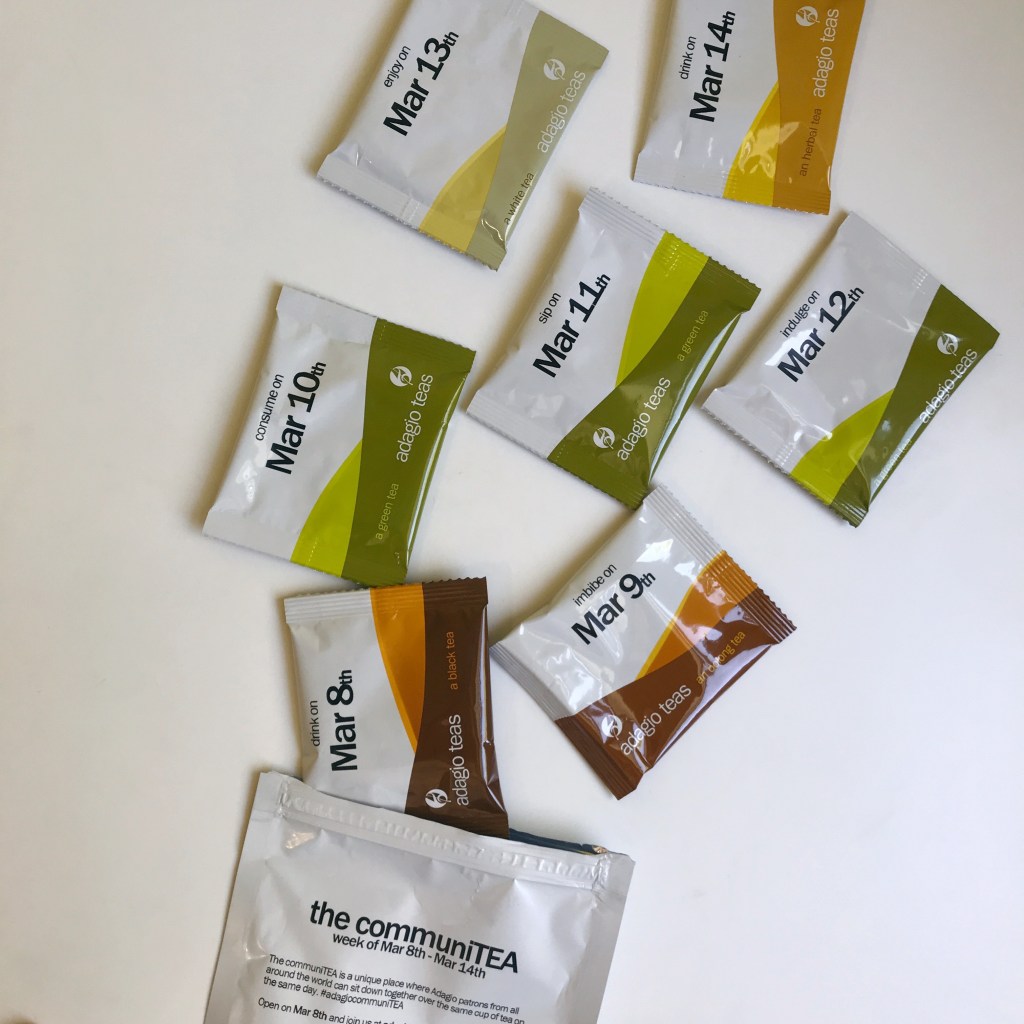
    While re-organizing my tea cabinet last week, I discovered a bag of communiTEA teas from Adagio Teas. It was dated the week of March 8th through March 14th, and each single-serving packet within was still sealed shut. I remembered I kept putting it aside with the intent to film YouTube videos or take Instagram glamour shots because if a tea is not showcased across social media, was it even consumed? The goal of the CommuniTEA is to bring people together over the same cup of tea on the same day, and I did not show up. I just never made the time for it.

    I’ve written and talked about how drinking tea is a lesson in being present and in mindfulness. Yet, I never address how it always seems to be at odds against my blogging and vlogging hobby and how both tend to take me out of the moment. I can’t begin to account for the times I’ve spilled tea all over the table because I was more focused on photographing the silhouette of tea pouring from a gaiwan. Or the times I struggled to get through advent calendars or countdown boxes timely because filming and editing videos is really time-consuming.

    And despite my awareness of this problem, instead of taking a few moments just to myself to enjoy a cup of tea…I spent the past two days binge-drinking communiTEA teas, taking pictures, and typing up this blog post. #NOREGRETS


    March 8 – Currant Tea

    I am a sucker for Adagio Teas’s creative blends, like the new Honeybush Blueberry Pancake. Have you seen my video, where I rave about it? But, I am equally in love with their simple, fruit-flavored black tea blends. The Orange Black Tea from Adagio Teas is a favorite of mine, and now the Currant Tea from March 8 was love at first sip, too. Adagio Teas’s Currant Tea is a blend of black tea, natural currant flavor, and raspberry flavor. I can’t recall the flavor of currants, but this blend offers a brisk and slightly malty-sweet black tea base that is complimented by red berry flavor. I’ve never been particularly inspired to make my own tea blends before, but I couldn’t help but wonder how the Currant Tea would taste blended with cream and zesty lemon flavors. I might be exploring Adagio’s Signature Blends soon…

    March 9 – Formosa Oolong

    When I first started sipping the Formosa Oolong, I was fairly indifferent about it. By the end of the cup though, it had me longing for brisk October mornings. This week’s heat-wave also makes me wish October was already here, but I digress. This tea tastes slightly toasty and definitely like crunchy Autumn leaves. The Adagio Teas website mentions there are some fruity notes in this tea, but I didn’t notice them. It’s possible I may have been able to draw them out using a different steeping method.

    March 10 – Serenitea

    The Serenitea blend is a fandom tea blended by Amy Zen. It is inspired by the science fiction series Firefly, and it is a blend of Spearmint, Gunpowder Green Tea, Black Tea, and Hazelnut flavoring. It’s an interesting twist on a Moroccan Mint because of the subtle hazelnuttiness. Also, and I feel like I lose a lot of nerd credit for admitting this, I have never watched Firefly beyond the pilot episode, so I have no idea if this blend captures the essence of the series. (Also, I may have forgotten to take a picture of the tea after I steeped it…)

    March 11 – Speedy Recovery

    I tend to stay away from blends that are for wellness or health purposes because I can’t not imagine the tea tasting medicinal. Even teas like Speedy Recovery, which is a blend of Green Tea, Peppermint Leaves, Ginger, Licorice, Cardamom, Fennel, Marigold Flowers, Black Peppercorn & Cloves starts to sound unappealing even though I appreciate all the ingredients except licorice. The flavor of green tea takes a backseat allowing the peppermint, ginger, and fennel shine in this blend. While it has challenged my perception of wellness teas, I still won’t reach for this one during the winter months. I take advantage of my stuffed up nose to power through all the teas I’m avoiding drinking!

    March 12 – Apricot Green

    Apricot Green from Adagio Teas is a blend of Green Tea, Apple Pieces, Natural Apricot Flavor, Apricots & Marigold Flowers, and I suppose of all the days during my communiTEA week, this was the tea I looked forward to the least. I’m not in love with flavored green teas, and I am not in love with Adagio’s peach or apricot flavoring. Yet, I found myself pleasantly surprised by the Apricot Green. I opted to sweeten this tea with sugar and serve it over ice, which helped to tone down the vegetal and steamed vegetable quality of the green tea used in this blend and allowed for the juicy apricot flavor to pop. This turned in to the kind of tea I could drink buckets of on a hot, summer day.

    March 13 – White Strawberry

    I may have also grumbled when I saw the packet of flavored white tea in my communiTEA week because white teas and I don’t get along. But you know what? I kind of fell in love with the blend from March 13. Within the packet was White Strawberry, which is a blend of White Tea, Rooibos Tea, Apple Pieces, Blueberries, Hibiscus, Natural Strawberry Flavor, Strawberries, Rose Petals, Blue Cornflowers & Natural Vanilla Flavor. This tea was juicy strawberries, sweet vanilla pound cake, and the most luscious, silky, and thick mouthfeel. It was basically strawberry shortcake in a cup. Would I get this again? Yea…yea, I think I would!

    March 14 – Sweet Science

    Sweet Science is another fandom tea, and this one is blended by Lisa & Kat Miller. This tea is inspired by Princess Bubblegum from Adventure Time, and it is a blend of Rooibos Tea, Black Tea, Apple Pieces, Rose Hips, Hibiscus, Marigold Flowers, Natural Peach Flavor, Coconut, Natural Creme Flavor, Natural Pineapple Flavor, Natural Coconut Flavor, Pineapple Pieces & Apricots. While I enjoyed this blend, sipping from such a small sample almost ensures that I do not get the full range of flavor this blend was trying to accomplish. I taste tropical fruit-flavored rooibos, but I’m missing the creamy notes from the coconut and creme flavors.


    If you’re interested in learning more about the kinds of teas Adagio’s newest subscription service offers, be sure to check out my first post on the communiTEA. A YouTube playlist of my reviews on some of the teas I’ve tried so far, is also posted there. Also be sure to check out the Adagio Teas CommuniTEA page to find out what other tea drinkers think!

  • Earl Grey Supreme from Harney & Sons

    Earl Grey Supreme from Harney & Sons

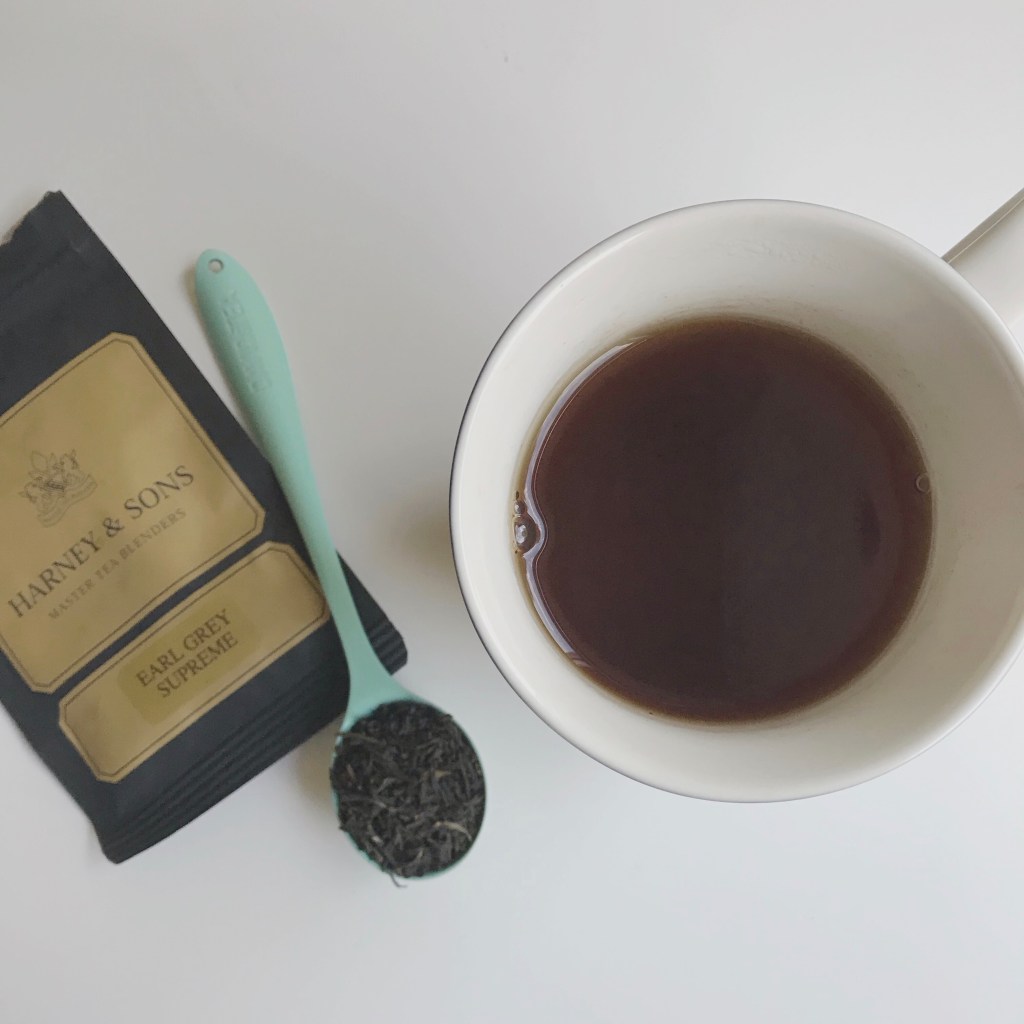
    I associate Earl Grey tea with the Autumn and Winter months. With mornings when I wake up before the sun, where there is a cold nip in the air, and the clouds hang heavy in the sky. We have had plenty of Earl Grey mornings lately even though it’s only the beginning of September and still technically summer. Is it just me, or does it seem like Autumn is rolling in early this year? You won’t find any complaints about that here; I live for Autumn! Plus, it just means I get to break out my Earl Grey a little earlier. The first Earl Grey of the season was Earl Grey Supreme from Harney & Sons.

    (more…)

  • Té alla Rosa Bianca from Tea Fiori

    Té alla Rosa Bianca from Tea Fiori

    Shut the front door! Did Té alla Rosa Bianca from Tea Fiori just make me a fan of white tea?

    For years, I’ve avoided white tea. That’s not to say it hasn’t somehow managed to find its way into my collection throughout the years. It’s usually the flavored varieties that end up in my online shopping cart because I’m not paying attention. Or because I’ve convinced myself this time will be different. But the outcome is the same every time. I end up with a mug of tea that tastes just like hot water. Or a mug of tea that tastes like hot water and blueberries because I somehow get a new packet of White Blueberry from Adagio Teas every year.

    It leaves me wondering: is it the quality of my water? Is it the quality of the tea? Am I more inept at brewing tea than I realize? Did I assault my tastebuds with strong, black coffee too much during college that I am unable to pick up the delicate aromas in white tea? Is it an unlucky combination of all four?

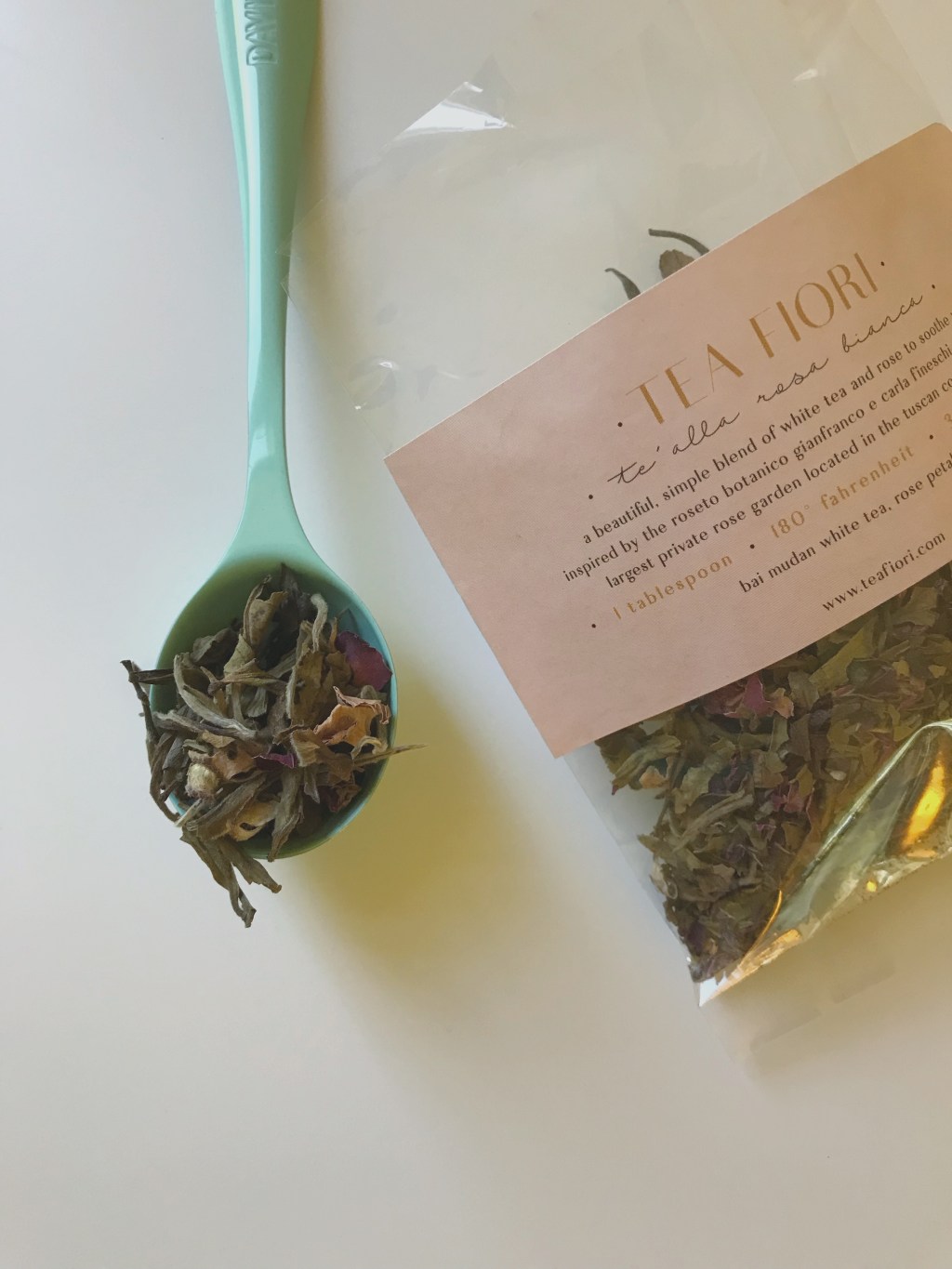
    Té alla Rosa Bianca is a simple blend of organic Bai Mudan White Tea and organic rose petals and buds. The appearance of the tea is as lovely as the scent of the dried tea, which was of sweet rose.

    When I first tried Té alla Rosa Bianca, I drank it hot, following the directions on the packaging very carefully– 1 tbsp of tea, 180 degrees, 3 minutes. However, I wasn’t impressed. The overall flavor seemed to be peppery hot water with an ambiguous floral aroma that I had to search for. I prepared this tea the same way two more times almost willing myself to love it, but the results remained the same.

    Everything changed when I decided to cold brew the remainder of my sample though.

    I didn’t note how much leaf to water ratio for my cold brew. I don’t even remember how long I let it steep, but if I had to guess, it was around 4 hours. Honestly? I was so intent to use up the rest of the tea that I just dumped it in a mug and called it a day.

    But oh…what a beautiful cold brew this tea made. The first flavor to surface was a delicate, peppery flavor, and it was soon followed by refreshing cucumber and sweet summertime rose. It conjured up images of lush perennial gardens, sunshine peeking through cozy cottage windows, and afternoon tea. And I swear, the theme song to the Great British Bake-Off could be heard somewhere in the distance.

    Never before have I been so delighted to have sipped on a white tea. This very experience has completely challenged my reluctance to drink it, and I am suddenly filled with the desire to explore this type of tea that I’ve long neglected! (After I sip down my collection that is already bursting at the seams, that is).

    I must know! What are your favorite white teas?

  • A Day Off with Books & Tea

    A Day Off with Books & Tea

    Yesterday was an ideal day off– simultaneously relaxing and productive. The kitchen is spotless and lemon-scented, all of the laundry is washed, the groceries have been purchased and put away, and I still had time to finish an enthralling cozy mystery, check out novels from the library, draft five whole blog posts, and sip a few mugs of Adagio Tea’s White Eternal Spring tea while appreciating the springtime breeze that danced through open windows.

    Adagio Tea’s White Eternal Spring tea is a blend of white tea, rose hips, pineapple pieces, mango pieces, cranberries, rose petals, apple pieces, hibiscus, blueberries, natural mango flavor, and natural pineapple flavor.

    When I open the bag, the dried tea leaves smell sweet, juicy, tart, and sticky (yes, sticky is now a scent). It makes me feel nostalgic, and I think of slurping on melting, fruity popsicles on a hot and sunny day. The flavor of the tea is very understated in comparison though, and while I appreciated that when sipping their lemon meringue green tea, this time I was disappointed that my tastebud’s were not bombarded with fragrant florals and juicy fruits. This is not to say the tea is bad, not at all. I still ended up brewing multiple cups and using up my entire sample. But, it didn’t live up to what I thought it would taste like, either. Drinking the White Eternal Spring tea plain is fine, but the flavors seem very middled. I suggest adding some honey, which actually helps to draw out the tartness of the pineapple flavor.

    A sample of this tea was provided by Adagio in exchange for an honest review.