By Golly, Ollie!

💾 a blog about books, tea, & geekery

Tag: book review

Posts featuring book reviews

  • Sign Language by Amy Ackley

    Sign Language by Amy Ackley

    Sometimes I choose library books with reckless abandon. I choose them at random and hope for the best. For example, the moment I plucked Sign Language by Amy Ackley from the library stack…I was disappointed. The book cover seemed to indicate that the novel I held in my hands was going to be some generic contemporary YA novel. This is a genre I tend to avoid because I have a hard time relating to the characters, and sometimes I find their actions/reactions to be unbelievable. However, Fangirl by Rainbow Rowell and Open Road Summer by Emery Lord are exceptions; I adored these two novels. On top of that, Sign Language dealt with a topic that I wasn’t entirely sure I was prepared to read about because I was already dealing with it in my own life– grief and a parent battling cancer. I did struggle to immerse myself into the novel at first, but by the end I found Sign Language to be wonderfully written and emotional story.

    I had a hard time getting absorbed into the story because I struggled to accept how Abby North, the main character, reacted to the news of her father’s cancer.  At first, she wouldn’t call her father’s ailment what it was– cancer. It seemed like she was ignorant and unaware of what was happening, which didn’t make sense because twelve-year-old kids know what cancer is. Then I realized, this was her “denial stage”, and the author was essentially using the 5 steps of grief as framework for the novel. The moment when Abby finally acknowledges that her father has cancer, and it is terminal, changed everything for me. I recall reading this novel in bed at 2AM with a flashlight tucked under my chin, and I’m fairly confident I wept through the entire second half of the novel.

    Aside from coping from the loss of her father, Abby still has to deal with everything else that comes with being a teenager– falling in love, a family that feels like it is falling apart, moving away, finding a place in the world. She feels lost, and she feels angry that her father is not around to guide her through adolescence. She doesn’t always make the best decisions, sometimes she pushes friends and family away, and every time, it felt like my heart was breaking for her.

    Sign Language by Amy Ackley is a perfect example of why I wanted to challenge myself to READ ALL THE BOOKS. It’s a novel I would have ignored either because of something vain, like the book cover, or because I don’t often like contemporary fiction, but in a way, it’s a story that I needed to read.

    (Also, fun fact, according to her bio, the author is a Michigan native, and she lives two towns over from where I live. What if I bumped into her at a restaurant and didn’t even realize?! NEAT!)


    Sign Language by Amy Ackley

    Released: August 2011
    Genre: Contemporary, Coming of Age
    Age Group: Young Adult

    [goodreads ]

    Twelve-year-old Abby North’s first hint that something is really wrong with her dad is how long it’s taking him to recover from what she thought was routine surgery. Soon, the thing she calls “It” has a real name: cancer. Before, her biggest concerns were her annoying brother, the crush unaware of her existence, and her changing feelings for her best friend, Spence, the boy across the street. Now, her mother cries in the shower, her father is exhausted, and nothing is normal anymore. Amy Ackley’s impressive debut is wrenching, heartbreaking, and utterly true.
  • I Found You by Lisa Jewell

    I Found You by Lisa Jewell

    I had a difficult time immersing myself in I Found You by Lisa Jewell, and I’m not entirely sure why. This novel had many characteristics that I appreciate. It was atmospheric. The writing was beautiful. It involved a mystery that I desperately wanted to solve. Yet, I started this book four separate times before finally reading all the way to the end.

    What Jewell successfully created in I Found You is an atmospheric novel, rich with vivid imagery and an underlying sinister feeling that both entices readers to keep turning the pages while at the same time making them feel slightly squidgy about the story that is unfolding. And, for the most part, I think that’s what I was really sticking around for– the atmosphere and, yes, the squidginess, though that seems to be the case with most of the books I’ve been reading lately. Because honestly, I found the plot line to be somewhat predictable, the characters to be kind of unrealistic, and the pacing to be somewhat slow compared to the usual thriller. And, let’s be real– if a man suffering from amnesia shows up on my property during a rainstorm, I’m not inviting him to spend the night in my detached garage (even though the previous tenants were so thoughtful to leave behind their mildewy box spring); I’m calling 9-1-1 not only to get this guy medical attention but to report a missing person. And, God forbid he enters my home uninvited to toast my hypothetical daughter a bagel and watch cartoons with her! How did the protagonist, Alice Lake, find this totally acceptable and endearing when the average person would lose their mind?

    Yet, despite my grief with the characters, part of what made this story so compelling is not just the alternation of narrators (between modern-day Alice Lake and Lily Monrose as well as the past’s Graham Ross), but also the alternation of timelines. While I’ve struggled with alternating timelines in the past, Jewell incorporates one that is not only intriguing but even blends the voices of the past and present together in a way that truly had me on the edge of my seat.


    I Found You by Lisa Jewell

    Released: June 2016
    Genre: Mystery
    Age Group: Adult

    [goodreads | indiebound]

    In a windswept British seaside town, single mom Alice Lake finds a man sitting on the beach outside her house. He has no name, no jacket, and no idea how he got there. Against her better judgment, she invites him inside.

    Meanwhile, in a suburb of London, twenty-one-year-old Lily Monrose has only been married for three weeks. When her new husband fails to come home from work one night she is left stranded in a new country where she knows no one. Then the police tell her that her husband never existed.

    Twenty-three years earlier, Gray and Kirsty are teenagers on a summer holiday with their parents. Their annual trip to the quaint seaside town is passing by uneventfully until an enigmatic young man starts paying extra attention to Kirsty. Something about him makes Gray uncomfortable—and it’s not just that he’s playing the role of the protective older brother.

    Two decades of secrets, a missing husband, and a man with no memory are at the heart of this brilliant new novel, filled with “beautiful writing, believable characters, pacey narrative, and dark secrets” (London Daily Mail) that make Lisa Jewell so beloved by audiences on both sides of the Atlantic.

    TLC Book Tours
    This novel was provided for free from the publisher and TLC Book Tours in exchange for an honest review.
  • How to Be Everything: a Guide for People Who (Still) Don’t Know What They Want to Be When They Grow Up by Emilie Wapnick

    How to Be Everything: a Guide for People Who (Still) Don’t Know What They Want to Be When They Grow Up by Emilie Wapnick

    In kindergarten, I wanted to be either a tiger or a cowboy-girl. Throughout elementary school and high school, I wanted to be a teacher, a librarian, a writer, a publisher, an actress (despite my crippling fear of public speaking), a website designer, some unnamed profession that would allow me to afford a loft in a New York City high-rise and eat carry out every night because I didn’t want to cook or do dishes. In college, I had no idea what I wanted to be anymore. I think I still wanted to be a teacher, but I refused to admit it because it was the expectation whenever I told someone I was majoring in English. Maybe I wanted to be a technical writer. Maybe I wanted to be a translator. Maybe I wanted to do it all but couldn’t quite figure out how to make it work, which is why I wish How to Be Everything by Emilie Wapnick existed back then.

    There is no hiding it. How to Be Everything is a “self-help” book, but it’s not the kind of “self-help” book that you would be embarrassed to admit that you read…and appreciated. It’s full of personality, positivity, brainstorming activities, and challenges to help you put your dreams in motion. The book also presents four different models to help you take control and design your ideal career path that embraces your multipotentiality. Currently, I follow the Einstein Approach; it’s the idea that, for those who require stability, a person chooses a day job that is “good enough” but provides the means to pursue interests after hours– I’m an accountant by day and a book blogger/avid reader/writer/amateur cook/gamer girl/superhero by night. I’d love to take the Slash Approach though, which could mean having 2…3…4 different jobs but all of them embracing a different aspect of a person’s multipotentiality.

    How to Be Everything would make a great gift for someone entering college or someone entering the workforce for the first time because they’re just starting to design their lives and their careers. I would also say this book is great for anyone who feels dissatisfied in their job; maybe it will plant the seeds of change in a person’s life. For me personally though? I’m not sure How to Be Everything influenced my mode of thinking drastically; it was empowering though and validated what I already suspected about myself. At almost twenty-nine, I follow the Einstein Approach (unintentionally) for a reason. While I wish I could take the Slash Approach to my career, I’m not comfortable with the thought of throwing caution to the wind, sacrificing stability, and changing my career (anytime soon). I’m not sure what Jon and I would have to achieve before I felt comfortable stepping back from a job that is “good enough” to pursue a career path that satiates my curiosity and desire for creativity.


    About Emilie Wapnick

    Emilie Wapnick is a speaker, career coach, blogger, and community leader. She is the founder and creative director at Puttylike.com, where she helps multipotentialites integrate all of their interests to create dynamic, fulfilling, and fruitful careers and lives. Unable to settle on a single path, Emilie studied music, art, film production, and law, graduating from the Law Faculty at McGill University in 2011. Emilie is a TED speaker and has been featured in Fast Company, Forbes, The Financial Times, The Huffington Post, and Lifehacker. Her TED talk, “Why Some of Us Don’t Have One True Calling,” has been viewed over 3.5 million times, and has been translated into 36 languages. She has been hired as a guest speaker and workshop facilitator at universities, high schools, and organizations across the United States and internationally.

    Find out more about Emilie at her website, and connect with her on Facebook, Twitter, and Instagram.


    How to Be Everything: a Guide for Those Who (Still) Don’t Know What They Want to Be When They Grow Up by Emilie Wapnick

    Released: May 2017

    [goodreads | indiebound]

    What do you want to be when you grow up? It’s a familiar question we’re all asked as kids. While seemingly harmless, the question has unintended consequences. It can make you feel like you need to choose one job, one passion, one thing to be about. Guess what? You don’t.

    Having a lot of different interests, projects and curiosities doesn’t make you a “jack-of-all-trades, master of none.” Your endless curiosity doesn’t mean you are broken or flaky. What you are is a multipotentialite: someone with many interests and creative pursuits. And that is actually your biggest strength.

    How to Be Everything helps you channel your diverse passions and skills to work for you. Based on her popular TED talk, “Why some of us don’t have one true calling”, Emilie Wapnick flips the script on conventional career advice. Instead of suggesting that you specialize, choose a niche or accumulate 10,000 hours of practice in a single area, Wapnick provides a practical framework for building a sustainable life around ALL of your passions.

    This book was provided by the publisher in exchange for an honest review.

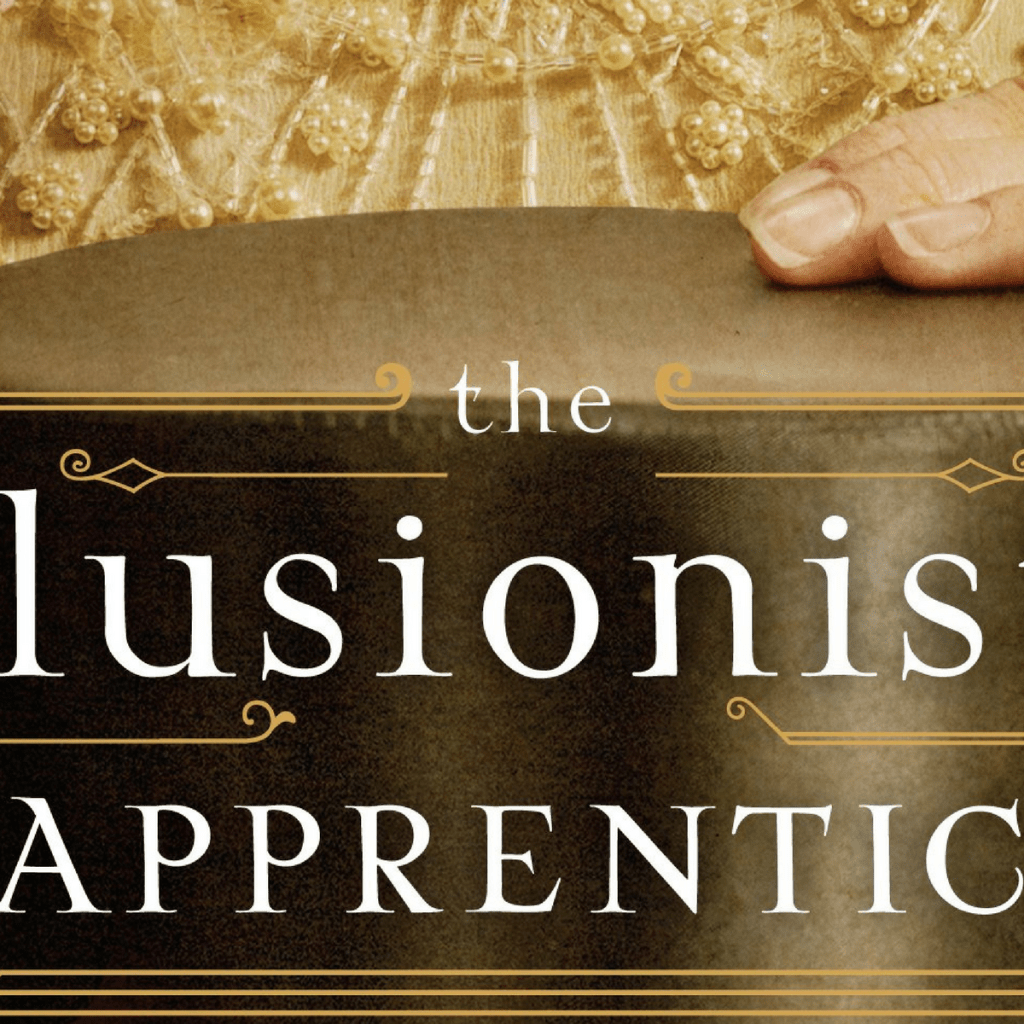
  • The Illusionist’s Apprentice by Kristy Cambron

    The Illusionist’s Apprentice by Kristy Cambron

    The Enemies of Versailles by Sally Christie is such a tough act to follow. Especially if the next book that is picked up is also of the historical fiction variety. How could anything even compare to a book that I’ve anticipated reading for months? Enter The Illusionist’s Apprentice by Kristy Cambron– a bit of a historical “whodunnit” set in 1927 Boston and on the Vaudeville stage. It had the ingredients to become an instant favorite, yet in the end, I just sort of felt like something was missing.

    I think the thing that frustrated me the most about The Illusionist’s Apprentice is it’s one of those stories that bounce around the timeline. The story opens in 1926/1927 in Boston. Then, six chapters later, we’re back in 1907 to reveal some small insight into one of the characters. A few pages later, we’re back in 1927 only to bounce back to 1924 in the next chapter for some more character insight. And so on and so forth. Part of me can appreciate what the author was trying to do; there were so many details in the past that seemed unassuming at first, but they ended up being totally relevant to the end of the novel. My biggest qualm was…I just felt disoriented. And I don’t think it’s through any fault of the author or the story; I think I just prefer more linear storytelling. I struggled to keep track of the timeline in Linda Lafferty’s the Girl Who Fought Napoleon after all. That being said, I also felt…well…bored? The timeline shifts slowed the pacing of the story down, sure, but what really frustrated me was that I finally discovered a novel that boasts being written about the jazz age that doesn’t revolve around/involve flappers, and I kept getting stuck in Wren’s sad childhood in 1907.

    What I was really sticking around for was Cambron’s writing and world-building. It was beautiful and atmospheric and full of intrigue both on and off stage. Plus, I was totally enamored by her choice to set the story against America’s Vaudeville scene, which is this jarring juxtaposition of gilt and grit and occasionally the grotesque. It’s a breeding ground for secrets and double lives and protagonist Wren Lockhart (illusionist, not magician) has them both; she’s a puzzle I wanted to unlock.

    It also made me want to listen to nothing but dark cabaret music for about a week straight, so I’ll leave you with this:


    The Illusionist’s Apprentice by Kristy Cambron

    Released: March 2017

    [goodreads | indiebound]

    Boston, 1926. Jenny “Wren” Lockhart is a bold eccentric—even for a female vaudevillian. As notorious for her inherited wealth and gentleman’s dress as she is for her unsavory upbringing in the back halls of a vaudeville theater, Wren lives in a world that challenges all manner of conventions.

    In the months following Houdini’s death, Wren is drawn into a web of mystery surrounding a spiritualist by the name of Horace Stapleton, a man defamed by Houdini’s ardent debunking of fraudulent mystics in the years leading up to his death. But in a public illusion that goes terribly wrong, one man is dead and another stands charged with his murder. Though he’s known as one of her teacher’s greatest critics, Wren must decide to become the one thing she never wanted to be: Stapleton’s defender.

    Forced to team up with the newly formed FBI, Wren races against time and an unknown enemy, all to prove the innocence of a hated man. In a world of illusion, of the vaudeville halls that showcase the flamboyant and the strange, Wren’s carefully constructed world threatens to collapse around her.

    Layered with mystery, illusion, and the artistry of the Jazz Age’s bygone vaudeville era, The Illusionist’s Apprentice is a journey through love and loss and the underpinnings of faith on each life’s stage.

    TLC Book Tours

    This novel was provided for free from the publisher and TLC Book Tours in exchange for an honest review.

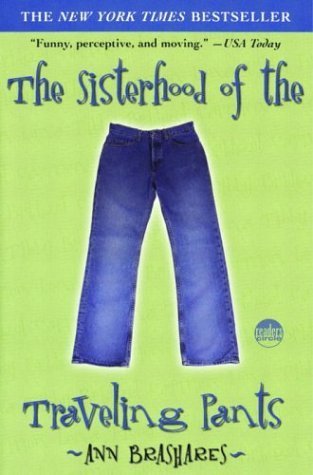
  • The Sisterhood of the Traveling Pants by Ann Brashares

    The Sisterhood of the Traveling Pants by Ann Brashares

    Following my recent re-read of Angus, Thongs, and Full-Frontal Snogging by Louise Rennison, I decided to check out another book from my teenage days– the Sisterhood of the Traveling Pants by Ann Brashares. To be completely honest, I only sort of vaguely remember this book despite its popularity and despite the movie, which of course I saw. I don’t have any specific memory related to this book, not like Angus, Thongs, and Full-Frontal Snogging at least, but I know I admired the depiction of a strong friendship and wished I had a Carmen, Tibby, Lena, and Bridget in my life.

    I felt something strange while reading the Sisterhood of the Traveling Pants. I don’t know if “regret” is the right word, but I think it was something close to that. I’ve never been a social butterfly. In high school, I hung out with friends during my school days and my color guard performances, but aside from that I kept myself pretty secluded mostly communicating with friends through livejournal and AIM (AOL Instant Messenger for you youngsters out there). We rarely had slumber parties. We rarely went to the movies or the beach or the mall together. In hindsight, I feel like I missed out on creating a strong bond, a strong friendship. I was very much a Tibby Rollins, cynical and sarcastic, but without Carmen, Lena, and Bridget to balance her.

    At first, I thought, if I could go back and do things differently… but then I wondered why go back in time when I still have so much future ahead of me? Because, as embarrassing as it is to admit, even at the age of 28, I still find myself living vicariously through Carmen and Tibby and Lena and Bridget. [This is about the time when I realize that I need to create one of those “Thirty before Thirty” lists and put “make real friends” at the very top.]

    The four girls are hardly perfect. Sometimes they become so preoccupied by events that are going on in their own lives– discovering that a parent is about to get remarried, making a new friend only to find out she is suffering from a terminal illness, allowing themselves to become vulnerable to someone else for the first time, becoming intimate with someone before they were actually ready– that they say things that they later regret or they don’t see that another friend is working through something painful too. But, their friendship is so strong that it doesn’t take long before one of them can take a step back and forgive one another or realize that they are needed by a friend to console and to comfort and to help realign the world.

    Another strange thing happened during my reread of the Sisterhood of the Traveling Pants— I cried. Specifically when Bailey is in the hospital and Tibby realizes just how big of an impact this little girl had on not just Tibby but the people the duo had met that summer. I never cry when I read books, but I swear, adulthood has turned me into a weepy wimp.

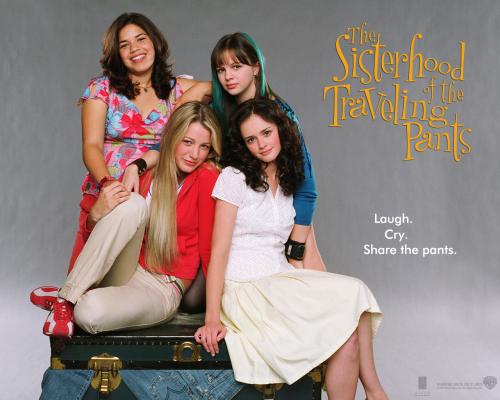
    Naturally, I had to immediately rent the Sisterhood of the Traveling Pants movie. It didn’t have quite the same effect as the book because I think their friendship seemed stronger in the book. But, I still spent the last twenty minutes of the film weeping (truly, adulthood has ruined me).

    If you’re looking for a contemporary novel focusing on friendship, the Sisterhood of the Traveling Pants is a must-read!


    The Sisterhood of the Traveling Pants by Ann Brashares

    Released: September 2001
    Genre: Contemporary, Romance
    Age Group: Young Adult

    [goodreads | indiebound]

    Carmen got the jeans at a thrift shop. They didn’t look all that great: they were worn, dirty, and speckled with bleach. On the night before she and her friends part for the summer, Carmen decides to toss them.

    But Tibby says they’re great. She’d love to have them. Lena and Bridget also think they’re fabulous. Lena decides that they should all try them on. Whoever they fit best will get them.

    Nobody knows why, but the pants fit everyone perfectly. Even Carmen (who never thinks she looks good in anything) thinks she looks good in the pants. Over a few bags of cheese puffs, they decide to form a sisterhood and take the vow of the Sisterhood of the Traveling Pants . . . the next morning, they say good-bye.

    And then the journey of the pants — and the most memorable summer of their lives — begins.

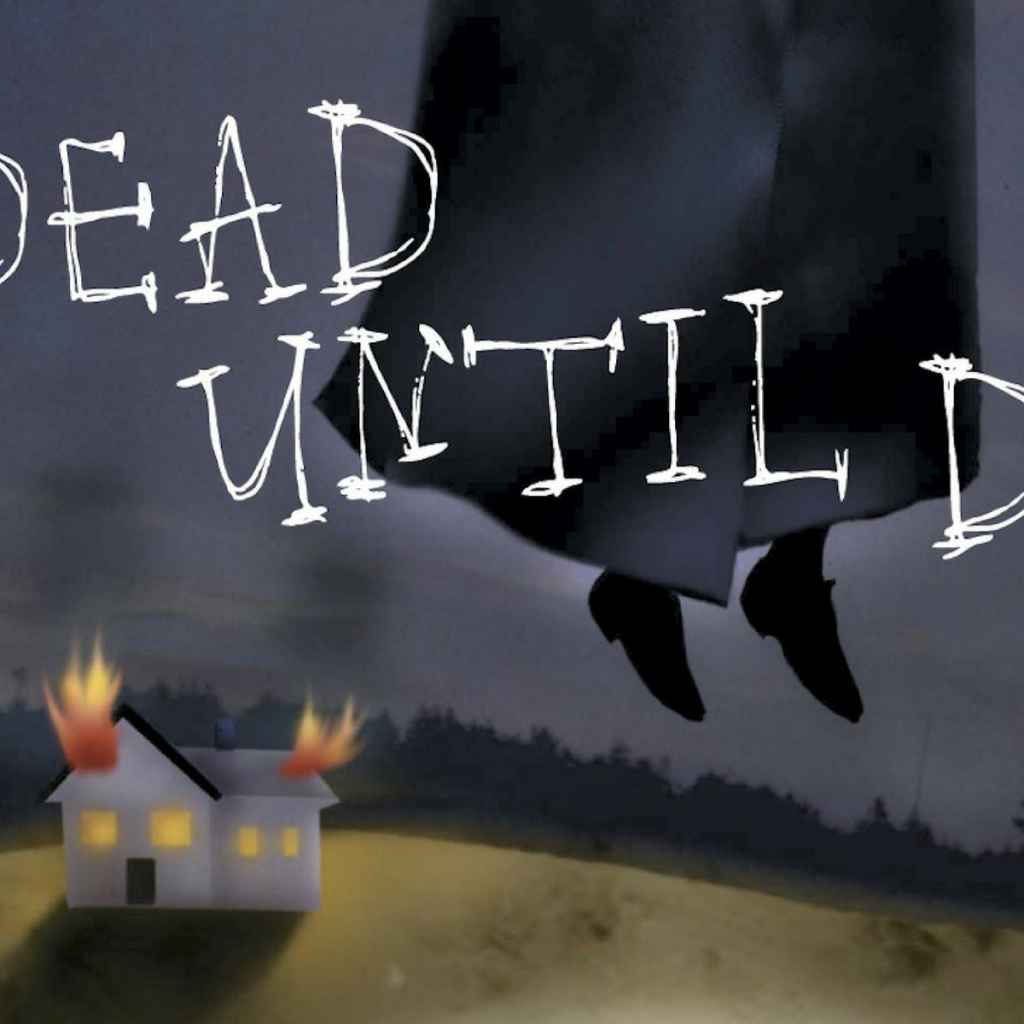
  • Dead Until Dark by Charlaine Harris

    Dead Until Dark by Charlaine Harris

    About a month after publishing a blog post about how I was nervous to start reading Dead Until Dark (Sookie Stackhouse #1) by Charlaine Harris, a reader pointed out that a fair amount of time had passed and I still hadn’t written a review for the novel; she was curious about what I thought of the book. The truth is…it took me nearly a month to read the novel, and it was a pretty grueling experience.

    I went into reading Dead Until Dark with skepticism. I’ve never developed a fondness for novels about vampires, and I suspected this novel was mostly smut, yet I was pleasantly surprised in the first few chapters. I was impressed by the character of Sookie Stackhouse and how vivid her voice was. She seemed like a down-to-earth and simple southern girl who had an insatiable curiosity about vampires. She also had a peculiar gift that allowed her to read the thoughts of others, which…okay…I wasn’t that impressed with. It was a little too Bella Swan for my taste (and yes, I realize Dead Until Dark was published first), though I was willing to overlook it.

    And then everything changed following her first roll in the hay with Bill, the vampire. Sookie Stackhouse? Surely her name is really Mary Sue!

    • She’s the most gorgeous girl in Bon Temps, Louisiana, which she and everyone in Bon Temps constantly remind the reader about. I guess the only reprieve the reader gets is at least Sookie doesn’t try to convince you she’s just mediocre looking despite an excess amount of male attention.
    • She refers to her magical ability, which allows her to read the minds of those around her, as a “disability”. Gross.
    • Said magical ability is a result of her not-so-human status (which is actually revealed in later novels, I just accidentally found a spoiler).
    • Spoilers also tell me of a love pentagon? A love hexagon? Just no.
    • She’s abstained from any romantic and sexual relationships because of her mind reading ability, so naturally her first sexual encounters, with a vampire of course, reveal she’s actually a sexual beast. Who doesn’t come out the gate swingin’ though, amiright? (Just kidding. The answer to that question is “NO ONE”).
    • She essentially has a minimum wage job, but she doesn’t ever have to worry about money because a giant “nest egg” has been willed to her. On multiple occasions. This allows her to take all the time off from work that she needs with no consequence. That and her boss is in love with her. How convenient.

    There was a mystery in this book too that became quite muddled after Sookie lost her V-card. I mean, it was a compelling murder mystery at first, but then the story morphed into this weird relationship power struggle between Bill and Sookie. Bill was a bit of a wet blanket unless bedroom activity was involved, and Sookie was excessively stubborn by refusing her gentleman caller unless bedroom activity was involved. I forgot about the mystery until the last couple of chapters, which in all fairness, wrapped up nicely.

    In the end, while I didn’t hate Dead Until Dark, it definitely didn’t impress me. I sort of wish I could have my month back to trudge through a different novel.


    Dead Until Dark (Sookie Stackhouse #1) by Charlaine Harris

    Released: May 2001

    [goodreads | indiebound]

    Sookie Stackhouse is a small-time cocktail waitress in small-town Louisiana. She’s quiet, keeps to herself, and doesn’t get out much. Not because she’s not pretty. She is. It’s just that, well, Sookie has this sort of “disability.” She can read minds. And that doesn’t make her too dateable. And then along comes Bill. He’s tall, dark, handsome–and Sookie can’t hear a word he’s thinking. He’s exactly the type of guy she’s been waiting for all her life….

    But Bill has a disability of his own: He’s a vampire with a bad reputation. He hangs with a seriously creepy crowd, all suspected of–big surprise–murder. And when one of Sookie’s coworkers is killed, she fears she’s next….

  • The Enemies of Versailles by Sally Christie

    The Enemies of Versailles by Sally Christie

    Pardon me. I’m just feeling a bit emotional right now. I’ve officially finished the final installment of the Mistresses of Versailles series by Sally Christie– the Enemies of Versailles. I know I’ve dedicated a fair amount of blog space to this genius series already but allow me just one more post (at least this quarter because I know the Enemies of Versailles is going to be mentioned again in my 2017 wrap up post).

    My love for this series was so unexpected because it was entirely out of my comfort zone. I only dabble in historical fiction, and I try to steer clear of any books that could be described as “steamy”. Yet, here I am, consuming these books faster than Victoire consumes her cordial. These books are vibrant and full of life and personality. They’re hilarious. And, tucked in between bed sheets pages of scheming mistresses and unfaithful kings, there is actually a lot of substance, whether it’s the surprising depth of the characters or…well…the socio-economic structure of 18th century France, the fall of the House of Bourbon, how brothels work, and the French Revolution.

    The series as a whole was consistently well-written and engaging, but the Enemies of Versailles was perhaps my favorite novel of the trilogy. In the Sisters of Versailles and the Rivals of Versailles, there were several narrators. While the shift between the many narrators made the novels seem fast-paced, I did find the flip-flopping to be confusing at first. I also found some narrators more compelling than others. But the Enemies of Versailles only had two narrators– Comtesse du Barry, the king’s official mistress, and Madame Adelaide, the king’s daughter.

    It’s been interesting to watch King Louis XV’s mistresses decline in social standing throughout the course of the series. The Sisters of Versailles were nobles. Madame Pompadour was bourgeois. And Comtesse du Barry, despite what the name suggests, was of even lower social strata and made ends meet through prostitution. Comtesse du Barry, like previous mistresses, was portrayed as an airhead at first, distracted by gilt and gems, but she later grows into her role at Versailles (thankfully not as maliciously as previous mistresses).

    To give a voice to Madame Adelaide, the king’s daughter was also a fascinating choice. I suspect one of the reasons is to juxtapose France’s First Estate (the nobles) against the Third Estate (the commoners), as the tides of revolution lap at the gates of Versailles. But it also demonstrates how unnatural the royal family feels– like the queen and her children just simply existed in the background because King Louis XV had more important things to pay attention to (certainly not church sermons though). With the children being taken care of by wet nurses and tutors and whose marriages were treated as business deals and war strategies, it’s surprising they would even have any kind of attachment to their parents. And yet, Madame Adelaide seems to truly adore her father and not just because he is the King of France. Their relationship made me feel so sad though. I got the sense that Madame Adelaide wanted to have a real relationship with her father but couldn’t. Not only has she been constantly cast aside when King Louis XV preferred to dote on mistresses, she, like every other royal subject, had to request an audience with her father!

    The Enemies of Versailles didn’t seem as fast-paced as the two previous novels, but there was more character-building and more world-building this time around. Christie’s challenge was to make readers care about these two women, who seem self-centered and too caught up in living in material excess (maybe kind of like the Kardashians). Because, inevitably, the novel ends at the beginning of great turmoil– the French Revolution. The final scenes of this novel, this series, when royalty is being beheaded and nobles are being tried for being spies for the old regime are some of the most emotional. Throughout this entire series, Louis, his mistresses, his family, the court at Versailles, heck! even church leaders are caught up in this gross obsession with wealth at the expense of everyone else. They’ve bankrupted their country and raised the deficit and yet, the government will not make any motion to reform taxes. People are suffering, and to make matters worse, the nobles don’t even recognize the damage they have done. There is this wonderful passage to capture this:

    “Six hundred black crows breaching the walls of our palace. Who are these men? Nothing, their blood denuded of that essence that marks the noble races. The nobles have defended France, the clergy has prayed for France, but what have these men done? Probably they do some tasks that are important, but they are menial ones, and why should they have any glory or power for that?

    And yet, the final chapters are the most gripping. Despite their attitudes, I still hoped Madame Adelaide and her family could escape the revolution. I still hoped Comtesse Du Barry’s pleas wouldn’t fall on deaf ears as they dragged her to the guillotine.

    I can’t praise these books enough!


    The Enemies of Versailles (the Mistresses of Versailles #3) by Sally Christie

    Released: March 2017
    Genre: Historical Fiction, Romance
    Age Group: Adult

    [goodreads | indiebound]

    In the final installment of Sally Christie’s “tantalizing” (New York Daily News) Mistresses of Versailles trilogy, Jeanne Becu, a woman of astounding beauty but humble birth, works her way from the grimy back streets of Paris to the palace of Versailles, where the aging King Louis XV has become a jaded and bitter old philanderer. Jeanne bursts into his life and, as the Comtesse du Barry, quickly becomes his official mistress.

    After decades suffering the King’s endless stream of Royal Favorites, the princesses of the Court have reached a breaking point. Horrified that he would bring the lowborn Comtesse du Barry into the hallowed halls of Versailles, Louis XV’s daughters, led by the indomitable Madame Adelaide, vow eternal enmity and enlist the young dauphiness Marie Antoinette in their fight against the new mistress. But as tensions rise and the French Revolution draws closer, a prostitute in the palace soon becomes the least of the nobility’s concerns.

    Told in Christie’s witty and engaging style, the final book in The Mistresses of Versailles trilogy will delight and entrance fans as it once again brings to life the sumptuous and cruel world of eighteenth century Versailles, and France as it approaches inevitable revolution.

    TLC Book Tours
    This novel was provided for free from the publisher and TLC Book Tours in exchange for an honest review.

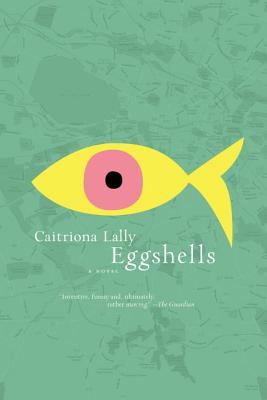
  • Eggshells by Caitriona Lally

    Eggshells by Caitriona Lally

    I had a friend in high school who was a little left of center. She never cut her hair. She never wore matching shoes. And she never cleaned her room. She cried when she broke a nail… and then taped the tip back on. She only listened to the Beatles, Kylie Minogue, and the Powerpuff Girls OST. And she only watched the Twilight Zone, Powerpuff Girls, and Sailor Moon. She collected (and I assume played with) dolls. She still collects (and I assume plays with) dolls. She had a high pitch, chirpy voice, and an even higher pitched laugh that sometimes sounded like she was screaming if she thought something was particularly funny. She colored strips of paper with pens and markers and taped them into bracelets, and then she wore them. Unless they broke…then she would toss them into her clear, plastic backpack, where they would collect at the bottom along with pencil shavings, empty Frutopia bottles, pen caps with erasers, and incomplete math homework.

    She is the best writer I’ve ever known. She is an enigma. She’s probably the only reason why I had real friends in middle school and high school. And this is who I thought about when I read Eggshells by Caitriona Lally.

    I thought I preferred character-driven novels over everything else, but I was wrong. And, the thing about Eggshells by Caitriona Lally is it’s 100% character driven. That’s not to say I didn’t enjoy Eggshells. That’s far from the truth. But, I did find the novel to be…exhausting. Vivian, like my friend from high school, is a little left of center. Her behavior is extremely quirky (which, is just a polite way of saying, she’s a weirdo), and at first I found it charming and silly.

    I was amused when Vivian sent letters containing the ashes of her late Aunt Maud to 22 of Aunt Maud’s friends– one to each letter of the alphabet. Then she picks four unsuspecting citizens from the phone book to complete the alphabet. I even related to her when she repeated the word “bumble bee” so many times that it started to sound meaningless because I do the exact same thing with the word “purple”.

    Then, I felt sad for her when she felt confident that a letter sent via message in a bottle across oceans would get to her friend more safely than through the postal service. And that’s just barely scratching the surface. He whole perspective of the world is so abstract and bizarre, and it began to wear on me. I felt like my ability to enjoy this book depended on how well I accepted and appreciated Vivian, and perhaps she’s a bit too much of a social pariah for my tastes. In the end, I just felt overwhelmed by her, but maybe that’s the point.

    What I really found myself sticking around for was Lally’s writing. It was poetic and clever and humorous (not in a laugh-out-loud sort of way, but subtly so). But even that was hard– sticking around for 250+ pages just because stylistically Lally’s writing is amazing.

    In the end, would I recommend this book? Absolutely. Just make sure you understand what you’re picking up.

    Are you a fan of character driven novels? What are some of your favorites?


    Eggshells by Caitriona Lally

    Released: May 2014
    Genre: Literary Fiction
    Age Group: Adult

    [goodreads | indiebound]

    Vivian doesn’t feel like she fits in – and never has. As a child, she was so whimsical that her parents told her she was “left by fairies.” Now, living alone in Dublin, the neighbors treat her like she’s crazy, her older sister condescends to her, social workers seem to have registered her as troubled, and she hasn’t a friend in the world.

    So, she decides it’s time to change her life: She begins by advertising for a friend. Not just any friend. She wants one named Penelope. Meanwhile, she roams the city, mapping out a new neighborhood every day, seeking her escape route to a better world, the other world her parents told her she came from. And then one day someone named Penelope answers her ad for a friend. And from that moment on, Vivian’s life begins to change.

    Debut author Caitriona Lally offers readers an exhilaratingly fresh take on the Irish love for lyricism, humor, and inventive wordplay in a book that is, in itself, deeply charming, and deeply moving.

    This novel was received for free in exchange for an honest review as a part of TLC Book Tours
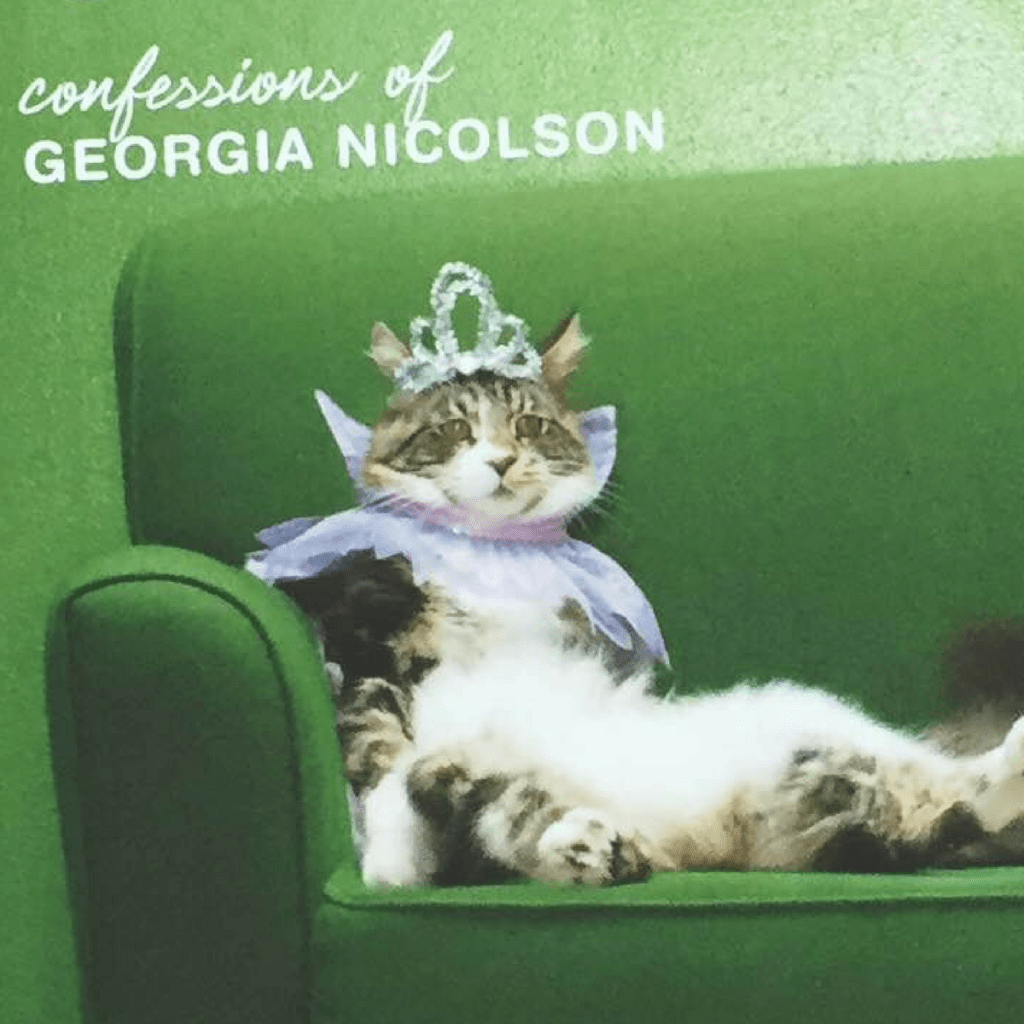
  • Angus, Thongs, and Full Frontal Snogging by Louise Rennison

    Angus, Thongs, and Full Frontal Snogging by Louise Rennison

    Angus, Thongs, and Full-Frontal Snogging by Louise Rennison is so old that I remember seeing it at my elementary book fair…nearly twenty years ago. I also remember wanting to buy the book, but I was too embarrassed because the word “thong” was in the title, so I picked up something more prudent instead. It wouldn’t be for another two years before I had the courage to pluck Angus, Thongs, and Full-Frontal snogging from the shelf at a Barnes & Noble bookstore.

    On the ride home, I read excerpts out loud to my mom about Georgia Nicholson dressing up as a green olive for a costume party followed by excerpts about Georgia accidentally shaving off one of her eyebrows, which made her look really surprised in one eye. My mom nearly had to pull the car over because she laughed so hard her eyes filled with tears.

    During a recent library visit, I spied this book on a shelf, and I wondered if it was still as funny after all of these years. I’m not much of a reader, unless it’s Harry Potter, but I could resist. I brought this book home…and devoured it in one sitting.

    Indeed, Angus, Thongs, and Full-Frontal Snogging is still hilarious, in the laugh-out-loud sort of way, after all of these years. It’s also entirely possible that Georgia Nicholson is one of my absolute favorite characters ever written. Okay, so she is sometimes selfish and a total snot to her friend, but she is also brave and vibrant, and she goes after what she wants (whether it’s Robbie the Sex God or Dave the Laugh or Masimo). Plus, Georgia has such a strong and memorable voice.

    angus-thongs

    After finishing the book, I immediately settled down to watch the movie adaptation on Netflix. If my memory serves me, the film is actually an adaptation of the first two novels in the Confessions of Georgia Nicholson series. It was such a fun little movie, and I just loafed on the couch wearing a cheesy grin and giggling. Although, Robbie was not how I pictured him. The movie version of Robbie the Sex God had such a feminine sounding voice, which was really weird.

    Also, I don’t recall if I thought about this as a teenager, but I certainly did during my recent re-read– I was kind of disturbed by the relationship between Georgia and Robbie. In the book, Georgia is only 14 but Robbie is just about to turn 18, and I found that to be totally creepy. (The film closed the age gap, so it didn’t bother me as much.)

    Have you ever read Angus, Thongs, and Full-Frontal Snogging? Have kids these days heard of this series? (I mean, I have to suspect that they have because my teeny tiny local library has the series…)


    Angus, Thongs, and Full-Frontal Snogging by Louise Rennison

    Released: June 1999
    Genre: Romance, Contemporary
    Age Group: Young Adult

    [goodreads | indiebound]

    There are six things very wrong with my life:

    1. I have one of those under-the-skin spots that will never come to a head but lurk in a red way for the next two years.

    2. It is on my nose

    3. I have a three-year-old sister who may have peed somewhere in my room.

    4. In fourteen days the summer hols will be over and then it will be back to Stalag 14 and Oberfuhrer Frau Simpson and her bunch of sadistic teachers.

    5. I am very ugly and need to go into an ugly home.

    6. I went to a party dressed as a stuffed olive.
    In this wildly funny journal of a year in the life of Georgia Nicolson, British author Louise Rennison has perfectly captured the soaring joys and bottomless angst of being a teenager. In the spirit of Bridget Jones’s Diary, this fresh, irreverent, and simply hilarious book will leave you laughing out loud. As Georgia would say, it’s “Fabbity fab fab!”

  • The Memory of Lemon by Judith Fertig

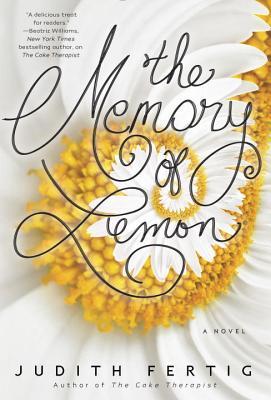
    The Memory of Lemon by Judith Fertig

    February is almost over, and I’ve only finished three books so far. Except for the Mermaids of Lake Michigan by Suzanne Kamata, which I devoured in two sittings, I find myself trudging through every book I pick up. Take for example the Memory of Lemon by Judith Fertig- it’s a relatively short book with 288 pages, but I spent nearly a month reading it. Don’t get me wrong. There were aspects of this book that were engaging and beautifully written. But, there were also aspects of this book that I felt disconnected from, and indifferent.

    This book felt a little cozy

    As in, if you added a thrilling murder and a pet cat, you’d have a cozy mystery novel. I suspect it was the introduction of the main character, Neely, who is in the process of divorcing her cavorting pro-football husband and starting fresh in her old hometown in southwest Ohio– a world away from posh NYC, which is where she lived prior. (What cozy mystery doesn’t start out with the main character arriving in a small town after leaving a husband or a long-time boyfriend?)

    She has also recently opened her own bakery called Rainbow Cakes, so you better believe your tummy will be grumbling throughout. If you’re a foodie or a baker, I’m sure you’ll love reading about all of Neely’s delicious baked goods! Plus, Rainbow Cakes is the perfect setting to meet all of the locals, like rough-around-the-edges Jett, Neely’s bakery assistant, and the bashful professor, who has his heart set on Maggie, Neely’s emotionally guarded waitress.

    I wasn’t sure if Neely’s gift was supernatural or synesthesia

    My favorite aspect of this book is how Neely can connect emotions and memories to certain flavors. I thought she was a synesthetic at first, and perhaps she is. Still, her gift teeters on the edge of the supernatural because she can experience feelings and memories of her ancestors. Fertig’s writing springs to life every time Neely experiences the past, and readers are treated to rich imagery of life in the Ohio River Valley during the 1800s.

    But…I’d rather read about Neely’s past than her present

    The part of the novel I feel indifferent about is Neely’s present, specifically the conflicts she has to overcome in her love life. Unlike Neely’s baked goods, Neely is kind of a bland character, and I had a hard time connecting with her. As for the conflict…it had potential. Neely is trying to divorce her football star husband, who doesn’t seem quite ready to let her go despite his debaucherous behavior. She especially wants to expedite the process because she’s falling in love with one of her best friends. She has to be careful though because there is a clause in the prenuptial agreement that could mean financial ruin if it’s determined Neely is being unfaithful. Fertig lets this conflict simmer throughout the novel; I wanted the pot to come to a full boil, but Fertig removes it from the burner before it had a chance, and I was left feeling kind of let down.

    That being said…the wedding Neely and her team are planning was totally my dream wedding!!!

    Perhaps my timing was off

    The Memory of Lemon by Judith Fertig teeters right on the edge of being a fluffy, contemporary novel, which is best devoured during a summer afternoon sitting on the back deck, soaking up the sun, not during the throes of winter while buried under blankets.


    The Memory of Lemon by Judith Fertig

    Released: June 2016
    Genre: Contemporary
    Age Group: Adult

    [goodreads | indiebound]

    A crisp tang of citrus that is at once poignant and familiar, sharpening the senses and opening the mind to possibilities once known and long forgotten…
     
    Claire “Neely” Davis is no ordinary pastry chef. Her flavor combinations aren’t just a product of a well-honed palate: she can “taste” people’s emotions, sensing the ingredients that will touch her customers’ souls. Her gift has never failed her—until she meets a free-spirited bride-to-be and her overbearing society mother. The two are unable to agree on a single wedding detail, and their bickering leaves Neely’s intuition frustratingly silent—right when she needs it most.

    Between trying to navigate a divorce, explore a new relationship, and handle the reappearance of her long-absent father, Neely is struggling to make sense of her own conflicting emotions, much less those of her hard-to-please bride. But as she embarks on a flavorful quest to craft the perfect wedding celebration, she’ll uncover a family history that sheds light on both the missing ingredients and her own problems—and illustrates how the sweet and sour in life often combine to make the most delicious memories…