By Golly, Ollie!

💾 a blog about books, tea, & geekery

Category: Tasty Teas

Posts about tea like reviews, tea musings, and books & tea pairings.

  • Ancient Tree Green Puerh from Masters Teas

    Ancient Tree Green Puerh from Masters Teas

    The one thing I know about Pu-erh tea is I don’t know much about Pu-erh tea. So, I made it one of my resolutions to learn about it, taste it, explore it, and see if I could acquire a taste for it. My first experience with pu-erh was a flavored one, and it didn’t go very well (I’m looking at you, S’mores Chai). In my defense, I didn’t intend to drink a flavored pu-erh; I’m not entirely sure I realized S’mores Chai had a pu-erh base when I purchased it. But, I digress.

    My second experience with puerh, the one I’m sharing with you now, was entirely different. First, it was unflavored. Second, it was a sheng puerh instead of, and I’m assuming based on color and what I’ve read about the taste, a shou puerh.

    Also, in hindsight, I probably should have read a little more before diving into my first cup of sheng pu-erh, but sometimes it’s fun to go in blind, unaffected by expectations based on other peoples’ experiences. I guess it’s sort of like when I visit a new city for the first time. I like to wander around without direction just to get a sense of the place, and sometimes I even accidentally stumble upon something I didn’t know to look for. Like the doggy playdate in a park nestled between skyscrapers in Chicago. Or the pinball machines tucked at the back of Coast City Comics in Portland, Maine. Oh, but I digress again.

    Ancient Tree Green Puerh from Masters Teas
    Origin: Yunnan, China
    Elevation: 800m*
    Harvest: April 2019

    *elevation currently means nothing to me because I’m not knowledgeble about how that affects tea. Also, it’s in metric, which I haven’t used outside of 11th grade chemistry, and we definitely were not measuring anything in meters.

    The Masters Teas website goes on to explain that the tea was hand-plucked from 150-year old trees (which don’t really sound that ancient), and this pu-erh goes through a 10 minute firing followed by roasting for 5-6 hours.

    My tasting notes regarding temperatures and infusion times are inconsistently recorded. I’m going to say it is because I was meandering my way through this tea, much like the way I meander through cities without maps, but really I’m just bad at logging that information. I need to get better at that as I practice with my gaiwan.

    The dry leaf is tightly twisted two leaves and a bud. They are brown, spinach and pea green, and occasionally there is a leaf covered in soft, silver fuzz. Their fragrance reminds me of the greenhouse I worked at for a season back in college. It is the scent that would stick to my fingers after deadheading flowers– vegetal and sour but somewhere buried is a hint of sweetness.

    I put the dry leaf into a warm gaiwan and shake it. A new fragrance surfaces, and it smells sweet, powdery, and floral. Is it orange blossoms? Is it budding magnolias? It’s something that reminds me of Florida in February.

    After steeping, the wet leaf smells sour and like steamed vegetables. Wilted spinach and lemon came to mind, and I find myself reluctant to drink.

    Infusions 1 and 2

    The liquor is pale, golden yellow, and the aromas are earthy and vegetal although my novice tongue can’t point to anything more specific than that. There is an astringency that makes me salivate and a bitterness and sourness on the back of my tongue that makes me think about eating the skin from a purple plum.

    Infusion 3

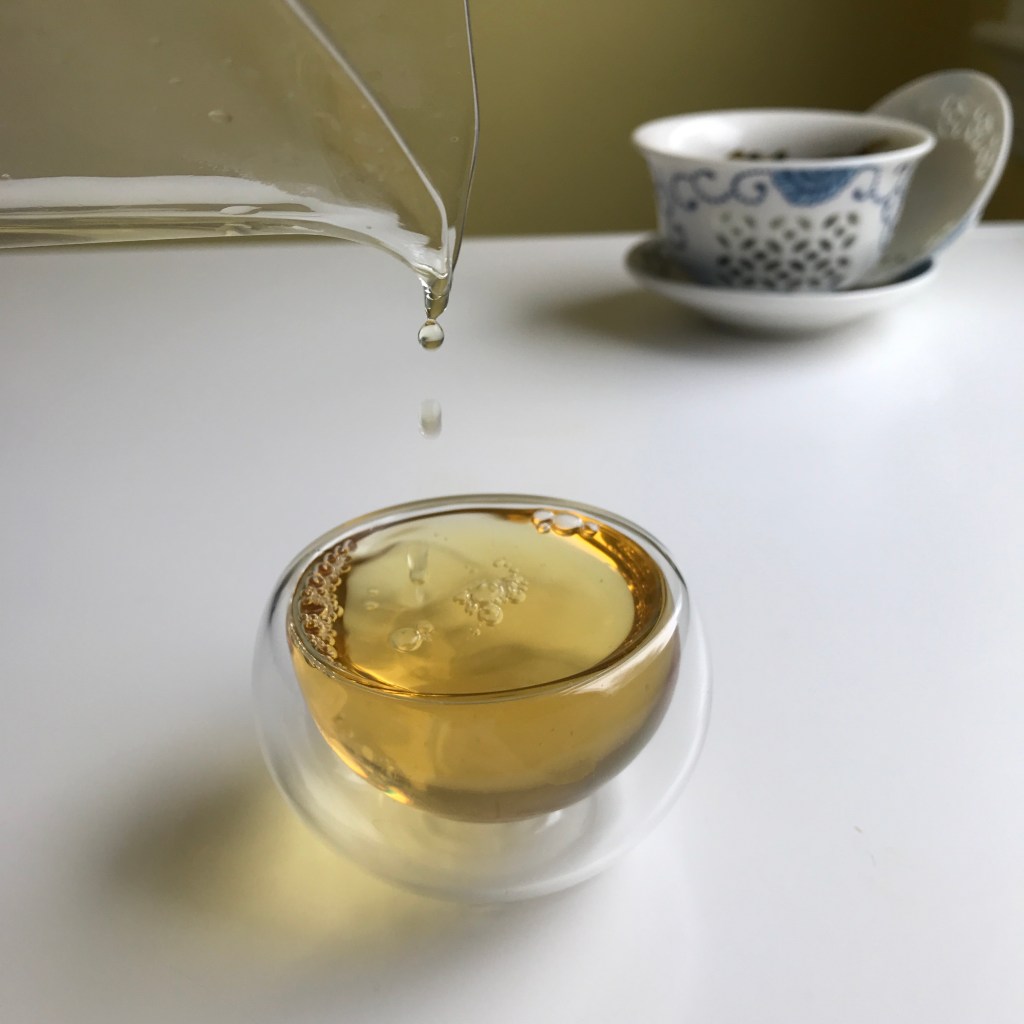
    The liquor sits in the fill cup for a while as I try to process my first two infusions. I can’t tell if I steeped this incorrectly or if this is the nature of a sheng pu-erh, but while I sit there, notes of sweetness and “green”, like I’m chewing on leaves, linger on my tongue. When I finally tip the liquor out of the fill cup, the light bounces off it, and it looks like I’m pouring liquid sunshine into my cup.

    There is an energy in this infusion that I have never experienced before. My toes and cheeks are humming, and it feels like there is cotton in my ears and in the space between my eyes. I am so distracted by this that I forget to write down tasting notes.

    Infusions 4 and 5

    I took a break to take Oliver to the library and then to settle him down for a nap. But, when I return to the tea, I shut myself up in a bedroom for proper alone time. Infusions 4 and 5 are still pretty astringent but the earth and sour, vegetal aromas give way to something faintly like a sweet apricot.

    Infusions 6 to 8

    These final infusions were lovely, with infusion 6 being my favorite. The astringency has drifted away, and now all I taste are dried apricots. The finish is sweet, like I’m sucking on sugar cubes stolen from the tea tray during a Girl Scout meeting decades ago. The sensation stays with me quite some time after I have finished the tea.

    As I have no other sheng pu-erhs to compare this to, I can’t comment on quality and value. But, I suspect if you are new to this type of tea, like I am, Ancient Tree Green Pu-erh from Masters Teas is a good place to start. Adagio Teas and Masters Teas make better quality teas more accessible and inviting to those just starting on their tea journey. Even though I technically started my tea journey a decade ago, I let myself grow complacent and stagnant. I have learned more about tea in the past few months than I did during the past decade thanks to the wonderful tea community over on Instagram. And, it’s worth noting that the Ancient Tree Green Pu-erh from Masters Teas has made sheng pu-erh slightly less intimidating, which is good because I have a 2017 IPA from white2tea with my name on it.

    Thank you to Masters Teas for sending me a sample of this tea for free in exchange for a review.

    Looking for more about Masters Teas? Check out my thoughts on their Formosa Fancy Bai Hao and their Muzha Tie Guan Yin!

  • Gyokuro from Japanese Green Tea Co.

    Gyokuro from Japanese Green Tea Co.

    I really enjoy my mugs of delicious, flavored teas and tisanes. I will always reach for a Hot Cinnamon Spice when winter settles in. I will happily chug honeybush dessert teas that taste like banana nut bread and cotton candy. And of course, how could I not indulge in a spiced chai latte when visiting coffee shops? But, the kind of tea I love most of all? Those unflavored, single origin teas that demand slow, intentional sips so I don’t miss a note in its array of aromas. Those teas that transform across multiple infusions, and I can’t help but scribble barely legible tasting notes because I’m too excited to explore a tea to care about neatness. Those teas that transport me to a time and place that isn’t now, but instead some distant memory. Some as clear as day, others a bit muddled– possibly an amalgamation of memories, but whatever it was, brought joy and wonder. I experienced all of that recently while sipping a Gyokuro from Japanese Green Tea Company.

    The first sips are savory umami. They are sultry summer afternoons in north Georgia, where the heat index is 108. Humidity hangs heavy in the air and thunderheads grow in the sky, but I am outside anyway seeking refuge in the woods behind my house where I can follow the creek and the shade of the tall, skinny pine trees all the way down to the shore of Lake Allatoona. I don’t meander to the lake very often, but when I do, there is a humming in my chest and my legs– a sensation of being thrilled because I’ve ventured somewhere I’m not supposed to be.

    The finish is slightly sweet and grassy, and now it’s no longer sultry summer afternoons. It is a late Spring morning instead. It is soft, freshly mowed grass clippings– the kind that sticks to bare feet eager to run to the park to spend the afternoon poolside. It is a fist full of quarters for the vending machine. It is pool toys teetering out of over-stuffed tote bags. It is sitting impatiently at the edge of the deep end until adult swim is over. It is somersaulting into the pool the moment the whistle is blown.

    The second cup takes me someplace entirely different. It’s further back on my timeline and further north, too. Only the best teas take me here– back to central Ohio, back to my foolhardiest days. The second cup has lost most of the umami and is instead mostly sweet and vegetal. It is listless summer afternoons, chewing on the end of tall, tasseled grass on the front porch of the babysitter’s house. The kind with seeds we plucked off and stuck on our tongues, and when we said “caterpillar, caterpillar, caterpillar”, the seed would inch its way to the back of the mouth.

    The Gyokuro from Japanese Green Tea Co. feels like a luxury both in aroma and experience– one I want to indulge in all the time but through sheer willpower, manage to save for the rare quiet moments when Jon and Oliver are snoozing and I can just sit and exist and reflect.

    This tea was sent to me for free in exchange for a review. Thoughts are ever my own. If you are interested in learning more about Japanese Green Tea Co. and Gyokuro, or you like your tasting notes a little more concrete, be sure to check the video at the top of the post. You can also check out my review for their Fukamushi Sencha!

  • S’mores Chai from DAVIDsTEA

    S’mores Chai from DAVIDsTEA

    I admit I’ve never gone camping. I’m afraid of the dark. Of being gobbled up by hungry bears. And most of all…the bathroom situation or lack thereof. So, the opportunity to indulge in this ooey-gooey, chocolate treat has been rare and reserved for the odd occasion that I’m socializing with someone with a fire pit in the back yard. Thankfully, there is no shortage of treats inspired by this campfire dessert though. Usually, I consume them in the form of granola bars, but I recently tried it in the form of tea, too!

    ORIGIN: NOT LISTED
    ELEVATION: NOT LISTED
    HARVEST: NOT LISTED
    PURCHASE FROM DAVIDSTEA

    DAVIDsTEA succeeded in blending a tea that tasted like toasted, sweet and creamy marshmallows smooshed between cinnamon graham crackers, but the chocolate flavor seems non-existent to me. There is also a strange, earthy bitterness to this tea which, if I had to guess, is coming from the pu’erh? Although, really that’s all it is– a guess– because I’ve never had a straight pu’erh before. And, unfortunately, it’s this earthy bitter flavor that often turns me off to this tea.

    I’ve experimented with brewing this tea, and so far my favorite method is to steep the blend directly in hot milk. It makes the finished product more creamy, and it seems to tame the bitterness as well. If you’ve tried S’Mores Chai before, what did you think of it?

    What are some of your favorite S’mores inspired treats?

    If you like S’mores Chai, try these other tasTEA recommendations:

  • Moscow Mule from DavidsTea

    Moscow Mule from DavidsTea

    Last summer I was pregnant. Like, super pregnant. Which meant I didn’t get to kick my feet up on the back porch while reading and sipping a beer— a most enjoyable and relaxing summer pastime. Nor did I get to indulge in a cold and refreshing Moscow Mule, my favorite cocktail by far. I did get DavidsTeas’s Ultimate Cocktail Kit though. It was a collection of teas inspired by cocktails, and it came with Sparkling Sangria, Peach Mai Tai, Spicy Piña Margarita, Apéro Spritz, and Lemon Smash (note: it appears the kit doesn’t include Spicy Piña Margarita anymore).

    I still haven’t sipped my way through the collection, but what I’ve tasted so far left me unimpressed. Peach Mai Tai was good, but it didn’t taste any different than the other peach teas I’ve had. Lemon Smash was unpalatable to me, so I tossed it. And, okay I admit, I’m really afraid to try Spicy Piña Margarita, but the blend contains tomato, jalapeño, and cilantro, so can you blame me?

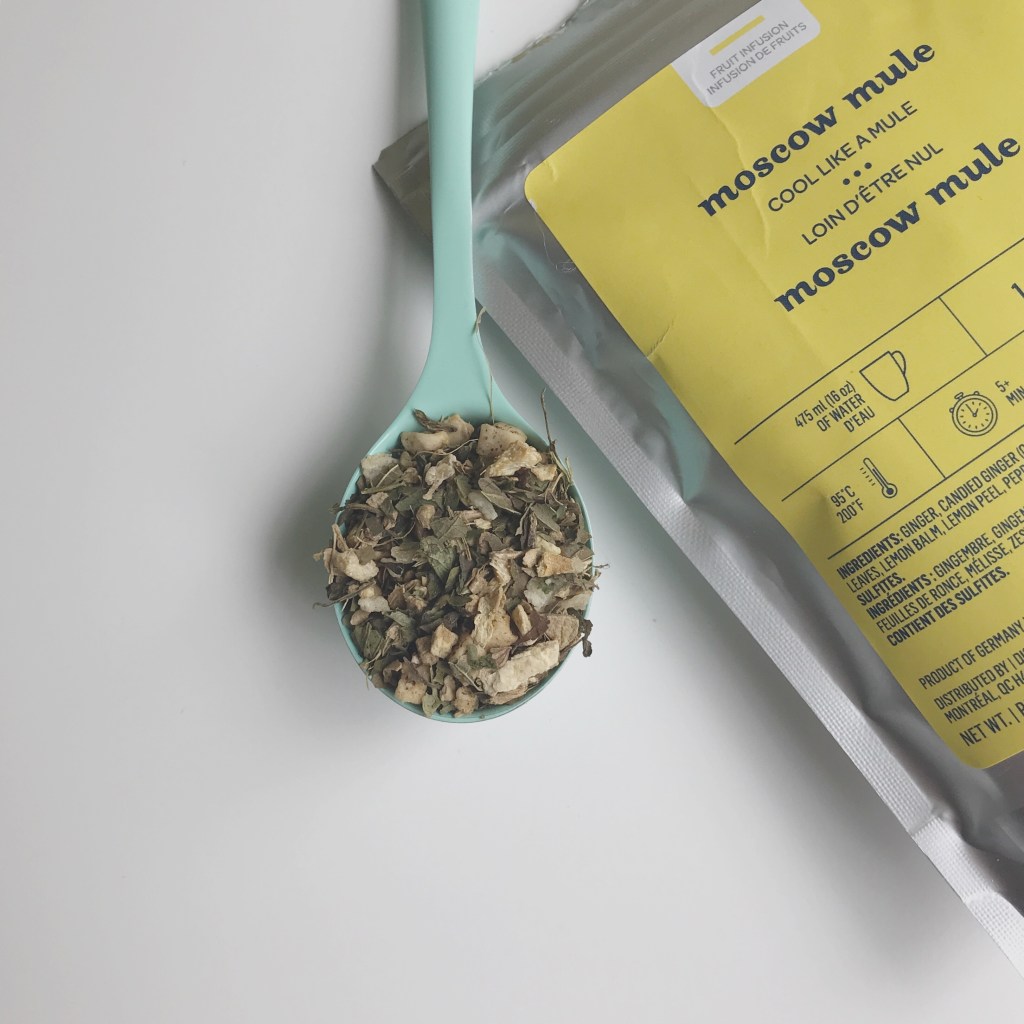
    Despite my previous experience with cocktail inspired teas though, when I saw DavidsTea added Moscow Mule to their collection this year, I knew I had to try it. Moscow Mule tea from DavidsTea is a blend of Ginger, Candied ginger, Apple, Sweet blackberry leaves, Lemon balm, Lemon peel, Peppermint, Cucumber, and Natural flavouring.

    The dominant scent of the blend is ginger and lemon peel, and the peppermint adds a menthol affect that leaves your nose feeling cool after you inhale. The flavor of this blend is quite similar to the scent too. The first flavor that hits you is the spicy, aromatic ginger. This is followed up with lemon that leans toward bitter, then refreshing cucumber. I think the peppermint is supposed to be a refreshing minty aftertaste, but it’s kind of muddled against the ginger and lemon and takes on what I can only describe is the taste of alcohol. Oddly, it works for me.

    As for whether this stays true to the cocktail or not, that’s another story. Every Moscow Mule I’ve had is a mix of ginger beer, vodka, and lime juice, so I’m unsure where the lemon, peppermint, and cucumber comes from. I still think fans of the Moscow Mule can appreciate this one.

    I recommend drinking this tea iced or cold brewed, and it doesn’t need any sugar because it’s already plenty sweet. I might even suggest topping it off with some ginger beer for extra fizzy fun.

    Have you ever had cocktail inspired teas before?

  • Earl Grey Supreme from Harney & Sons

    Earl Grey Supreme from Harney & Sons

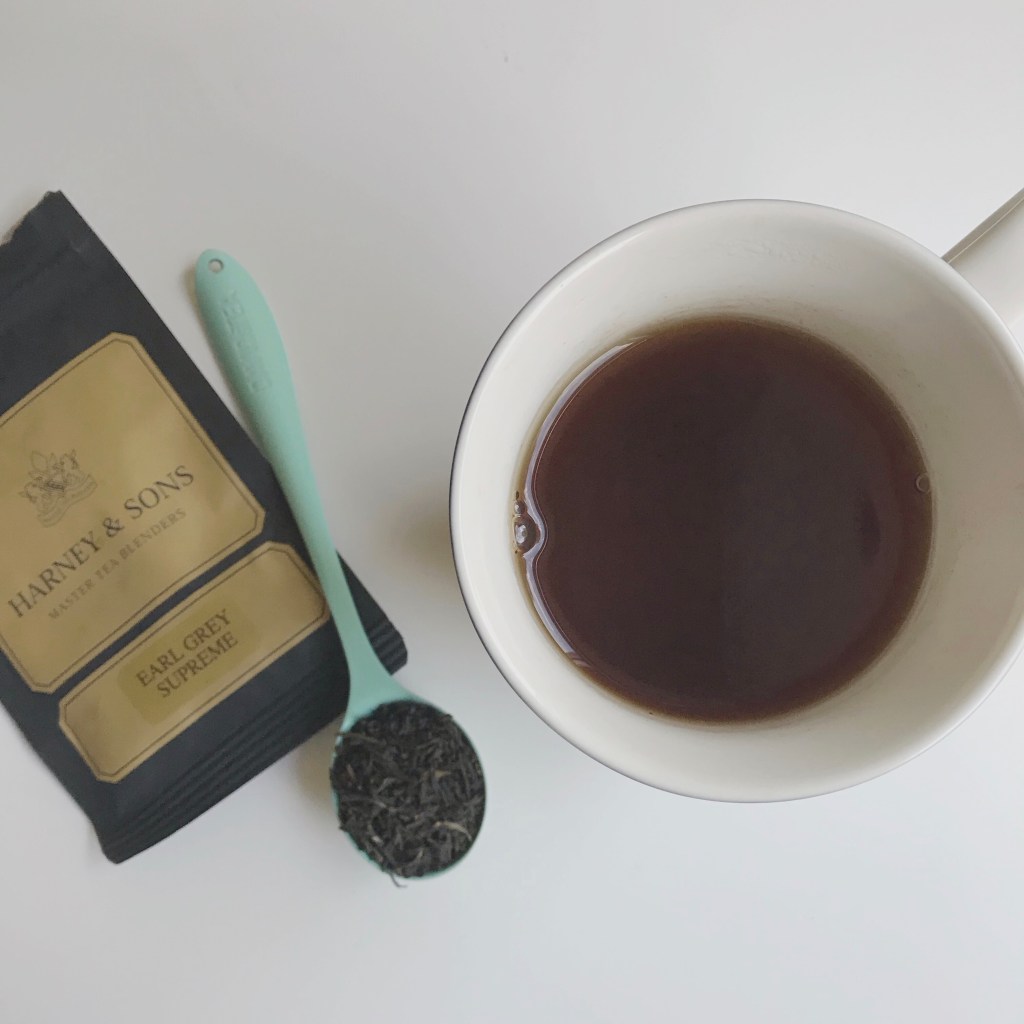
    I associate Earl Grey tea with the Autumn and Winter months. With mornings when I wake up before the sun, where there is a cold nip in the air, and the clouds hang heavy in the sky. We have had plenty of Earl Grey mornings lately even though it’s only the beginning of September and still technically summer. Is it just me, or does it seem like Autumn is rolling in early this year? You won’t find any complaints about that here; I live for Autumn! Plus, it just means I get to break out my Earl Grey a little earlier. The first Earl Grey of the season was Earl Grey Supreme from Harney & Sons.

    (more…)

  • Back to Hogwarts with THE BOY WHO…tea from Adagio Teas

    Back to Hogwarts with THE BOY WHO…tea from Adagio Teas

    It’s September 1st, which means the Hogwarts Express departed without fail from Platform Nine and Three Quarters today. I can’t help but reflect on how this magical story has been in my life for TWENTY years, now. I never could have suspected the impact this series would have on me the day I pulled this book* randomly from one of the shelves at Walden Books. I held it in my hands, staring at the artwork almost debating whether to spend my allowance money on it or not. A mother passed by me, and seeing the book in my hands, told me the book I held was an incredible story. That was enough to convince me to bring it home with me, so thank you Random Mother who convinced me to buy Harry Potter back in 1999.

    *This book actually being Harry Potter and the Chamber of Secrets. My experience with book series back then was the Boxcar Children, Fear Street novels, and the Time Warp Trio. I had no idea there were series that were meant to be read in order!

    Today couldn’t be a more perfect Back-to-Hogwarts day here in Michigan either; 67 degrees, overcast, and occasionally drizzly. The perfect day to cozy up and enjoy the Harry Potter marathon on television while sipping THE BOY WHO…tea from Adagio Teas. THE BOY WHO… tea is one of the fandom teas blended by Cara McGee. It is a blend of Black Tea, Ginger, Cloves, Cardamom, Cinnamon, Natural Pumpkin Spice Flavor, Natural Caramel Flavor, Marigold Flowers & Natural Cinnamon Flavor.

    I can easily see black tea leaves, ginger pieces, cinnamon pieces, and cloves. I don’t see cardamom as I expected despite it being high on the ingredient list. The dry tea smells warm and inviting and most prominently of clove and cardamom.

    I brewed this tea a little differently this time. Typically, I would steep the tea leaves in hot water and then add milk and sugar, but this time I steeped the tea leaves directly in milk. I put two teaspoons of tea into one cup of milk in a saucepan, brought it to a boil, and then steeped for about 3-4 minutes. I added sugar to taste.

    I find that this tea isn’t as spicy as one would expect considering the ingredient list, and I’ve steeped it both in water and in milk. That being said, I still find this blend enjoyable and appropriate for Autumn. The black tea and the pumpkin flavor were the most prominent flavors, followed by cardamom and ginger. I much prefer steeping this tea in milk (as opposed to steeping in water and then adding milk). It adds a creaminess and mouthfeel that cannot be achieved if this tea were to be steeped in water. It has me reconsidering how I steep any of my spiced chais.

    Already tried THE BOY WHO…tea? Check out these other tasTEA recommendations:

    If you love Harry Potter, what is your favorite book from the series? For me, it’s hard to choose. It’s a toss-up between books 1, 3, and 5! It’s possible I love those three equally, albeit for different reasons.

  • Dragon Fruit Dream from Adagio Teas [Cold Brew]

    Dragon Fruit Dream from Adagio Teas [Cold Brew]

    I said I wanted to sip more iced tea this summer, but it is mid-August, summer is on its way out, and I haven’t sipped any more iced tea than usual. That’s why I’ve dubbed August as my unofficial iced tea month! I’m trying to indulge in all of the iced teas I meant to sip on all summer long, like Piña Colada from Adagio Teas and Moscow Mule from DavidsTea (the fact that those are both inspired by boozy cocktails is just coincidence).

    The first tea I wanted to share with you though is Dragon Fruit Dream from Adagio Teas. It’s everything I wanted in an iced tea this summer!

    Dragon Fruit Dream is a blend of apple pieces, rose hips, hibiscus, lemon verbena, orange, dragon fruit flavor, dragon fruit, pineapple pieces, strawberries, marigold flowers, and rose petals.

    I cold steeped my Dragon Fruit Dream– 5 tsp. to about 12-16 oz of water for about 4 hours. It could certainly steep longer though; I left a second batch steeping for about three days, but I didn’t notice a major difference in flavor. I mentioned in my video that it steeps up to the color of a white wine, but I would like to amend that statement since I don’t think I had much hibiscus present in my scoops of tea. My second batch yielded a liquor that was more blush-like.

    I don’t actually know what dragon fruit tastes like. I have tried it before, but it may not have been ripe. I’ve read it’s supposed to be a mild kiwi flavor, but mine was tasteless. That being said, Dragon Fruit Dream from Adagio Teas was bursting with flavor! The predominate flavor was sweet candied pineapple, and it’s tartness was enhanced by the addition of the hibiscus and orange. In many of the iced teas I’ve tried this summer, the hibiscus overpowered all the ingredients, but it was actually nicely balanced in this tea. Finally, there were some light floral finishing notes. I should also add, this tea doesn’t need additional sugar; it’s already (perfectly) sweet because of the fruit pieces.

    Dragon Fruit Dream is the iced tea I wish I would have tasted at the beginning of summer. It’s tropical-fruity, sweet, and oh-so-refreshing. It’s a perfect drink to share with friends at a Barbecue or pool party.

    If you like Dragon Fruit Dream, check out these tasTEA recommendations:

  • Jasmine Pearls from Adagio Teas

    Jasmine Pearls from Adagio Teas

    I have searched for a tea tasting journal for the past few years, but I never found exactly what I was looking for; so, I have been writing in whatever journal I had sitting around. Notes are scattered throughout four different journals, which are now tucked under odd places, like the couch, in Oliver’s toy basket, under the bed– anywhere Oliver manages to fling them, really. Finally, I decided on a new home–a trusty, 98 cent Composition notebook, that I now keep well out of Oliver’s reach!

    Last weekend, I sipped Jasmine Pearls from Adagio Teas. I don’t know what made me grab this particular tea. It’s not one I typically drink, and it was only in my collection because it came in my Christmas advent calendar. I have avoided it because Oliver’s pediatrician mentioned jasmine teas (and mint teas) could have negative impacts on a nursing mother’s milk supply, but now that Oliver is eating solids foods as well now, I have become less restrictive.

    Aside from that, jasmine just isn’t a flavor I appreciate. I like some floral flavors, like rose, but I think jasmine can make tea taste like perfume or quite bitter. Still, I sipped on.

    The tea was dark green leaves, scented with jasmine, and they were wound tightly into little balls reminiscent of a pearl. They came in a tea bag, though the Jasmine Phoenix Dragon Pearls seem comparable if you want a loose leaf variety. I decided to cut open the tea bag, so I could brew the pearls loose, and what a smart decision that was because these pearls unfurled into full, big tea leaves that could be steeped multiple times.

    The initial steep had the most prominent jasmine flavor followed by a slight sweetness from the green tea. The following steeps lost the sweetness from green tea, but the jasmine seemed to mellow. Overall, I thought this tea had a nice, balanced flavor– never perfume-like and never bitter. I steeped this three times, but I think I could have steeped this a fourth and possibly even a fifth, which surprised me considering this started in a teabag!

    Where do you record your tea tasting notes? Do you keep a pen and paper journal, or do you record everything digitally?

    Looking for teas with floral notes? Check out these tasTEA recommendations:

  • Celebrating 31 with Birthday Tea!

    Celebrating 31 with Birthday Tea!

    I’m starting my 31st birthday off with a cup of Birthday Tea from Adagio Teas. This super special blend of black tea, caramel flavoring, sugar sprinkles, vanilla flavoring, and Creme flavoring is a treat I look forward to every year. It’s not available for sale on the Adagio Teas website; they simply slide a sample pack into your shipment if you order during your birth month (and you already have an account with them).

    I love this tea sweetened because it tastes like just a like sweet birthday treat. The caramel, vanilla, and cream flavors compliment the black tea nicely.

    As for turning 31…well, it’s strange being IN my 30s, but I’m excited to find out what this year has in store for me. I want to make friendship, family, community, and my health a priority this year. Becoming part of the community where I live and finding friends is terrifying to me, and I don’t really know where to begin. But, I’m already off to a good start for health and family. I have a doctors appointment today (who schedules doctor appointments on their birthday?), and Jon, Oliver, and I are going to the fair tonight!

    Going to the fair is one of my birthday traditions (as well as drinking Birthday Tea). Do you have any birthday traditions?

    Looking for a dessert tea? Try these:

  • Té alla Rosa Bianca from Tea Fiori

    Té alla Rosa Bianca from Tea Fiori

    Shut the front door! Did Té alla Rosa Bianca from Tea Fiori just make me a fan of white tea?

    For years, I’ve avoided white tea. That’s not to say it hasn’t somehow managed to find its way into my collection throughout the years. It’s usually the flavored varieties that end up in my online shopping cart because I’m not paying attention. Or because I’ve convinced myself this time will be different. But the outcome is the same every time. I end up with a mug of tea that tastes just like hot water. Or a mug of tea that tastes like hot water and blueberries because I somehow get a new packet of White Blueberry from Adagio Teas every year.

    It leaves me wondering: is it the quality of my water? Is it the quality of the tea? Am I more inept at brewing tea than I realize? Did I assault my tastebuds with strong, black coffee too much during college that I am unable to pick up the delicate aromas in white tea? Is it an unlucky combination of all four?

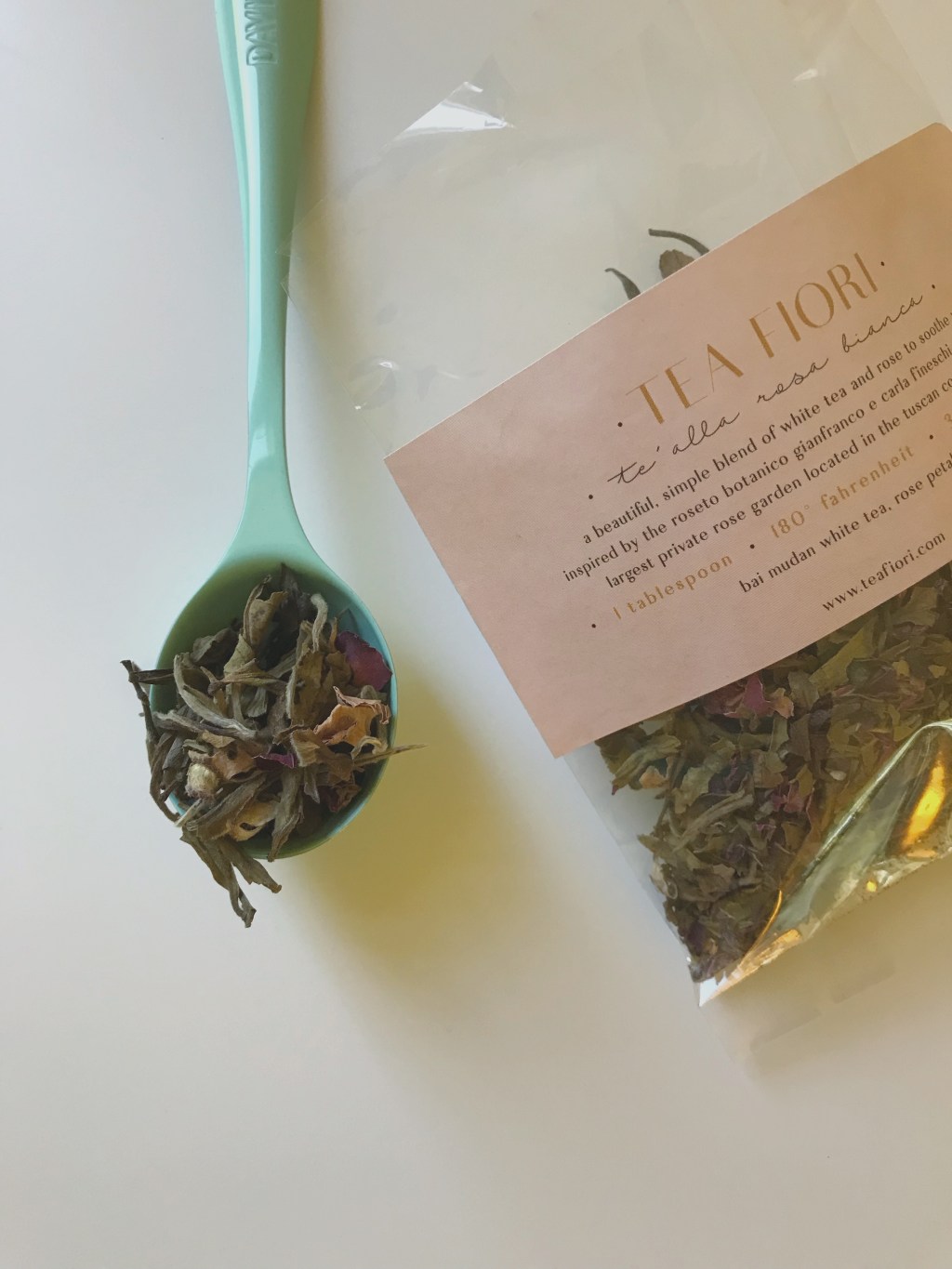
    Té alla Rosa Bianca is a simple blend of organic Bai Mudan White Tea and organic rose petals and buds. The appearance of the tea is as lovely as the scent of the dried tea, which was of sweet rose.

    When I first tried Té alla Rosa Bianca, I drank it hot, following the directions on the packaging very carefully– 1 tbsp of tea, 180 degrees, 3 minutes. However, I wasn’t impressed. The overall flavor seemed to be peppery hot water with an ambiguous floral aroma that I had to search for. I prepared this tea the same way two more times almost willing myself to love it, but the results remained the same.

    Everything changed when I decided to cold brew the remainder of my sample though.

    I didn’t note how much leaf to water ratio for my cold brew. I don’t even remember how long I let it steep, but if I had to guess, it was around 4 hours. Honestly? I was so intent to use up the rest of the tea that I just dumped it in a mug and called it a day.

    But oh…what a beautiful cold brew this tea made. The first flavor to surface was a delicate, peppery flavor, and it was soon followed by refreshing cucumber and sweet summertime rose. It conjured up images of lush perennial gardens, sunshine peeking through cozy cottage windows, and afternoon tea. And I swear, the theme song to the Great British Bake-Off could be heard somewhere in the distance.

    Never before have I been so delighted to have sipped on a white tea. This very experience has completely challenged my reluctance to drink it, and I am suddenly filled with the desire to explore this type of tea that I’ve long neglected! (After I sip down my collection that is already bursting at the seams, that is).

    I must know! What are your favorite white teas?