Winter is officially here! Although, the weekly forecast might have you wondering if Jack Frost is taking a vacation this year. I can’t believe it was in the 50s on Christmas day here in Michigan! Normally, I love freezing temperatures and plush snowbanks, especially now that I don’t have to drive in inclement weather. It used to give me a purpose for embracing my inner hermit, but now that Oliver is a rambunctious toddler, I find we are going stir crazy from staying cooped up in the house. So, when thermometers rose into the 50s, Oliver and I made our great escape and walked to the library to read about winter instead. Here are five picture books about winter we are reading this week:
Goodbye Autumn, Hello Winter by Kenard Pak
Follow a brother and sister as they walk to town, conversing with nature and greeting the signs of the approaching winter. Pak’s illustrations are dreamy and somehow capture the quiet muffled sounds snow makes. I adore this story!
Little brother, Sam, experiences his first snowstorm, and older sister, Stella, delights in answering his many questions about the transformed landscape while showing him how to best enjoy a snowy day. Whimsical watercolor illustrations capture the wonder and imagination of the two siblings.
I couldn’t resist sharing this favorite from my own childhood. An adaptation of a Ukranian folktale, the Mitten tells the story of white mitten lost in the snow, and all the woodland animals that burrow inside to make it their new home. The illustrations are rich in detail, and I remember poring over them when I was younger.
Could any wintertime picture book list be complete without this Caldecott Medal-winning classic? The Snowy Day follows Peter, full of wonder, as he explores his city, which has been transformed by a blanket of snow.
The Twelve Days of Winter by Deborah Lee Rose, Illustrated by Carey F. Armstrong-Ellis
My son, Oliver, hasn’t started school yet, nor am I a good singer, but that doesn’t interfere with his LOVE of this book. Following the format of the song, the Twelve Days of Christmas, the Twelve Days of Winter captures the passion for learning (and the chaos too) of an elementary classroom as students participate in wintertime activities. The illustrations are rich in detail and personality and beg to be explored by young readers!
Fact: Motherhood has ruined me, and I started listening to Christmas songs on November 1st. I think our Christmas tree went up the following week. In lieu of homemade Christmas cookies, because Oliver has an egg allergy, I stirred up a batch of rice crispy treats in which I dyed the marshmallow fluff green and red. And, I think I have watched a Christmas movie every other day since the beginning of December. So, of course, I couldn’t resist borrowing picture books from the library to keep Oliver and me in the Christmas Spirit. Here are five picture books about Christmas we are reading this week:
The Knights Before Christmas by Joan Holub, illustrated by Scott Magoon
The Knights Before Christmas is a parody of the Christmas poem, The Night Before Christmas, in which three knights, one brave, one polite, and one silent, protect their keep from one jolly intruder.
The Christmas Quiet Book by Deborah Underwood, illustrated by Renata Liwska
Simple sentences and soft color pencil drawings of charming woodland creatures capture the quieter side of holidays usually filled with Christmas carols and jingling sleigh bells.
Dinosaur Christmas by Jerry Pallotta, illustrated by Howard McWilliam
Have you ever wondered who pulled Santa’s sleigh before the reindeer? Well, the answer is dinosaurs. Dinosaur Christmas explores the different dinosaurs that once pulled Santa’s sleigh and the silly reasons why that did not work out well.
The Biggest Smallest Christmas Present by By Harriet Muncaster
Clementine is a teeny-tiny little girl, who fits in the palm of her parents’ hand. Being tiny is mostly fun, but for Christmas, she always receives giant gifts. She tries to creatively communicate with Santa that the gifts are too big but learns gratitude along the way.
Curiosity leads Slipper the cat to the North Pole after meeting Mr. Furryboots (aka Santa). He enjoys exploring Santa’s workshop but quickly finds himself feeling homesick.
Years ago, I read Just Listen by Sarah Dessen, and what I remember most about it is how mediocre I thought the story was, and after reading through summaries of her other novels, largely formulaic:
Girl experiences some kind of hardship and withdraws from the world
Girl falls in with a new crowd
Girl meets a handsome teenage boy and starts to feel human again
Girl and boy have a misunderstanding and experience a falling out
Girl and boy makeup at the end and live happily ever after
So, considering my previous experience with this author, it’s strange that by the end of my first library visit in months, one of the books I borrowed was The Truth About Forever by Sarah Dessen. And even more surprising? I devoured the book in just a few sittings.
I appreciated reading about Macy’s journey. She is grieving the loss of her father and with the help of her boyfriend, Jason, she has established a very strict routine. One that includes working at the library information desk, studying for the SAT, and ironing and starching her clothes to perfection. It helps keep her mind from dwelling on her father’s death, and it shows people that she’s carrying on with life and everything is fine, just fine. But, her routine is threatened when her boyfriend goes away to Brain Camp. And worse, he wants to take a break so he can focus on his future.
Then comes along a new job opportunity and a group of new and ragtag co-workers, who turn her life even more topsy-turvy. They draw her out of her shell, they introduce her to the chaos and imperfections of catering and high school parties, and most importantly, they allow her the opportunity to be vulnerable without judgment— a stark contrast to her boyfriend.
But, while enjoyable, The Truth About Forever doesn’t deviate far from the plot structure outlined above. The Truth About Forever doesn’t introduce anything new to Contemporary YA. It doesn’t even attempt to put a clever twist on any of the genre tropes. But, I don’t think that’s why people reach for novels by Sarah Dessen. Dessen has been around for a while. A long while. Like, she was writing YA back when I was… YA. She’s a constant in this genre, so many people reach for her novels for the comfort of likable characters, the familiar summertime settings in North Carolina, specifically the fictional town of Colby, and a plot that is…well, predictable— one where despite all the hardships, all the characters end up okay at the end. At least, that’s why I reached for The Truth About Forever; and that’s why I’m inclined to continue picking up other books by Dessen in the future.
The Tea
The Truth About Forever takes place during the summertime in the south, and only one thing comes to mind— sweet, iced tea! Stereotypically Lipton, sweet iced tea, but I’m choosing Ceylon Sonata Cold Brew from Adagio Teas instead. Adagio’s Ceylon Sonata is a black tea that comes from the Kenilworth Estate in Sri Lanka. It is a medium-bodied, black tea with bright citrus notes.
It’s balanced and refreshing, and it’s one of those teas that makes me break my no-caffeine-after-3PM bans because it’s so, so good. This is exactly the kind of iced tea I think the characters in Dessen’s fictional town of Colby, North Carolina would sip on during summer vacations.
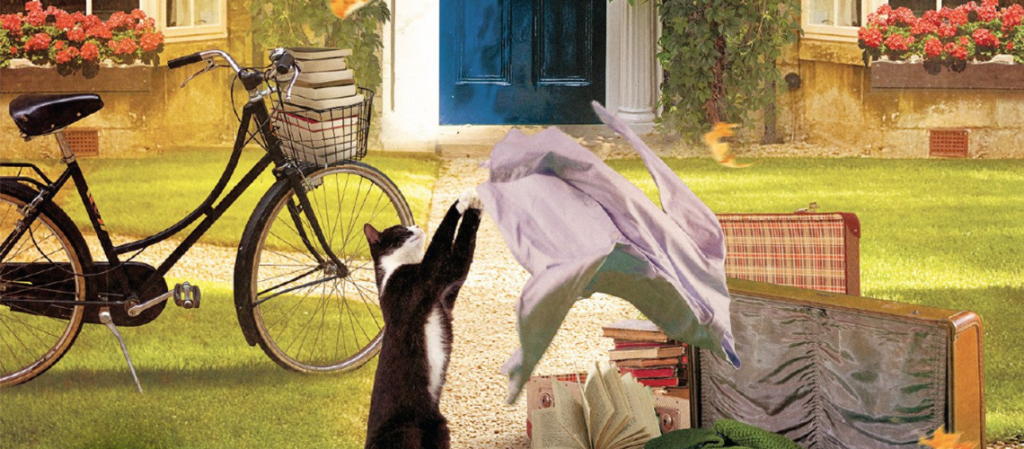
There is something so delightfully tacky about the book covers for cozy mystery novels. I especially love the book covers that have a beautifully illustrated background but then have other elements from the novel (say, books, a cat, a bicycle) photoshopped in from what I assume are stock photographs. They remind me of the hidden object games I became obsessed with my final year at college when I was avoiding attending my business law lectures. The textures seem a little off, but I find the book covers endearing and comforting, and this is probably why I couldn’t resist purchasing a copy of Murder in the Mystery Suite by Ellery Adams. Either that or it was the cat on the cover. I’m 100% more likely to pick up your cozy mystery novel if there is a cat on the cover as demonstrated here, here, here, here, here, and here.
Murder in the Mystery Suite (A Book Retreat Mystery, #1) by Ellery Adams
Tucked away in the rolling hills of rural western Virginia is the storybook resort of Storyton Hall, catering to book lovers who want to get away from it all. To increase her number of bookings, resort manager Jane Steward has decided to host a Murder and Mayhem week so that fans of the mystery genre can gather together for some role-playing and fantasy crime solving.
But when the winner of the scavenger hunt, Felix Hampden, is found dead in the Mystery Suite, and the valuable book he won as his prize is missing, Jane realizes one of her guests is an actual murderer. Amid a resort full of fake detectives, Jane is bound and determined to find a real-life killer. There’s no room for error as Jane tries to unlock this mystery before another vacancy opens up…
It’s easy for cozy mysteries to become formulaic. Typically, the main character is a female, who is thrown out in to the world on her own after a recent divorce/break up with her boyfriend/death of her husband. She’s still getting used to life on her own, but luckily she has been able to turn her hobby into a career, so she has a distraction as she navigates her grief. Then, someone dies in or around her business, and she’s thrust into a situation where she has to figure out whodunnit.
Also:
the female lead has a cat (or maybe a dog to appeal to those other readers)
a potential love interest is introduced
if the female lead is new in town, she may be a suspect in the murder mystery
the setting is usually a very small town, where all of the townsfolk have been able to turn their hobbies into careers too
the female lead probably lives in an old Victorian-style home
Murder in the Mystery Suite had several of those elements, but then Jane, our heroine, discovers a family secret hidden within the walls of Storyton Hall that sets this novel apart from the rest of the cozies. What I thought was going to be my typical cozy mystery ended up having more action and adventure than usual complete with secret agents, a little bit of espionage, hidden rooms, and blow dart guns. Murder in the Mystery Suite was probably one of the most thrilling cozies I’ve ever read!
There were some inconsistencies, like the fact that this story takes place in rural Virginia, but all of the characters seemed prim and proper; I kept thinking the story took place in England. Also, Storyton Hall is initially described as falling on hard times, and yet the resort was able to invest enough money for a week-long Murder & Mayhem themed program complete with costume parties, multi-course gourmet meals, and Rolls Royce town cars to pick up attendees. If readers can look past that, Murder in the Mystery Suite promises readers a fun and engaging whodunnit. Mystery novel nerds will especially love all of the literary references made throughout the story!
Overall, I enjoyed this novel, and I look forward to picking up the second book in this series, Murder in the Paperback Parlor, in which Jane plans a romance novel themed week for Valentine’s Day.
Everything, Everything by Nicola Yoon is one of those books that have been on my TBR list for ages, but I couldn’t remember why. That happens you know – forgetting why I put a book on my wish list? Or that I even put a book on my wish list at all. That started happening once I became a book blogger. I get bombarded with book recommendations from other bloggers that sometimes I lose track. It’s especially bad because I’ve been a part of the book blogosphere since 2011, so that’s a lot of books that have made it onto my radar. Has that happened to you?
I will even admit I forget what Everything, Everything was about– just that it was a contemporary that was supposed to be an emotional read, and it came highly recommended. I didn’t even bother to read the synopsis when I bought it! I just saw that it was on sale, so in my cart it went.
Everything, Everything by Nicola Yoon
Released:September 2015 Publisher:Delacorte Books for Young Readers ★★★☆☆
My disease is as rare as it is famous. Basically, I’m allergic to the world. I don’t leave my house, have not left my house in seventeen years. The only people I ever see are my mom and my nurse, Carla.
But then one day, a moving truck arrives next door. I look out my window, and I see him. He’s tall, lean and wearing all black—black T-shirt, black jeans, black sneakers, and a black knit cap that covers his hair completely. He catches me looking and stares at me. I stare right back. His name is Olly.
Maybe we can’t predict the future, but we can predict some things. For example, I am certainly going to fall in love with Olly. It’s almost certainly going to be a disaster.
The Writing
The first thing that stood out to me was the formatting of the story. I thought I was going to dive into a heavy novel with beautiful and emotional prose, but instead Everything, Everything has short, two to three page chapters, and it includes some epistolary storytelling in the form of instant messages, emails, and homework assignments. The formatting was engaging and perhaps an effective way to show how isolated Madeline was. Through her e-mails and instant messages, readers catch a glimpse of what is inside her head while also seeing how she tries to connect with the people around her though limited those opportunities they may be. The formatting also happened to be the story’s downfall. The story addressed some heavy subject matter like mental health, physical abuse, chronic illness, death, and isolation, that I wish was explored further in prose.
The Relationships
I appreciated the relationship between Madeline and her nurse, Carla, who seemed to treat Madeline as though she was a normal teenager despite growing up in a bubble. This relationship feels more like a mother/daughter relationship compared to the relationship Madeline has with her own mother. There is conflict and some bickering between Madeline and Carla as Madeline tries to push her boundaries. But of course, the two love each other, and that comes through too.
Her relationship with her mom, on the other hand, seemed sterile and a touch unrealistic. The two get along too well, and the two don’t seem to have a history of conflict despite being cooped up with each other for so long.
The fast-paced relationship between Madeline and Olly, the dreamy boy next-door, also seemed unrealistic. I liked the bond the two formed. And despite Olly’s bad-boy appearance, he was kind and gentle and fun. But, their relationship seemed to move too fast considering how limited their interactions were. And Madeline seemed incredibly mature about everything despite her lack of socialization with people her age. She would probably argue that it’s because she’s read so many books. But, I don’t care how well-read someone is– relating to other teenagers, especially when hormones are buzzing, is easier said read than done!
The Twist
The plot twist left me wanting more. Although, to call it a twist is inaccurate (for me). I wasn’t surprised the story took the turn that it did. I already had my suspicions after reading the first few pages.
After the twist was revealed, I thought “Oooh! Here is where things get juicy!” But there was no juice, and I was left feeling thirsty. The plot twist opened up more opportunity for conflict between Madeline and her mom, but the story didn’t go there. Madeline…just sort of ignores her mom and continues on with life, and the ending just sort of fizzled along.
Overall I appreciated Everything, Everything. The characters were likable, and the plot, though predictable, was new and refreshing (or, at least I haven’t read anything like it). The blend of prose and Epistolary storytelling made for an engaging and quick read– perfect for cluster feeding nursing sessions at two in the morning– but I don’t think the formatting allowed the reader to explore some of the heavier themes beyond the surface.
Dark Companion by Marta Acosta is book #2 in my READ ALL THE LIBRARY BOOKS challenge, and like my initial reaction to Sign Language by Amy Ackley, when I pulled Dark Companion from the shelf, I was once again disappointed. In fact, I hadn’t even openly declared that I was trying to read all of the books in the YA section of my library at this point, so I almost gave up on the project in that moment. The book cover featured a young woman wearing a white gown in the middle of a spooky forest; between that image and the title, it screamed paranormal romance, which is a genre that has me hightailing it in the other direction faster than if it were a plate of brussels sprouts.
I chose to persevere though, and in the end…I’ll still run from paranormal romance faster than if it were a plate of brussels sprouts.
Dark Companion by Marta Acosta
Released: July 2013
Publisher: Tor/Macmillan ★★☆☆☆ Add to Goodreads
Orphaned at the age of six, Jane Williams has grown up in a series of foster homes, learning to survive in the shadows of life. Through hard work and determination, she manages to win a scholarship to the exclusive Birch Grove Academy. There, for the first time, Jane finds herself accepted by a group of friends. She even starts tutoring the headmistress’s gorgeous son, Lucien. Things seem too good to be true.
They are.
The more she learns about Birch Grove’s recent past, the more Jane comes to suspect that there is something sinister going on. Why did the wife of a popular teacher kill herself? What happened to the former scholarship student, whose place Jane took? Why does Lucien’s brother, Jack, seem to dislike her so much?
As Jane begins to piece together the answers to the puzzle, she must find out why she was brought to Birch Grove and what she would risk to stay there..because even the brightest people make terrible decisions when they are offered the things they desire most.
The Review
Admittedly, for the first half of the novel, I thought Dark Companion was going to be a solid, four-star kind of novel. I thought it was going to be the book that changed my mind about paranormal romance. So what if I thought the main character, Jane, was kind of uninspiring? So what if I thought Lucien and Jack, potential love interests, were worse than Edward Cullen (how?!)? It takes place at a friggin’ boarding school, which is one of my favorite settings ever! Plus, Acosta wrote one of my favorite secondary characters ever– Mary Violet (or MV). MV is hilarious and clever and vibrant, and all I wanted to do was read a book about her. Of course, there simply is no denying that Marta Acosta’s writing is beautiful either. She captured the atmosphere of a gothic novel so perfectly.
Yet the exclusive Birch Grove Academy has a dark, cult-like secret. One that I wasn’t on board with.
I thought Dark Companion was going to be a vampire novel because there are these subtle clues that some of the characters in the novel have a certain fascination with blood. They like their steaks rare (Did I say “rare”? I mean “basically raw”), and they practically start salivating when people get paper cuts. And yet, vampirism would have been preferred to the twist that was presented (even though I can’t stand vampires. Exhibit A. Exhibit B. Exhibit C.) A genetic disorder plagues Lucien and his family (who run Birch Grove), that makes them both incredibly pale and incredibly thirsty for blood. And Jane was invited to Birch Grove Academy because her blood is exactly what Lucien needs. When it is revealed to Jane that she was selected to be Lucien’s companion, she’s both freaked out because this means he will drink her blood, but also kind of thrilled because it means she gets to be with Lucien forever and she totally has the hots for him. Except, their relationship ends up being just as creepy as you think it will be. Lucien is overwhelmed by literal bloodlust, and he tries to seduce Jane every time he wants to feed. It boggled my mind that this novel was marketed as a YA novel, especially considering in a previous scene, Jane returned to a friend in the slums and learned all about BDSM and “blood play”. All of this just made me feel so uncomfortable, and all I wanted to do was take a hot shower and scrub myself clean with a loofah made of steel wool. Ick.
Jane eventually comes to her senses and realizes this relationship is absolutely crazy and toxic and ends up falling for Jack, Lucien’s brother, instead. Neither of the love interests are particularly decent, but at least Jack doesn’t want to drink Jane’s bodily fluids.
Dark Companion was a disappointment, but I still find myself optimistic about this challenge. This is especially odd because the next book in line is Halo by Alexandra Adornetto, and I’ve intentionally avoided YA novels featuring angels as the main character. I’m not keen on innocent and pure main characters and forbidden love.Save
Sometimes I choose library books with reckless abandon. I choose them at random and hope for the best. For example, the moment I plucked Sign Language by Amy Ackley from the library stack…I was disappointed. The book cover seemed to indicate that the novel I held in my hands was going to be some generic contemporary YA novel. This is a genre I tend to avoid because I have a hard time relating to the characters, and sometimes I find their actions/reactions to be unbelievable. However, Fangirl by Rainbow Rowell and Open Road Summer by Emery Lord are exceptions; I adored these two novels. On top of that, Sign Language dealt with a topic that I wasn’t entirely sure I was prepared to read about because I was already dealing with it in my own life– grief and a parent battling cancer. I did struggle to immerse myself into the novel at first, but by the end I found Sign Language to be wonderfully written and emotional story.
I had a hard time getting absorbed into the story because I struggled to accept how Abby North, the main character, reacted to the news of her father’s cancer. At first, she wouldn’t call her father’s ailment what it was– cancer. It seemed like she was ignorant and unaware of what was happening, which didn’t make sense because twelve-year-old kids know what cancer is. Then I realized, this was her “denial stage”, and the author was essentially using the 5 steps of grief as framework for the novel. The moment when Abby finally acknowledges that her father has cancer, and it is terminal, changed everything for me. I recall reading this novel in bed at 2AM with a flashlight tucked under my chin, and I’m fairly confident I wept through the entire second half of the novel.
Aside from coping from the loss of her father, Abby still has to deal with everything else that comes with being a teenager– falling in love, a family that feels like it is falling apart, moving away, finding a place in the world. She feels lost, and she feels angry that her father is not around to guide her through adolescence. She doesn’t always make the best decisions, sometimes she pushes friends and family away, and every time, it felt like my heart was breaking for her.
Sign Language by Amy Ackley is a perfect example of why I wanted to challenge myself to READ ALL THE BOOKS. It’s a novel I would have ignored either because of something vain, like the book cover, or because I don’t often like contemporary fiction, but in a way, it’s a story that I needed to read.
(Also, fun fact, according to her bio, the author is a Michigan native, and she lives two towns over from where I live. What if I bumped into her at a restaurant and didn’t even realize?! NEAT!)
Twelve-year-old Abby North’s first hint that something is really wrong with her dad is how long it’s taking him to recover from what she thought was routine surgery. Soon, the thing she calls “It” has a real name: cancer. Before, her biggest concerns were her annoying brother, the crush unaware of her existence, and her changing feelings for her best friend, Spence, the boy across the street. Now, her mother cries in the shower, her father is exhausted, and nothing is normal anymore. Amy Ackley’s impressive debut is wrenching, heartbreaking, and utterly true.
I had a difficult time immersing myself in I Found You by Lisa Jewell, and I’m not entirely sure why. This novel had many characteristics that I appreciate. It was atmospheric. The writing was beautiful. It involved a mystery that I desperately wanted to solve. Yet, I started this book four separate times before finally reading all the way to the end.
What Jewell successfully created in I Found You is an atmospheric novel, rich with vivid imagery and an underlying sinister feeling that both entices readers to keep turning the pages while at the same time making them feel slightly squidgy about the story that is unfolding. And, for the most part, I think that’s what I was really sticking around for– the atmosphere and, yes, the squidginess, though that seems to be the case with most of the books I’ve been reading lately. Because honestly, I found the plot line to be somewhat predictable, the characters to be kind of unrealistic, and the pacing to be somewhat slow compared to the usual thriller. And, let’s be real– if a man suffering from amnesia shows up on my property during a rainstorm, I’m not inviting him to spend the night in my detached garage (even though the previous tenants were so thoughtful to leave behind their mildewy box spring); I’m calling 9-1-1 not only to get this guy medical attention but to report a missing person. And, God forbid he enters my home uninvited to toast my hypothetical daughter a bagel and watch cartoons with her! How did the protagonist, Alice Lake, find this totally acceptable and endearing when the average person would lose their mind?
Yet, despite my grief with the characters, part of what made this story so compelling is not just the alternation of narrators (between modern-day Alice Lake and Lily Monrose as well as the past’s Graham Ross), but also the alternation of timelines. While I’ve struggled with alternating timelines in the past, Jewell incorporates one that is not only intriguing but even blends the voices of the past and present together in a way that truly had me on the edge of my seat.
I Found You by Lisa Jewell
Released: June 2016 Genre: Mystery Age Group: Adult
In a windswept British seaside town, single mom Alice Lake finds a man sitting on the beach outside her house. He has no name, no jacket, and no idea how he got there. Against her better judgment, she invites him inside.
Meanwhile, in a suburb of London, twenty-one-year-old Lily Monrose has only been married for three weeks. When her new husband fails to come home from work one night she is left stranded in a new country where she knows no one. Then the police tell her that her husband never existed.
Twenty-three years earlier, Gray and Kirsty are teenagers on a summer holiday with their parents. Their annual trip to the quaint seaside town is passing by uneventfully until an enigmatic young man starts paying extra attention to Kirsty. Something about him makes Gray uncomfortable—and it’s not just that he’s playing the role of the protective older brother.
Two decades of secrets, a missing husband, and a man with no memory are at the heart of this brilliant new novel, filled with “beautiful writing, believable characters, pacey narrative, and dark secrets” (London Daily Mail) that make Lisa Jewell so beloved by audiences on both sides of the Atlantic.
This novel was provided for free from the publisher and TLC Book Tours in exchange for an honest review.
In kindergarten, I wanted to be either a tiger or a cowboy-girl. Throughout elementary school and high school, I wanted to be a teacher, a librarian, a writer, a publisher, an actress (despite my crippling fear of public speaking), a website designer, some unnamed profession that would allow me to afford a loft in a New York City high-rise and eat carry out every night because I didn’t want to cook or do dishes. In college, I had no idea what I wanted to be anymore. I think I still wanted to be a teacher, but I refused to admit it because it was the expectation whenever I told someone I was majoring in English. Maybe I wanted to be a technical writer. Maybe I wanted to be a translator. Maybe I wanted to do it all but couldn’t quite figure out how to make it work, which is why I wish How to Be Everything by Emilie Wapnick existed back then.
There is no hiding it. How to Be Everything is a “self-help” book, but it’s not the kind of “self-help” book that you would be embarrassed to admit that you read…and appreciated. It’s full of personality, positivity, brainstorming activities, and challenges to help you put your dreams in motion. The book also presents four different models to help you take control and design your ideal career path that embraces your multipotentiality. Currently, I follow the Einstein Approach; it’s the idea that, for those who require stability, a person chooses a day job that is “good enough” but provides the means to pursue interests after hours– I’m an accountant by day and a book blogger/avid reader/writer/amateur cook/gamer girl/superhero by night. I’d love to take the Slash Approach though, which could mean having 2…3…4 different jobs but all of them embracing a different aspect of a person’s multipotentiality.
How to Be Everything would make a great gift for someone entering college or someone entering the workforce for the first time because they’re just starting to design their lives and their careers. I would also say this book is great for anyone who feels dissatisfied in their job; maybe it will plant the seeds of change in a person’s life. For me personally though? I’m not sure How to Be Everything influenced my mode of thinking drastically; it was empowering though and validated what I already suspected about myself. At almost twenty-nine, I follow the Einstein Approach (unintentionally) for a reason. While I wish I could take the Slash Approach to my career, I’m not comfortable with the thought of throwing caution to the wind, sacrificing stability, and changing my career (anytime soon). I’m not sure what Jon and I would have to achieve before I felt comfortable stepping back from a job that is “good enough” to pursue a career path that satiates my curiosity and desire for creativity.
About Emilie Wapnick
Emilie Wapnick is a speaker, career coach, blogger, and community leader. She is the founder and creative director at Puttylike.com, where she helps multipotentialites integrate all of their interests to create dynamic, fulfilling, and fruitful careers and lives. Unable to settle on a single path, Emilie studied music, art, film production, and law, graduating from the Law Faculty at McGill University in 2011. Emilie is a TED speaker and has been featured in Fast Company, Forbes, The Financial Times, The Huffington Post, and Lifehacker. Her TED talk, “Why Some of Us Don’t Have One True Calling,” has been viewed over 3.5 million times, and has been translated into 36 languages. She has been hired as a guest speaker and workshop facilitator at universities, high schools, and organizations across the United States and internationally.
What do you want to be when you grow up? It’s a familiar question we’re all asked as kids. While seemingly harmless, the question has unintended consequences. It can make you feel like you need to choose one job, one passion, one thing to be about. Guess what? You don’t.
Having a lot of different interests, projects and curiosities doesn’t make you a “jack-of-all-trades, master of none.” Your endless curiosity doesn’t mean you are broken or flaky. What you are is a multipotentialite: someone with many interests and creative pursuits. And that is actually your biggest strength.
How to Be Everything helps you channel your diverse passions and skills to work for you. Based on her popular TED talk, “Why some of us don’t have one true calling”, Emilie Wapnick flips the script on conventional career advice. Instead of suggesting that you specialize, choose a niche or accumulate 10,000 hours of practice in a single area, Wapnick provides a practical framework for building a sustainable life around ALL of your passions.
This book was provided by the publisher in exchange for an honest review.
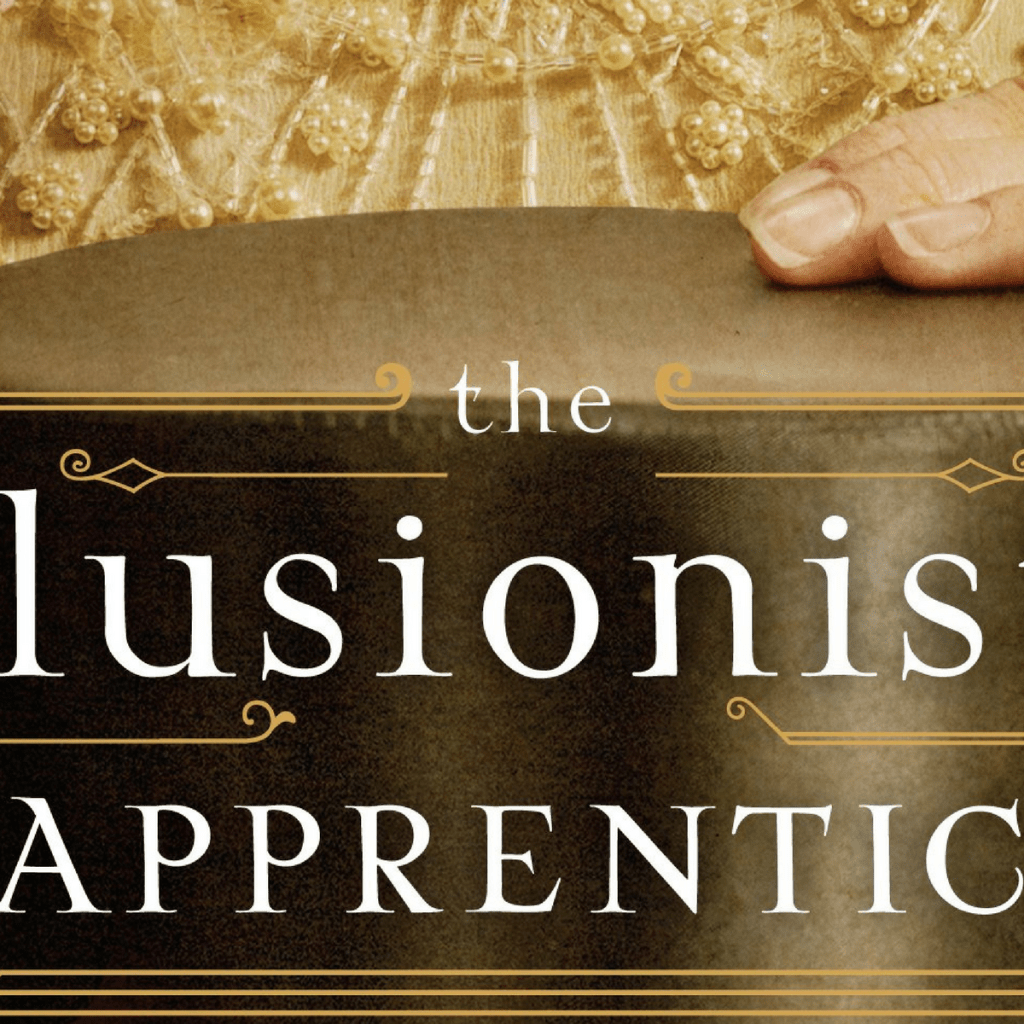
The Enemies of Versailles by Sally Christie is such a tough act to follow. Especially if the next book that is picked up is also of the historical fiction variety. How could anything even compare to a book that I’ve anticipated reading for months? Enter The Illusionist’s Apprentice by Kristy Cambron– a bit of a historical “whodunnit” set in 1927 Boston and on the Vaudeville stage. It had the ingredients to become an instant favorite, yet in the end, I just sort of felt like something was missing.
I think the thing that frustrated me the most about The Illusionist’s Apprentice is it’s one of those stories that bounce around the timeline. The story opens in 1926/1927 in Boston. Then, six chapters later, we’re back in 1907 to reveal some small insight into one of the characters. A few pages later, we’re back in 1927 only to bounce back to 1924 in the next chapter for some more character insight. And so on and so forth. Part of me can appreciate what the author was trying to do; there were so many details in the past that seemed unassuming at first, but they ended up being totally relevant to the end of the novel. My biggest qualm was…I just felt disoriented. And I don’t think it’s through any fault of the author or the story; I think I just prefer more linear storytelling. I struggled to keep track of the timeline in Linda Lafferty’s the Girl Who Fought Napoleon after all. That being said, I also felt…well…bored? The timeline shifts slowed the pacing of the story down, sure, but what really frustrated me was that I finally discovered a novel that boasts being written about the jazz age that doesn’t revolve around/involve flappers, and I kept getting stuck in Wren’s sad childhood in 1907.
What I was really sticking around for was Cambron’s writing and world-building. It was beautiful and atmospheric and full of intrigue both on and off stage. Plus, I was totally enamored by her choice to set the story against America’s Vaudeville scene, which is this jarring juxtaposition of gilt and grit and occasionally the grotesque. It’s a breeding ground for secrets and double lives and protagonist Wren Lockhart (illusionist, not magician) has them both; she’s a puzzle I wanted to unlock.
It also made me want to listen to nothing but dark cabaret music for about a week straight, so I’ll leave you with this:
Boston, 1926. Jenny “Wren” Lockhart is a bold eccentric—even for a female vaudevillian. As notorious for her inherited wealth and gentleman’s dress as she is for her unsavory upbringing in the back halls of a vaudeville theater, Wren lives in a world that challenges all manner of conventions.
In the months following Houdini’s death, Wren is drawn into a web of mystery surrounding a spiritualist by the name of Horace Stapleton, a man defamed by Houdini’s ardent debunking of fraudulent mystics in the years leading up to his death. But in a public illusion that goes terribly wrong, one man is dead and another stands charged with his murder. Though he’s known as one of her teacher’s greatest critics, Wren must decide to become the one thing she never wanted to be: Stapleton’s defender.
Forced to team up with the newly formed FBI, Wren races against time and an unknown enemy, all to prove the innocence of a hated man. In a world of illusion, of the vaudeville halls that showcase the flamboyant and the strange, Wren’s carefully constructed world threatens to collapse around her.
Layered with mystery, illusion, and the artistry of the Jazz Age’s bygone vaudeville era, The Illusionist’s Apprentice is a journey through love and loss and the underpinnings of faith on each life’s stage.
This novel was provided for free from the publisher and TLC Book Tours in exchange for an honest review.