• Alone Time and Yan Shan Mu Dan

    Alone Time and Yan Shan Mu Dan

    3 comments on Alone Time and Yan Shan Mu Dan

    Alone time is fleeting these days. I have been trying to find the time to write about a tea I tasted last Sunday morning, and I finally found it on a Thursday night after everyone else went to bed. I penned this post by cellphone light– the candlelight of 2020. Oliver snored beside me, raindrops pattered on windows, thunder rumbled across the sky, and lightning flashes brightened a dark room. It was a different atmosphere compared to last Sunday morning.

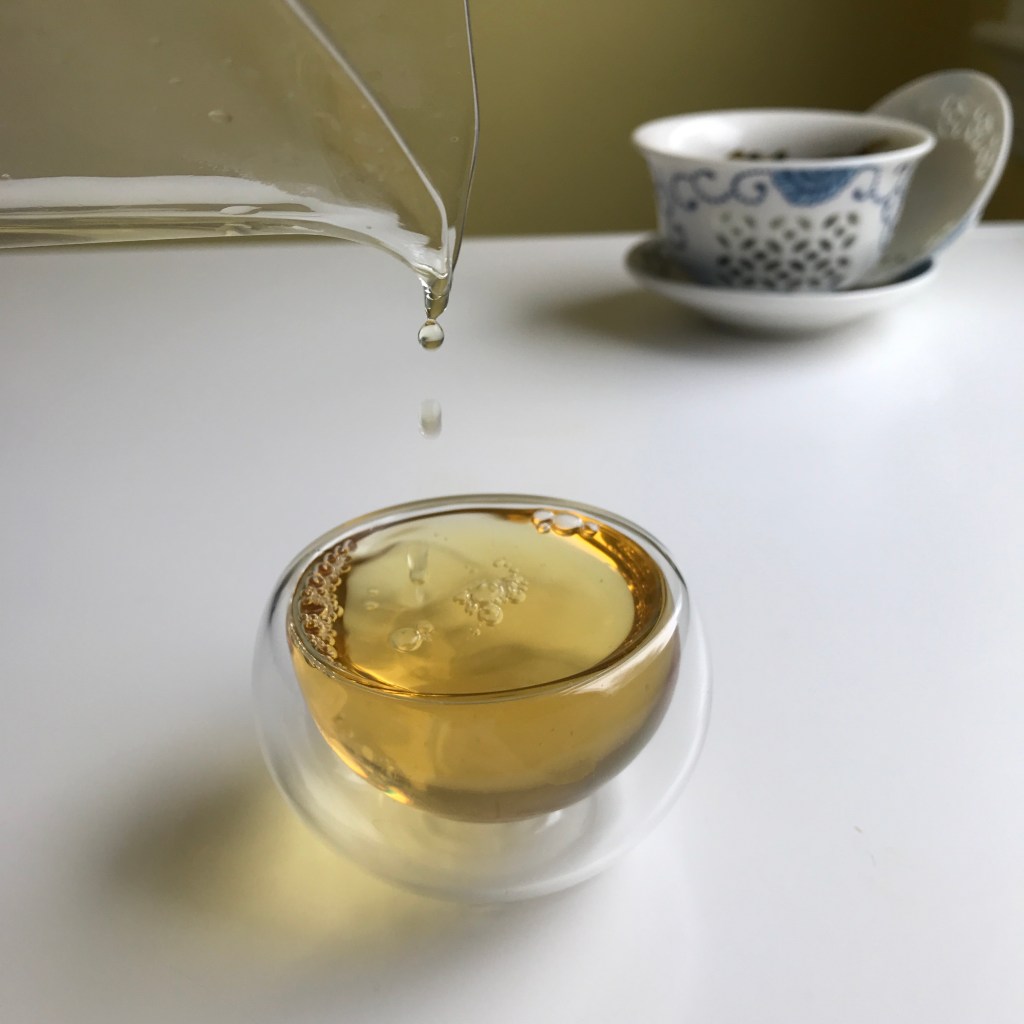
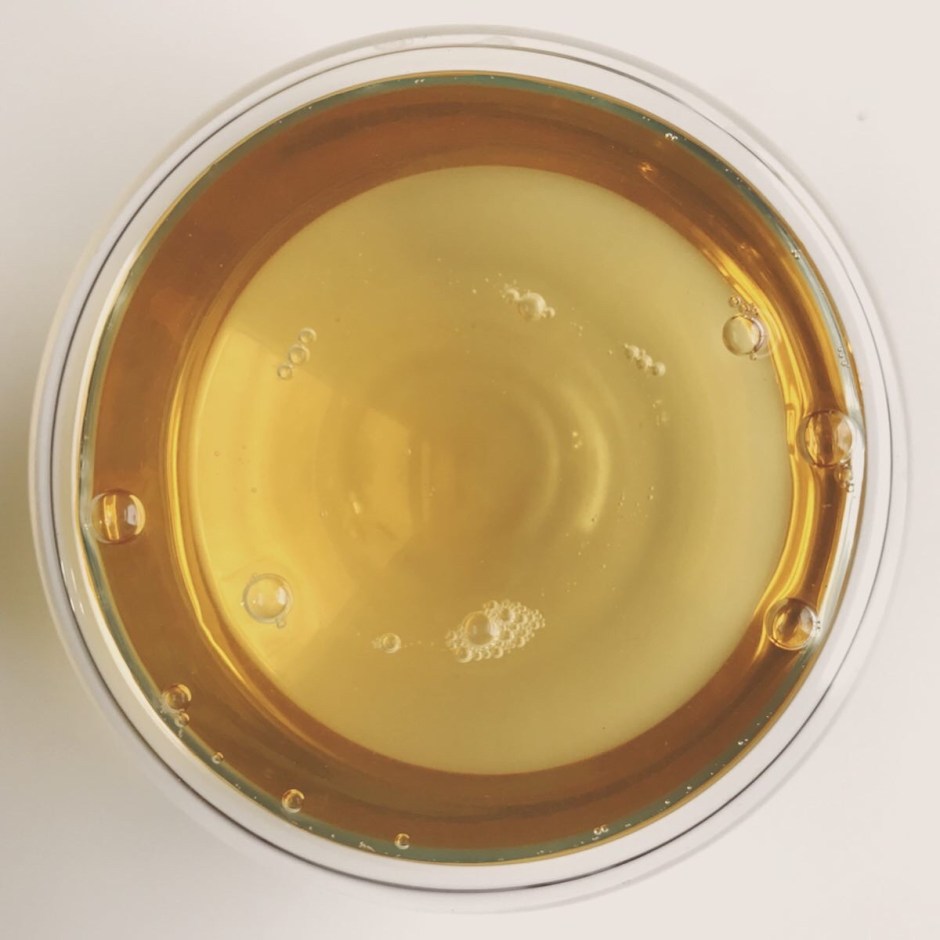
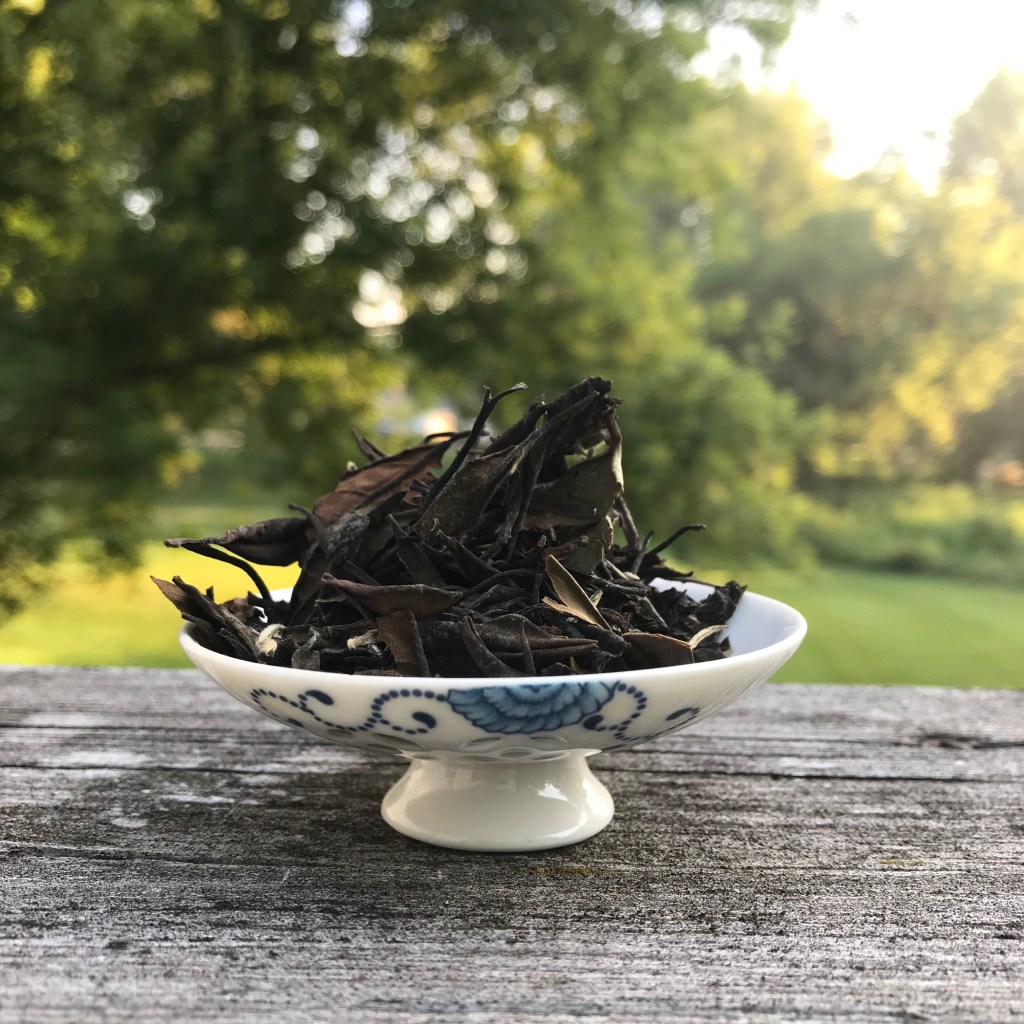
    Last Sunday, I finally decided to explore a 2015 Yan Shan Mu Dan from Old Ways Tea Co.. It was an aged white tea that came in my Countdown to Summer Box from Tea Thoughts. That morning, I allowed myself some quiet, guilt-free time alone on the back porch while an episode of Sesame Street distracted Oliver. It was barely 7:00 in the morning. The sun rose over dew-covered lawns, and fog hung heavy in the humid air. Or, maybe it was leftover smoke from the fireworks from the night before. The only sounds were birds chirping in the trees surrounding my home, the hum of a neighbor’s air conditioning unit, and the quiet clinks of porcelain as I gently shook tea leaves in a warm gaiwan. The cup of warmed leaves offered a sweet and smoky fragrance, and the lid smelled like overripe fruit. The tea leaves looked like Autumn leaves covering the forest floor– muddy brown, pale yellow, sage, and sometimes when the sun hit the underbelly of the leaf just right, red Georgia clay.
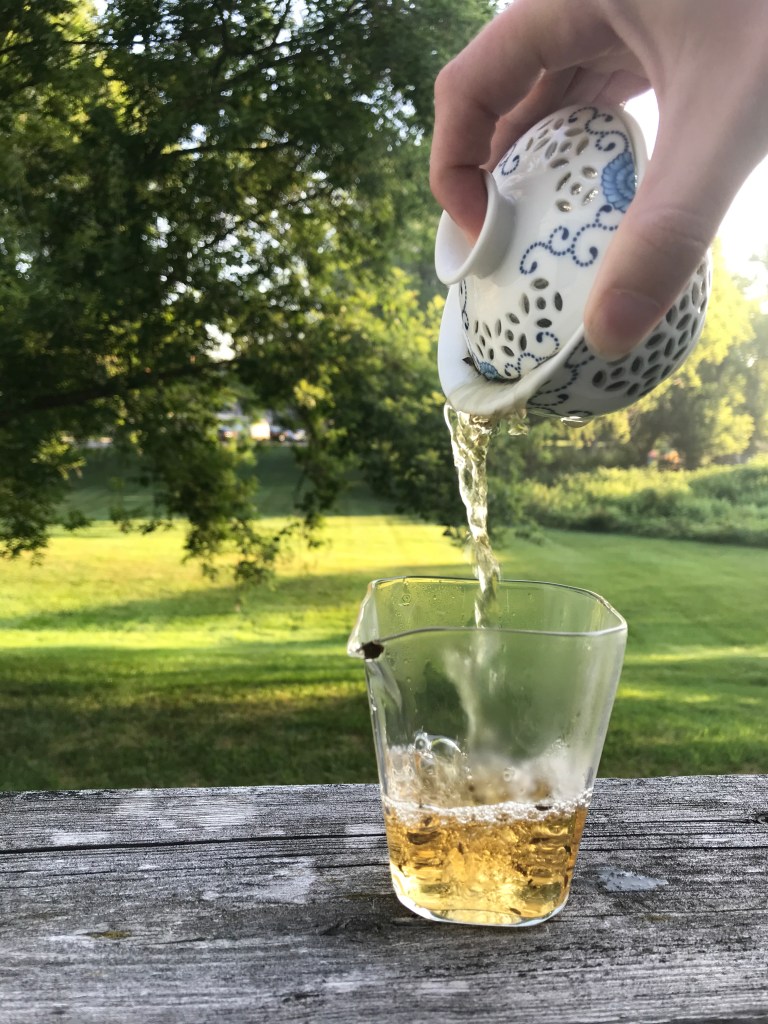
    As I began brewing the first infusion, I wondered why I was even engaging in any sort of pomp and circumstance with this tea. It is rare for me to drink white tea and taste anything other than peppery hot water, so I was surprised when I tasted faint barbecue smoke and something that is sweet, sour, and vegetal all at once– like chewing the ends of tall prairie grass. Infusion number two excited me even more as I noticed a fruit I could not quite name along with sweet and spicy cinnamon. Infusion three was melon rind, but the mouthfeel was thick and luscious like silk scarves. Infusion four was like a mild but smoky Lapsang Souchong. Infusion five is when everything married together into one perfect honeyed-plum and smoky-cinnamon sip, and it hit me like, “Oh! this is why people like white tea”.

    My tasting notes ended there because infusion six triggers a memory of my first apartment with Jon. In that memory, it is Autumn. It is always Autumn at that apartment even though Jon and I lived there for two years. It reminds me of Saturday mornings when Jon would be at work, and I would spend the morning picking out too many books at the library. I knew I would never read them all, but having a stack of new books close by always brought me comfort. Afterward, I would go to the grocery store and pick up soup and a deli sandwich for lunch. Then, I would go home, prepare a cup of tea, light a candle that smelled like caramel apples, and document my library loot because back then, this little space was a book blog called Books & Tea. Jon would meander in a short while later, crack open a Bell’s Two Hearted IPA, and sink into the couch to watch football, while I would cuddle down under blankets to read a cozy mystery novel.

    It was an unexpected memory. I still cannot figure out what fragrance or taste triggered it, but it was welcome nonetheless. And, the Yan Shan Mu Dan from Old Ways Tea gave me yet another positive experience with a white tea. It makes me feel optimistic about future white teas that my come into my collection.

    Have you been able to indulge in some rejuvenating alone time lately? Tell me about it in the comments!


  • I Failed Adagio’s communiTEA

    I Failed Adagio’s communiTEA

    No comments on I Failed Adagio’s communiTEA

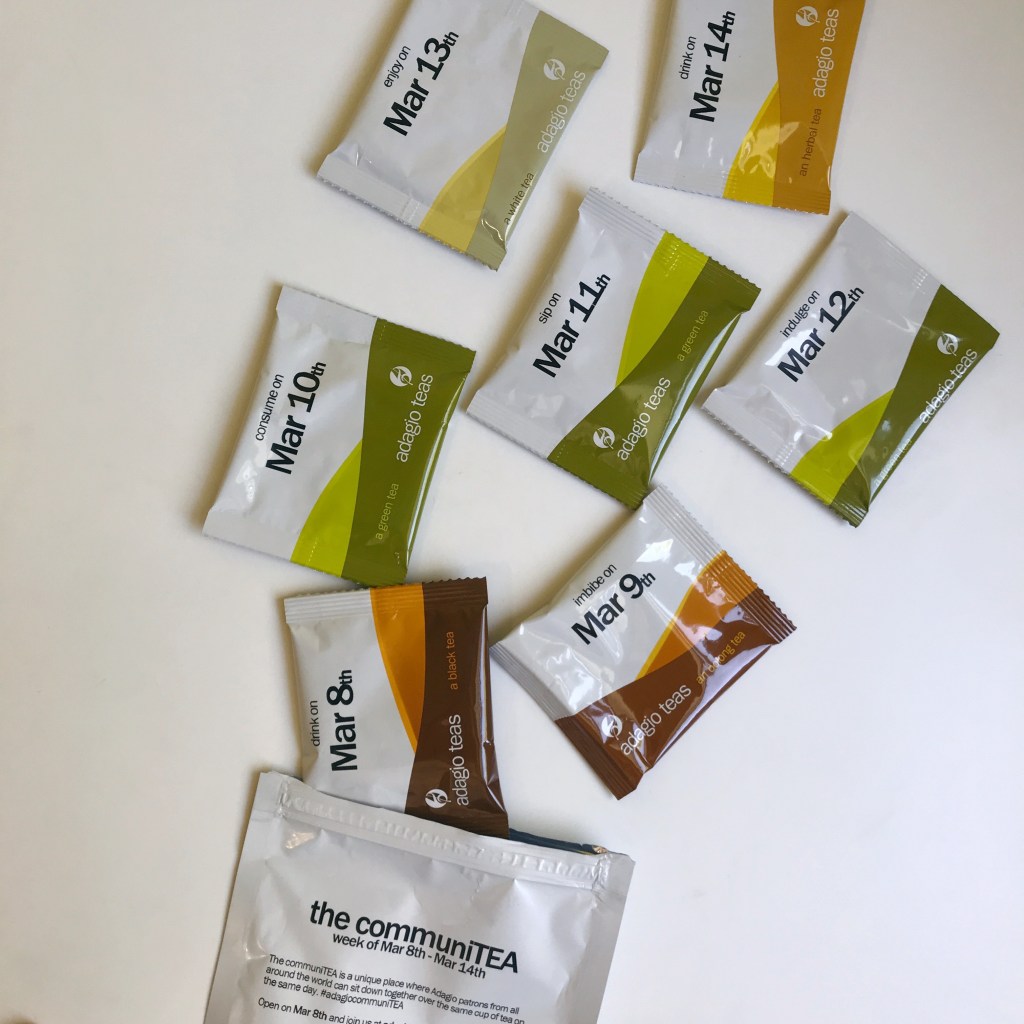
    While re-organizing my tea cabinet last week, I discovered a bag of communiTEA teas from Adagio Teas. It was dated the week of March 8th through March 14th, and each single-serving packet within was still sealed shut. I remembered I kept putting it aside with the intent to film YouTube videos or take Instagram glamour shots because if a tea is not showcased across social media, was it even consumed? The goal of the CommuniTEA is to bring people together over the same cup of tea on the same day, and I did not show up. I just never made the time for it.

    I’ve written and talked about how drinking tea is a lesson in being present and in mindfulness. Yet, I never address how it always seems to be at odds against my blogging and vlogging hobby and how both tend to take me out of the moment. I can’t begin to account for the times I’ve spilled tea all over the table because I was more focused on photographing the silhouette of tea pouring from a gaiwan. Or the times I struggled to get through advent calendars or countdown boxes timely because filming and editing videos is really time-consuming.

    And despite my awareness of this problem, instead of taking a few moments just to myself to enjoy a cup of tea…I spent the past two days binge-drinking communiTEA teas, taking pictures, and typing up this blog post. #NOREGRETS


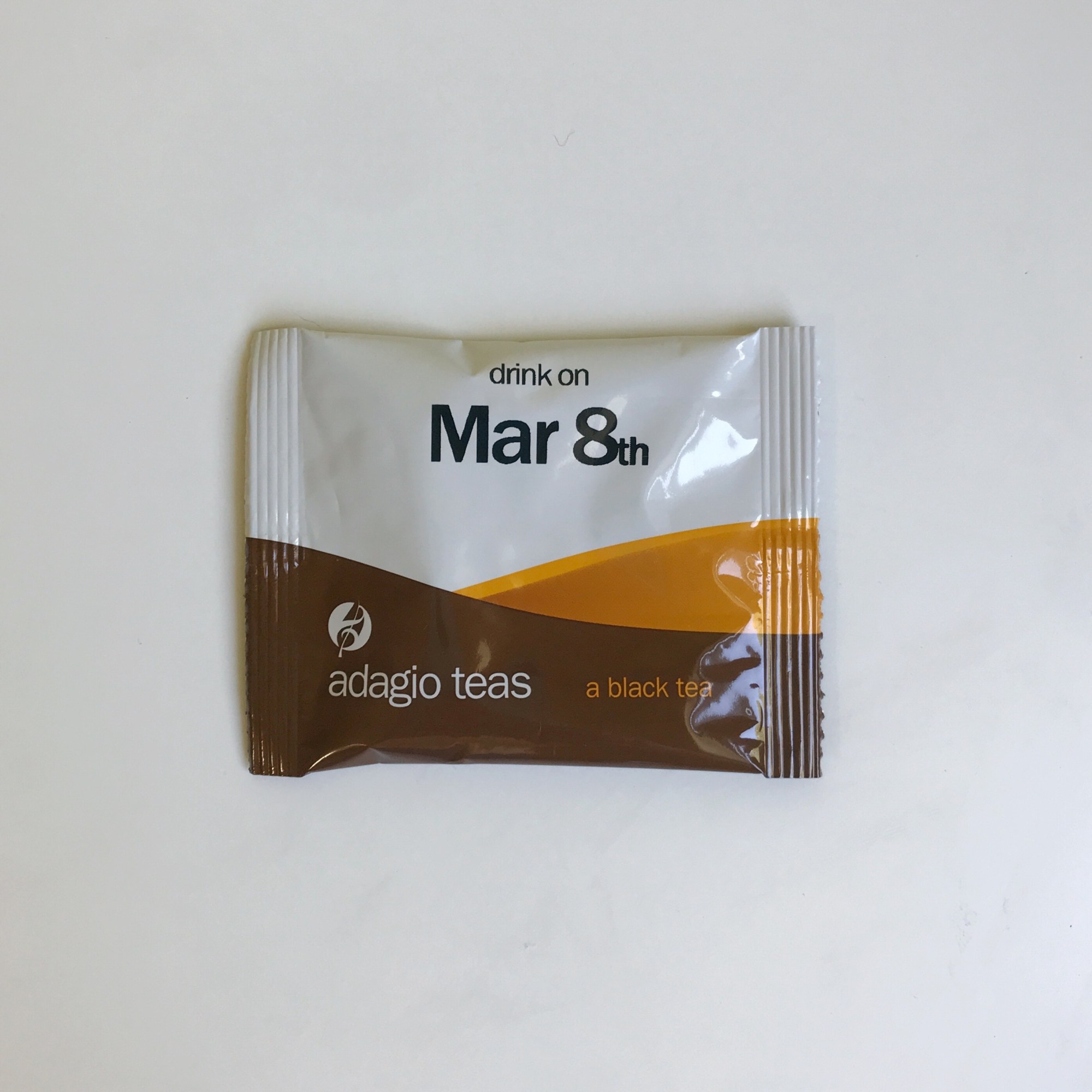
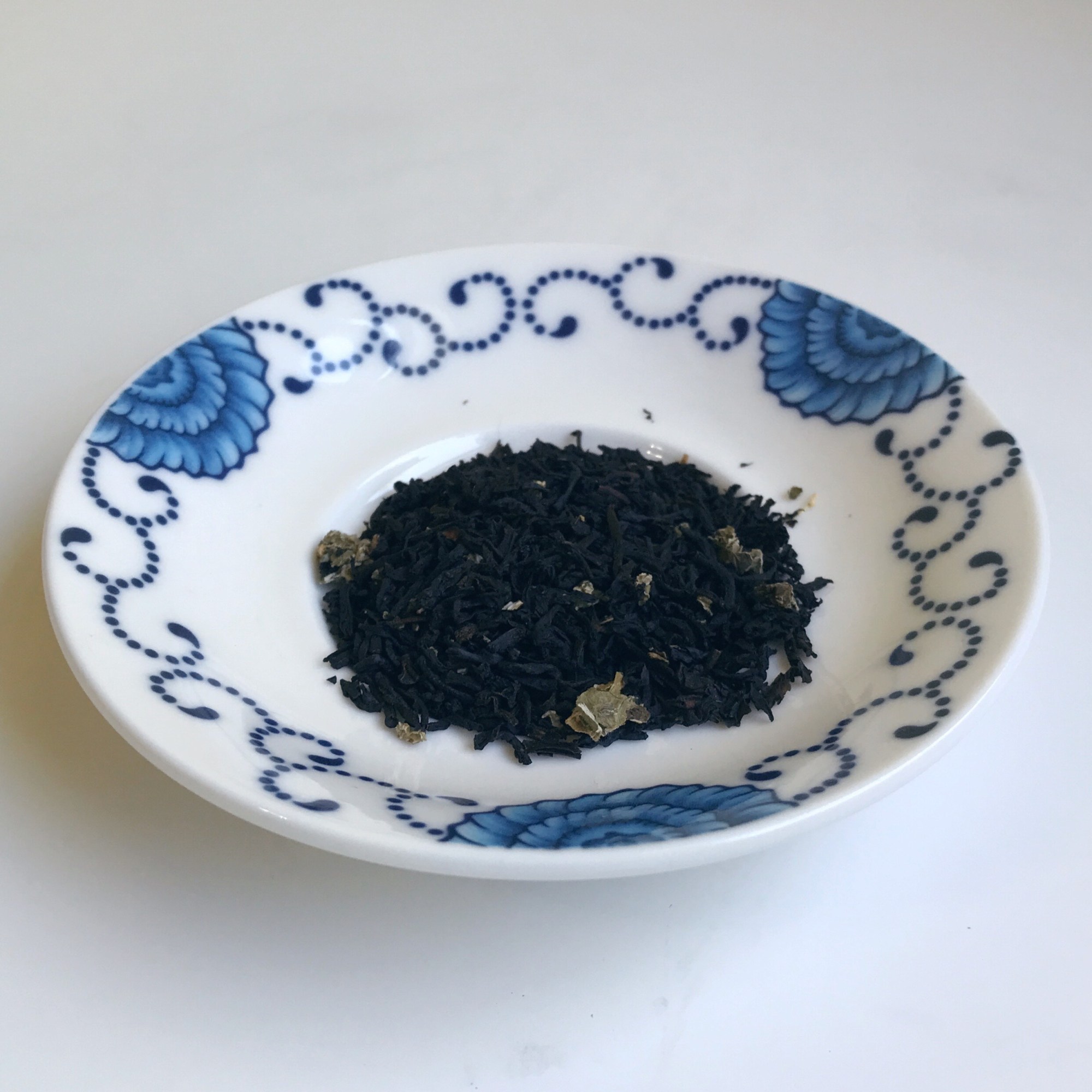
    March 8 – Currant Tea

    I am a sucker for Adagio Teas’s creative blends, like the new Honeybush Blueberry Pancake. Have you seen my video, where I rave about it? But, I am equally in love with their simple, fruit-flavored black tea blends. The Orange Black Tea from Adagio Teas is a favorite of mine, and now the Currant Tea from March 8 was love at first sip, too. Adagio Teas’s Currant Tea is a blend of black tea, natural currant flavor, and raspberry flavor. I can’t recall the flavor of currants, but this blend offers a brisk and slightly malty-sweet black tea base that is complimented by red berry flavor. I’ve never been particularly inspired to make my own tea blends before, but I couldn’t help but wonder how the Currant Tea would taste blended with cream and zesty lemon flavors. I might be exploring Adagio’s Signature Blends soon…

    March 9 – Formosa Oolong

    When I first started sipping the Formosa Oolong, I was fairly indifferent about it. By the end of the cup though, it had me longing for brisk October mornings. This week’s heat-wave also makes me wish October was already here, but I digress. This tea tastes slightly toasty and definitely like crunchy Autumn leaves. The Adagio Teas website mentions there are some fruity notes in this tea, but I didn’t notice them. It’s possible I may have been able to draw them out using a different steeping method.

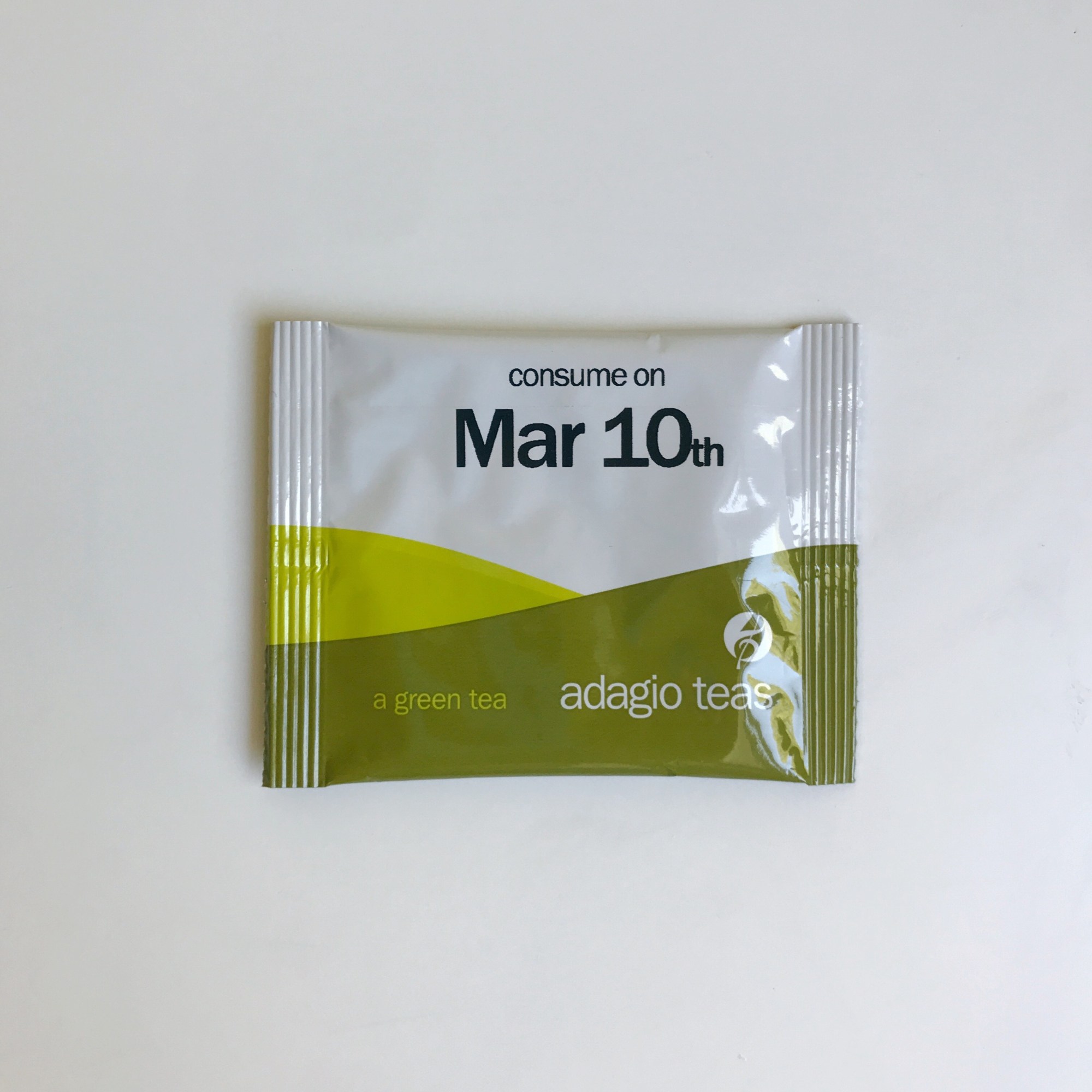
    March 10 – Serenitea

    The Serenitea blend is a fandom tea blended by Amy Zen. It is inspired by the science fiction series Firefly, and it is a blend of Spearmint, Gunpowder Green Tea, Black Tea, and Hazelnut flavoring. It’s an interesting twist on a Moroccan Mint because of the subtle hazelnuttiness. Also, and I feel like I lose a lot of nerd credit for admitting this, I have never watched Firefly beyond the pilot episode, so I have no idea if this blend captures the essence of the series. (Also, I may have forgotten to take a picture of the tea after I steeped it…)

    March 11 – Speedy Recovery

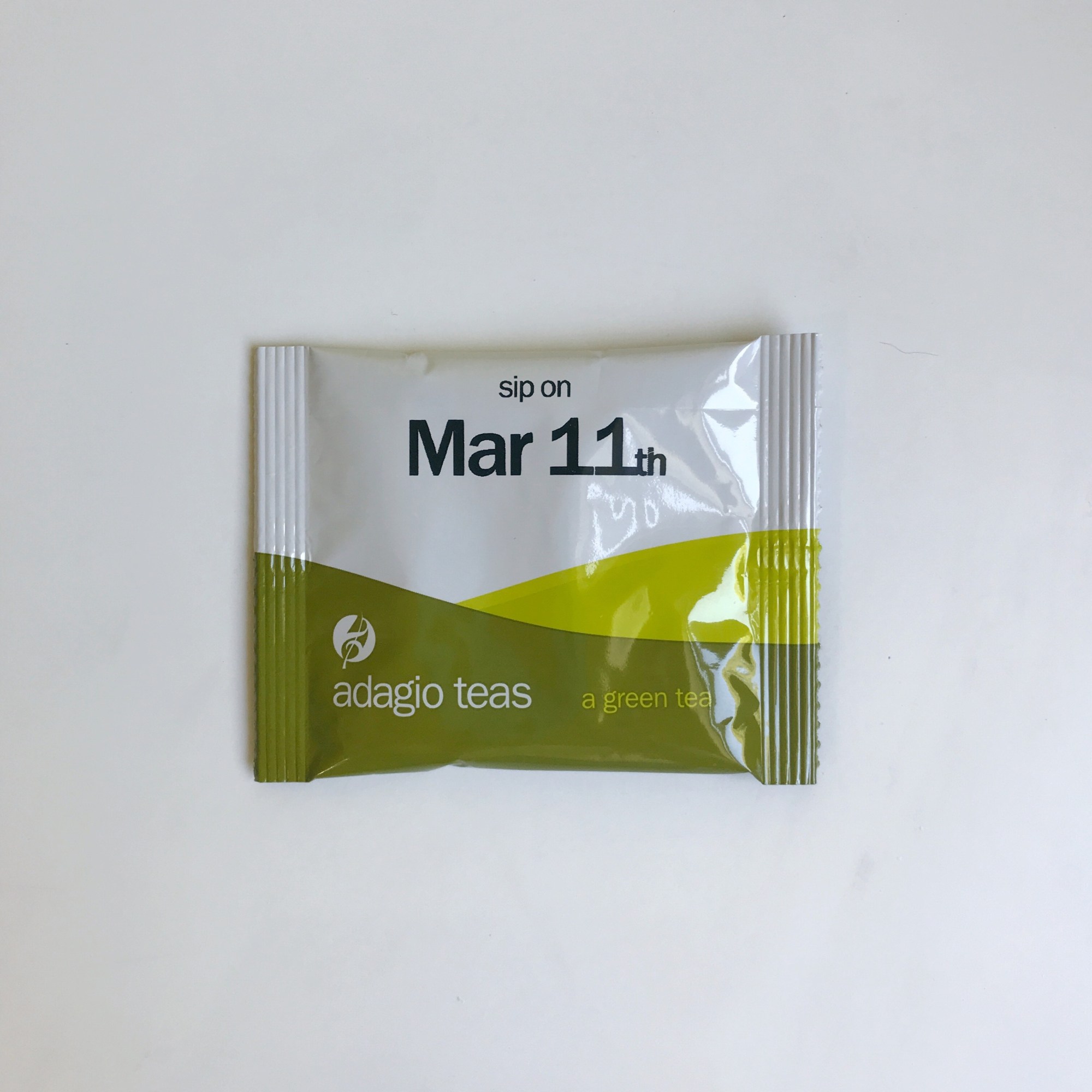
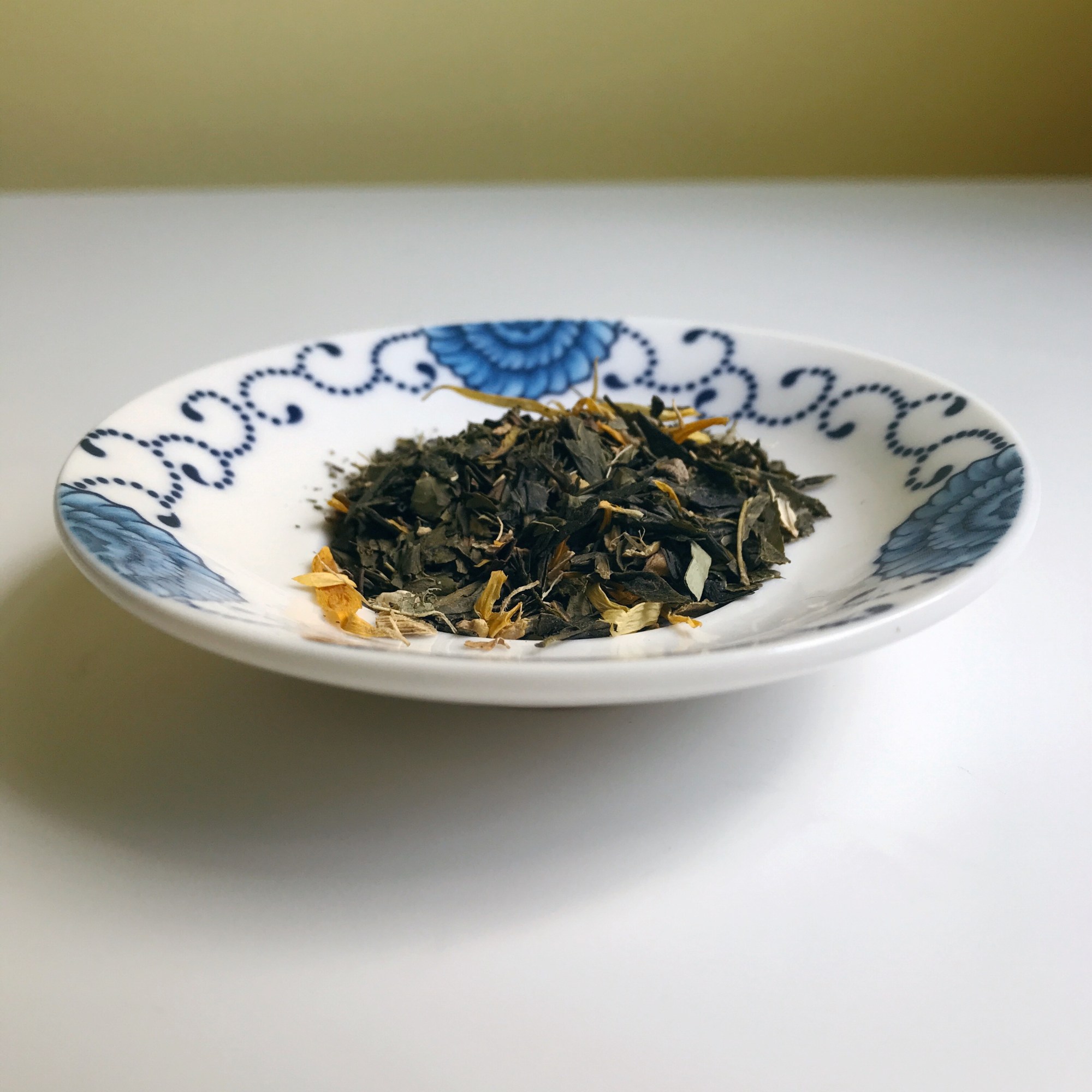
    I tend to stay away from blends that are for wellness or health purposes because I can’t not imagine the tea tasting medicinal. Even teas like Speedy Recovery, which is a blend of Green Tea, Peppermint Leaves, Ginger, Licorice, Cardamom, Fennel, Marigold Flowers, Black Peppercorn & Cloves starts to sound unappealing even though I appreciate all the ingredients except licorice. The flavor of green tea takes a backseat allowing the peppermint, ginger, and fennel shine in this blend. While it has challenged my perception of wellness teas, I still won’t reach for this one during the winter months. I take advantage of my stuffed up nose to power through all the teas I’m avoiding drinking!

    March 12 – Apricot Green

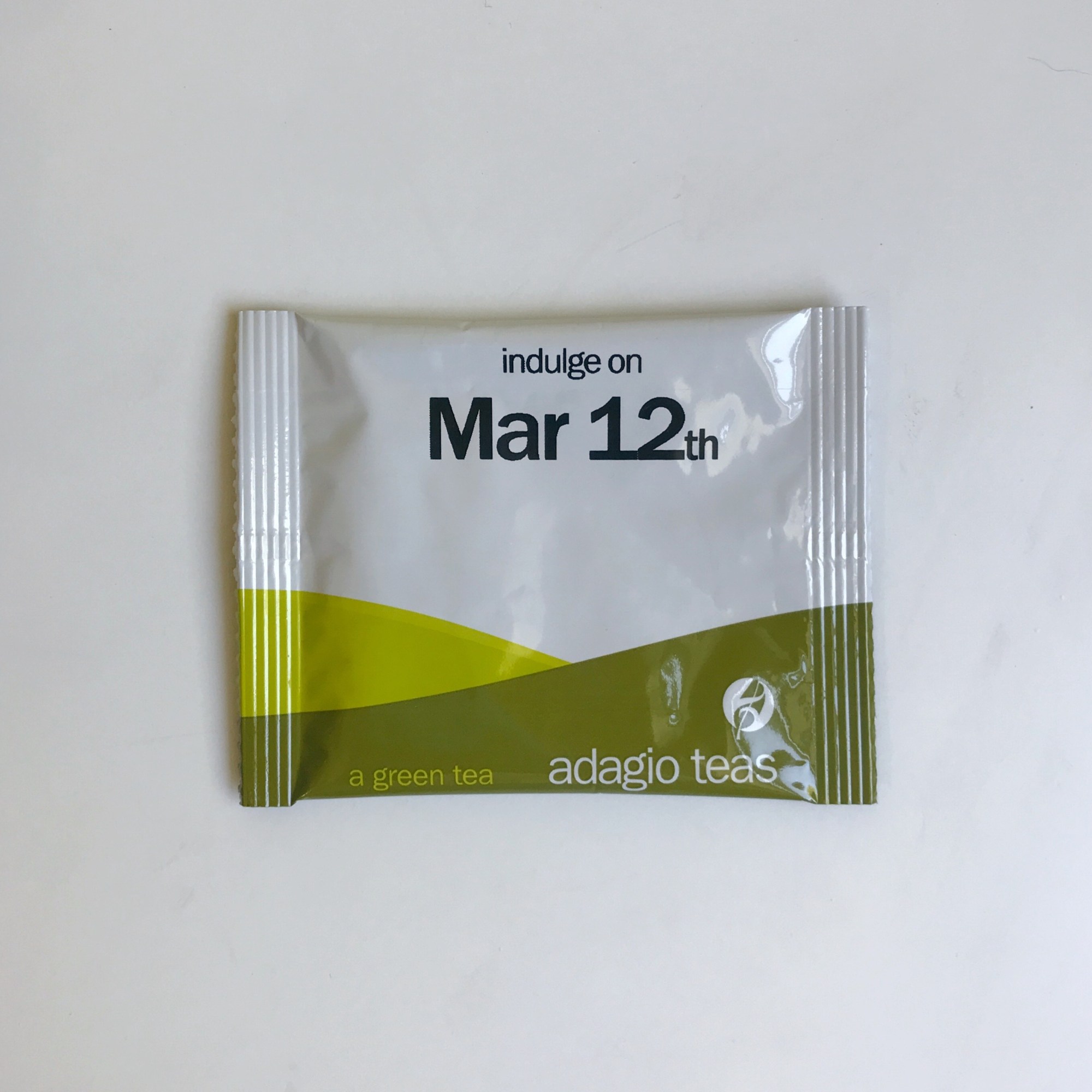
    Apricot Green from Adagio Teas is a blend of Green Tea, Apple Pieces, Natural Apricot Flavor, Apricots & Marigold Flowers, and I suppose of all the days during my communiTEA week, this was the tea I looked forward to the least. I’m not in love with flavored green teas, and I am not in love with Adagio’s peach or apricot flavoring. Yet, I found myself pleasantly surprised by the Apricot Green. I opted to sweeten this tea with sugar and serve it over ice, which helped to tone down the vegetal and steamed vegetable quality of the green tea used in this blend and allowed for the juicy apricot flavor to pop. This turned in to the kind of tea I could drink buckets of on a hot, summer day.

    March 13 – White Strawberry

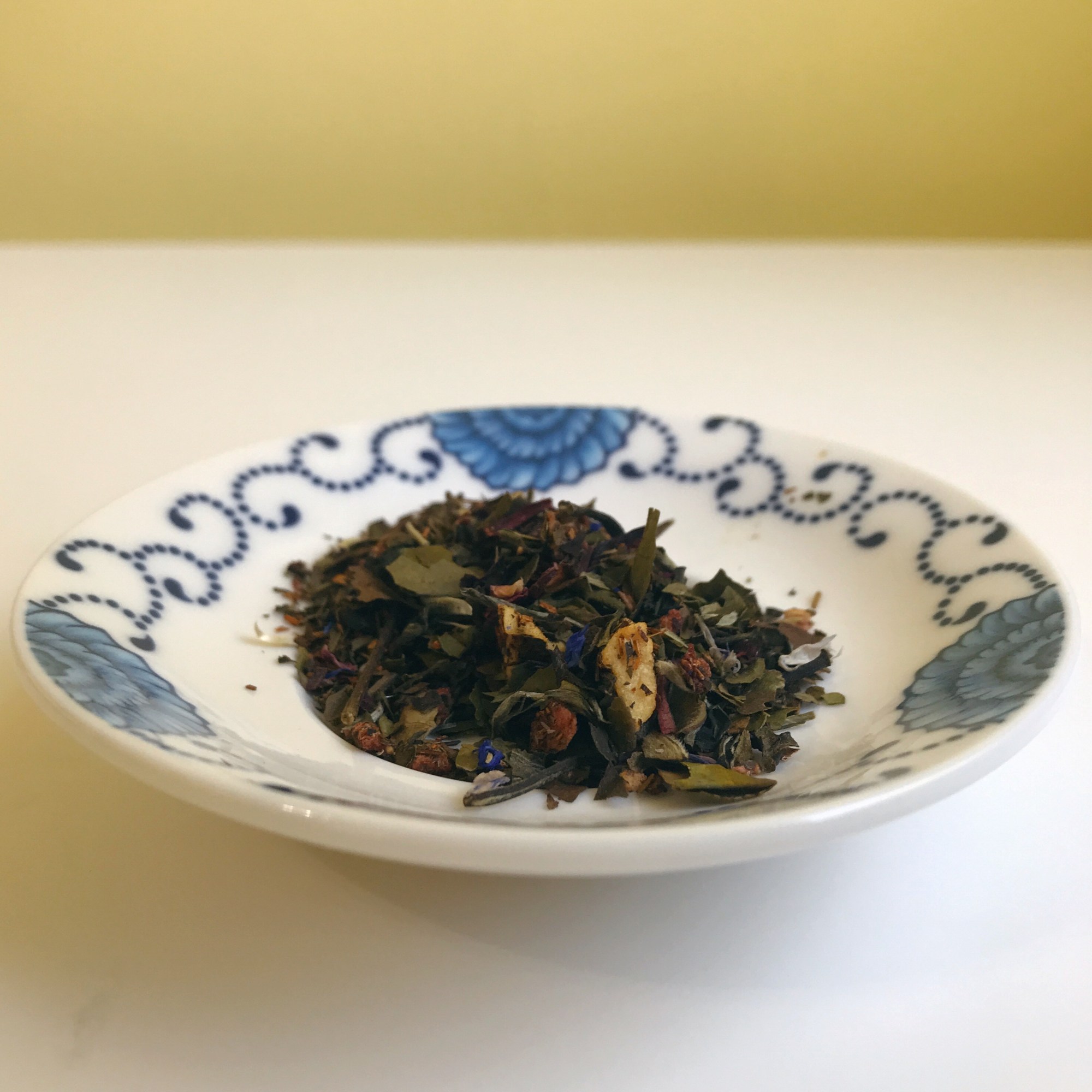
    I may have also grumbled when I saw the packet of flavored white tea in my communiTEA week because white teas and I don’t get along. But you know what? I kind of fell in love with the blend from March 13. Within the packet was White Strawberry, which is a blend of White Tea, Rooibos Tea, Apple Pieces, Blueberries, Hibiscus, Natural Strawberry Flavor, Strawberries, Rose Petals, Blue Cornflowers & Natural Vanilla Flavor. This tea was juicy strawberries, sweet vanilla pound cake, and the most luscious, silky, and thick mouthfeel. It was basically strawberry shortcake in a cup. Would I get this again? Yea…yea, I think I would!

    March 14 – Sweet Science

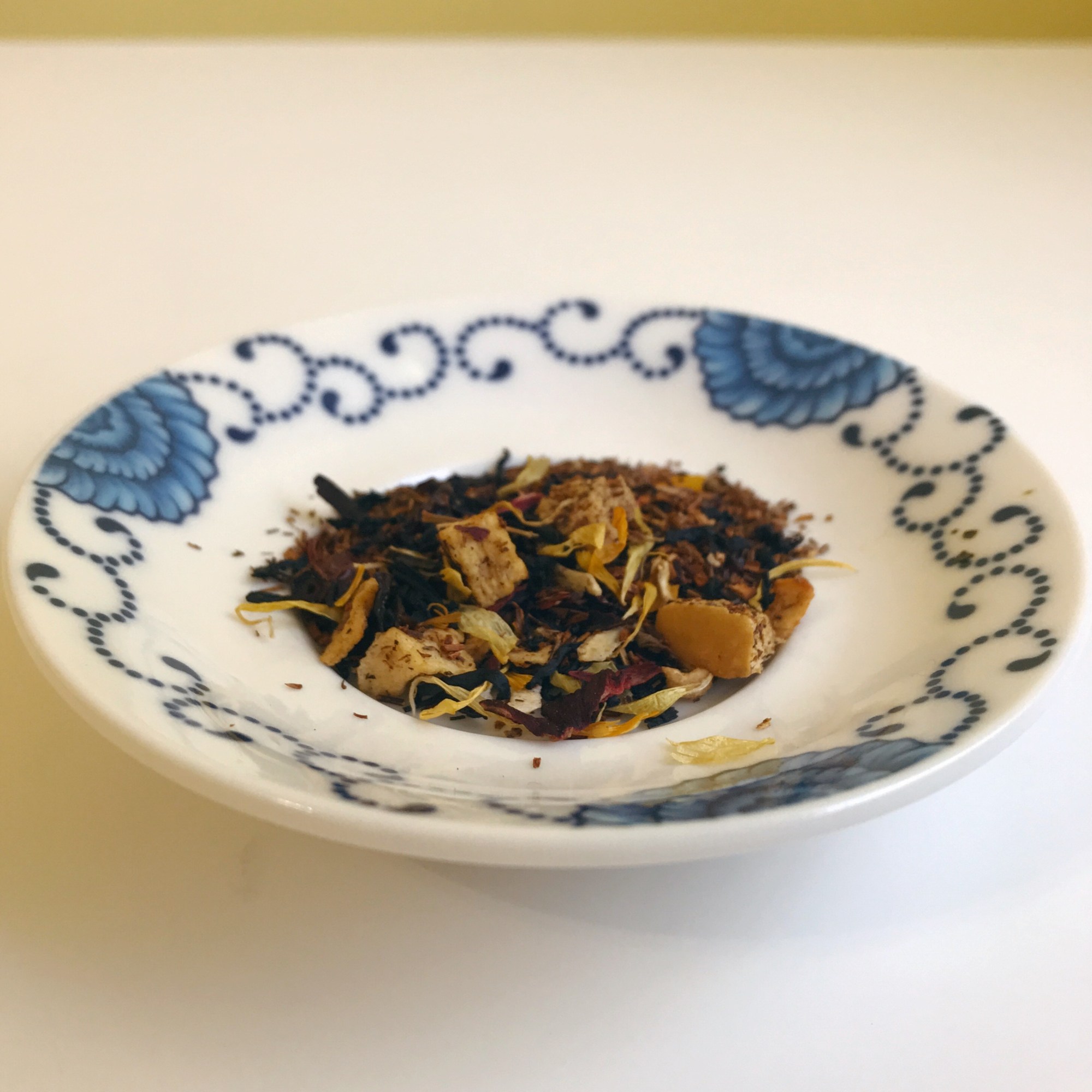
    Sweet Science is another fandom tea, and this one is blended by Lisa & Kat Miller. This tea is inspired by Princess Bubblegum from Adventure Time, and it is a blend of Rooibos Tea, Black Tea, Apple Pieces, Rose Hips, Hibiscus, Marigold Flowers, Natural Peach Flavor, Coconut, Natural Creme Flavor, Natural Pineapple Flavor, Natural Coconut Flavor, Pineapple Pieces & Apricots. While I enjoyed this blend, sipping from such a small sample almost ensures that I do not get the full range of flavor this blend was trying to accomplish. I taste tropical fruit-flavored rooibos, but I’m missing the creamy notes from the coconut and creme flavors.


    If you’re interested in learning more about the kinds of teas Adagio’s newest subscription service offers, be sure to check out my first post on the communiTEA. A YouTube playlist of my reviews on some of the teas I’ve tried so far, is also posted there. Also be sure to check out the Adagio Teas CommuniTEA page to find out what other tea drinkers think!

  • Since I Never Formally Introduced My Gaiwan…

    Since I Never Formally Introduced My Gaiwan…

    5 comments on Since I Never Formally Introduced My Gaiwan…

    There are a couple of moments during my tea journey that forever changed the way I experienced tea. The first was circa 2009 when I randomly asked for a tea kettle and tea for Christmas. I was a heavy coffee-drinker during this time in my life (because college), so I must have wanted one just for aesthetics. But, when I received a shiny, red stovetop tea kettle and some Celestial Seasonings fruit tisanes for Christmas, I immediately became obsessed.

    The second was when I discovered Adagio Teas, which would have been circa 2012. They made better tea more accessible and less intimidating when I was ready to step out of the grocery store aisles. And clearly, my love and sentimental attachment to the brand has never waned.

    The third was when I discovered the Tea Leaf Project on YouTube as well as the tea community on Instagram, circa 2018. They inspired me to become more active in the tea community, and they challenged me to step out of my comfort zone to drink things I had never heard of.

    The fourth, and most recent moment, was when I started brewing with my gaiwan. This blue-and-white, rice-patterned, 120mL beaut comes from CraftedLeaf Teas, a vendor I’m only slightly obsessed with right now because they also introduced me to unsmoked Lapsang Souchong.

    It makes me a little braver

    I know this may sound silly, but there are teas that I find downright intimidating— largely puerhs, anything (intentionally) aged, or anything compressed into coins or cakes or tiny tea mountains. In my mind, these are the teas for people who know what they’re talking about when they talk about tea (ie. not me). I challenge myself to drink these teas anyway even though sometimes I feel like an imposter. And, because of my gaiwan (and the encouragement of others in the tea community), I think I’ve explored more tea in the past four months than I have in the past decade!

    It makes me slow down.

    When I brew tea Western-style, I plop an infuser and tea leaves in my cup, and most of the time I’m lucky I don’t get too distracted by working or baby-wrangling that I end up with an over-steeped cup. It’s how I prepare my tea when I’m attempting to be productive or just trying to infuse my bloodstream with caffeine because #momfuel.

    When I brew tea with my gaiwan though, I slow down. Like, way, way down. I weigh, observe, and smell the dry tea leaves. I slide them into the warm gaiwan and give them a shake to release more fragrances that I would have missed otherwise. And then I start steeping, taking breaks between each infusion to smell both the lid and the wet leaves, to note the color of the liquor, and of course to taste the tea. These sessions easily last an hour, sometimes longer if Oliver is preoccupied enough by puzzles and books. Okay…fine…and Sesame Street; let’s be real and transparent here. Practicing with my gaiwan becomes almost meditative– a lesson in being present and in mindfulness, where I drink tea with all of my senses.

    It lets me taste tea in ways I’ve never tasted it before

    Shou puerhs, which previously tasted funky and like how the animal pens at the county farm smelled, suddenly tasted like petrichor and baked bread and the vanilla-smell of old books. Bi Luo Chun, which (dare I say it) I was largely indifferent towards, revealed layers of honeysuckle florals, a delicate nuttiness, and buttery edamame. Mi Lan Dancong, which had always been an interesting blend of malt and floral, suddenly tasted like a spoonful of honey in early infusions. And, don’t even get me started on the Jin Jun Mei I tried for the first time a few weeks ago– honey, malt, cocoa, honeydew melon, and grapes all packed in one tea. How?!


    My love for this vessel was immediate. And although I am still a novice at practicing gongfu cha (or drinking tea, in general), I am now one of those people who always encourages others who are showing interest in using a gaiwan for the first time. (Do iiiiiiit!)

    What are some of the tea experiences in your life that greatly impacted your relationship with tea?

  • Ancient Tree Green Puerh from Masters Teas

    Ancient Tree Green Puerh from Masters Teas

    3 comments on Ancient Tree Green Puerh from Masters Teas

    The one thing I know about Pu-erh tea is I don’t know much about Pu-erh tea. So, I made it one of my resolutions to learn about it, taste it, explore it, and see if I could acquire a taste for it. My first experience with pu-erh was a flavored one, and it didn’t go very well (I’m looking at you, S’mores Chai). In my defense, I didn’t intend to drink a flavored pu-erh; I’m not entirely sure I realized S’mores Chai had a pu-erh base when I purchased it. But, I digress.

    My second experience with puerh, the one I’m sharing with you now, was entirely different. First, it was unflavored. Second, it was a sheng puerh instead of, and I’m assuming based on color and what I’ve read about the taste, a shou puerh.

    Also, in hindsight, I probably should have read a little more before diving into my first cup of sheng pu-erh, but sometimes it’s fun to go in blind, unaffected by expectations based on other peoples’ experiences. I guess it’s sort of like when I visit a new city for the first time. I like to wander around without direction just to get a sense of the place, and sometimes I even accidentally stumble upon something I didn’t know to look for. Like the doggy playdate in a park nestled between skyscrapers in Chicago. Or the pinball machines tucked at the back of Coast City Comics in Portland, Maine. Oh, but I digress again.

    Ancient Tree Green Puerh from Masters Teas
    Origin: Yunnan, China
    Elevation: 800m*
    Harvest: April 2019

    *elevation currently means nothing to me because I’m not knowledgeble about how that affects tea. Also, it’s in metric, which I haven’t used outside of 11th grade chemistry, and we definitely were not measuring anything in meters.

    The Masters Teas website goes on to explain that the tea was hand-plucked from 150-year old trees (which don’t really sound that ancient), and this pu-erh goes through a 10 minute firing followed by roasting for 5-6 hours.

    My tasting notes regarding temperatures and infusion times are inconsistently recorded. I’m going to say it is because I was meandering my way through this tea, much like the way I meander through cities without maps, but really I’m just bad at logging that information. I need to get better at that as I practice with my gaiwan.

    The dry leaf is tightly twisted two leaves and a bud. They are brown, spinach and pea green, and occasionally there is a leaf covered in soft, silver fuzz. Their fragrance reminds me of the greenhouse I worked at for a season back in college. It is the scent that would stick to my fingers after deadheading flowers– vegetal and sour but somewhere buried is a hint of sweetness.

    I put the dry leaf into a warm gaiwan and shake it. A new fragrance surfaces, and it smells sweet, powdery, and floral. Is it orange blossoms? Is it budding magnolias? It’s something that reminds me of Florida in February.

    After steeping, the wet leaf smells sour and like steamed vegetables. Wilted spinach and lemon came to mind, and I find myself reluctant to drink.

    Infusions 1 and 2

    The liquor is pale, golden yellow, and the aromas are earthy and vegetal although my novice tongue can’t point to anything more specific than that. There is an astringency that makes me salivate and a bitterness and sourness on the back of my tongue that makes me think about eating the skin from a purple plum.

    Infusion 3

    The liquor sits in the fill cup for a while as I try to process my first two infusions. I can’t tell if I steeped this incorrectly or if this is the nature of a sheng pu-erh, but while I sit there, notes of sweetness and “green”, like I’m chewing on leaves, linger on my tongue. When I finally tip the liquor out of the fill cup, the light bounces off it, and it looks like I’m pouring liquid sunshine into my cup.

    There is an energy in this infusion that I have never experienced before. My toes and cheeks are humming, and it feels like there is cotton in my ears and in the space between my eyes. I am so distracted by this that I forget to write down tasting notes.

    Infusions 4 and 5

    I took a break to take Oliver to the library and then to settle him down for a nap. But, when I return to the tea, I shut myself up in a bedroom for proper alone time. Infusions 4 and 5 are still pretty astringent but the earth and sour, vegetal aromas give way to something faintly like a sweet apricot.

    Infusions 6 to 8

    These final infusions were lovely, with infusion 6 being my favorite. The astringency has drifted away, and now all I taste are dried apricots. The finish is sweet, like I’m sucking on sugar cubes stolen from the tea tray during a Girl Scout meeting decades ago. The sensation stays with me quite some time after I have finished the tea.

    As I have no other sheng pu-erhs to compare this to, I can’t comment on quality and value. But, I suspect if you are new to this type of tea, like I am, Ancient Tree Green Pu-erh from Masters Teas is a good place to start. Adagio Teas and Masters Teas make better quality teas more accessible and inviting to those just starting on their tea journey. Even though I technically started my tea journey a decade ago, I let myself grow complacent and stagnant. I have learned more about tea in the past few months than I did during the past decade thanks to the wonderful tea community over on Instagram. And, it’s worth noting that the Ancient Tree Green Pu-erh from Masters Teas has made sheng pu-erh slightly less intimidating, which is good because I have a 2017 IPA from white2tea with my name on it.

    Thank you to Masters Teas for sending me a sample of this tea for free in exchange for a review.

    Looking for more about Masters Teas? Check out my thoughts on their Formosa Fancy Bai Hao and their Muzha Tie Guan Yin!

  • Gyokuro from Japanese Green Tea Co.

    Gyokuro from Japanese Green Tea Co.

    3 comments on Gyokuro from Japanese Green Tea Co.

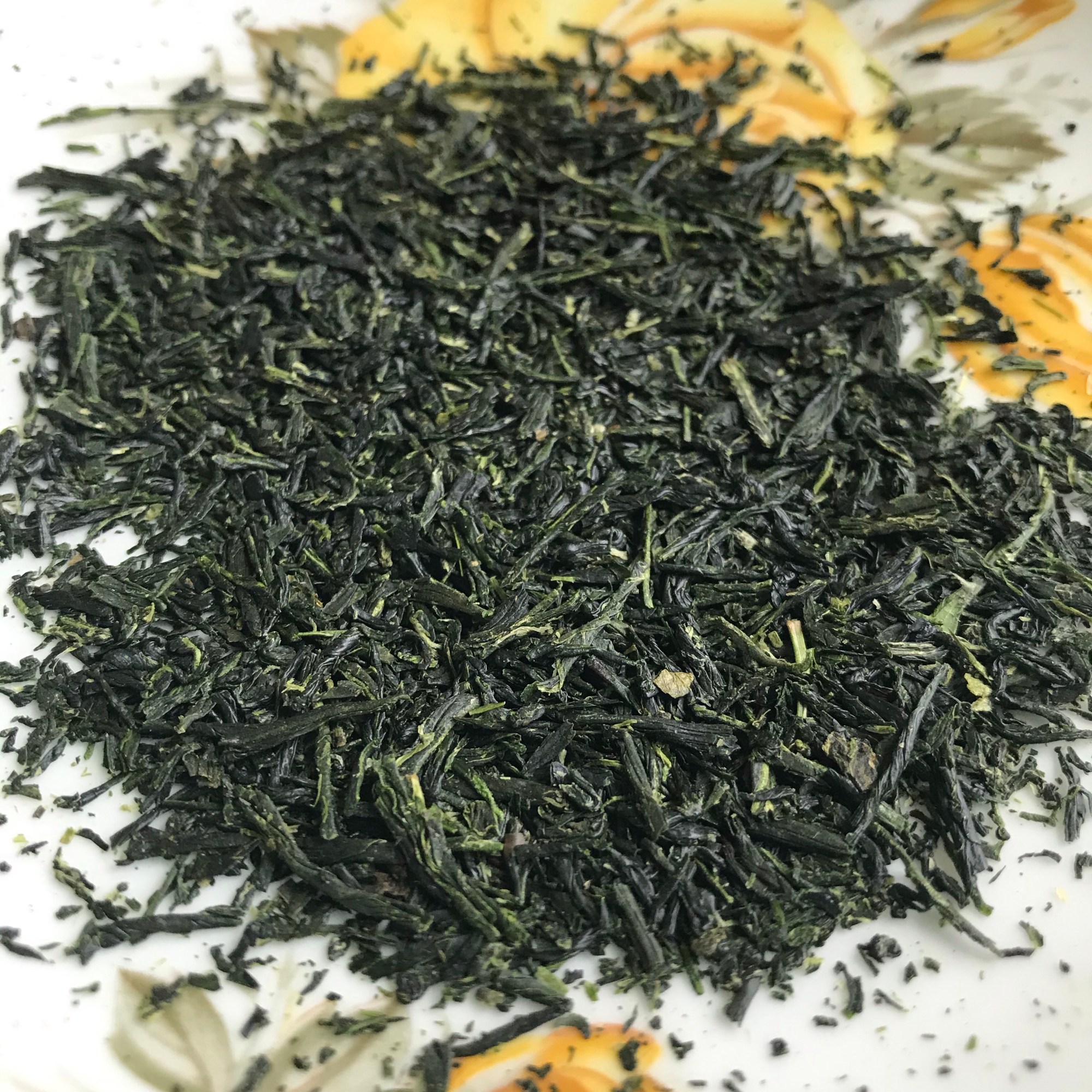
    I really enjoy my mugs of delicious, flavored teas and tisanes. I will always reach for a Hot Cinnamon Spice when winter settles in. I will happily chug honeybush dessert teas that taste like banana nut bread and cotton candy. And of course, how could I not indulge in a spiced chai latte when visiting coffee shops? But, the kind of tea I love most of all? Those unflavored, single origin teas that demand slow, intentional sips so I don’t miss a note in its array of aromas. Those teas that transform across multiple infusions, and I can’t help but scribble barely legible tasting notes because I’m too excited to explore a tea to care about neatness. Those teas that transport me to a time and place that isn’t now, but instead some distant memory. Some as clear as day, others a bit muddled– possibly an amalgamation of memories, but whatever it was, brought joy and wonder. I experienced all of that recently while sipping a Gyokuro from Japanese Green Tea Company.

    The first sips are savory umami. They are sultry summer afternoons in north Georgia, where the heat index is 108. Humidity hangs heavy in the air and thunderheads grow in the sky, but I am outside anyway seeking refuge in the woods behind my house where I can follow the creek and the shade of the tall, skinny pine trees all the way down to the shore of Lake Allatoona. I don’t meander to the lake very often, but when I do, there is a humming in my chest and my legs– a sensation of being thrilled because I’ve ventured somewhere I’m not supposed to be.

    The finish is slightly sweet and grassy, and now it’s no longer sultry summer afternoons. It is a late Spring morning instead. It is soft, freshly mowed grass clippings– the kind that sticks to bare feet eager to run to the park to spend the afternoon poolside. It is a fist full of quarters for the vending machine. It is pool toys teetering out of over-stuffed tote bags. It is sitting impatiently at the edge of the deep end until adult swim is over. It is somersaulting into the pool the moment the whistle is blown.

    The second cup takes me someplace entirely different. It’s further back on my timeline and further north, too. Only the best teas take me here– back to central Ohio, back to my foolhardiest days. The second cup has lost most of the umami and is instead mostly sweet and vegetal. It is listless summer afternoons, chewing on the end of tall, tasseled grass on the front porch of the babysitter’s house. The kind with seeds we plucked off and stuck on our tongues, and when we said “caterpillar, caterpillar, caterpillar”, the seed would inch its way to the back of the mouth.

    The Gyokuro from Japanese Green Tea Co. feels like a luxury both in aroma and experience– one I want to indulge in all the time but through sheer willpower, manage to save for the rare quiet moments when Jon and Oliver are snoozing and I can just sit and exist and reflect.

    This tea was sent to me for free in exchange for a review. Thoughts are ever my own. If you are interested in learning more about Japanese Green Tea Co. and Gyokuro, or you like your tasting notes a little more concrete, be sure to check the video at the top of the post. You can also check out my review for their Fukamushi Sencha!

About the Blogger

My name is Jackie, and I am a millennial / mother / Michigander / blogger / wannabe runner / accountant / local library enthusiast / gamer, kinda. This is a personal blog, which means I’m not entirely certain what you’ll find here, but it will definitely not show up on the first page of Google search results.