By Golly, Ollie!

💾 a blog about books, tea, & geekery

Author: Jackie

  • Teas to Sip While Reading A Rip Through Time by Kelley Armstrong

    Teas to Sip While Reading A Rip Through Time by Kelley Armstrong

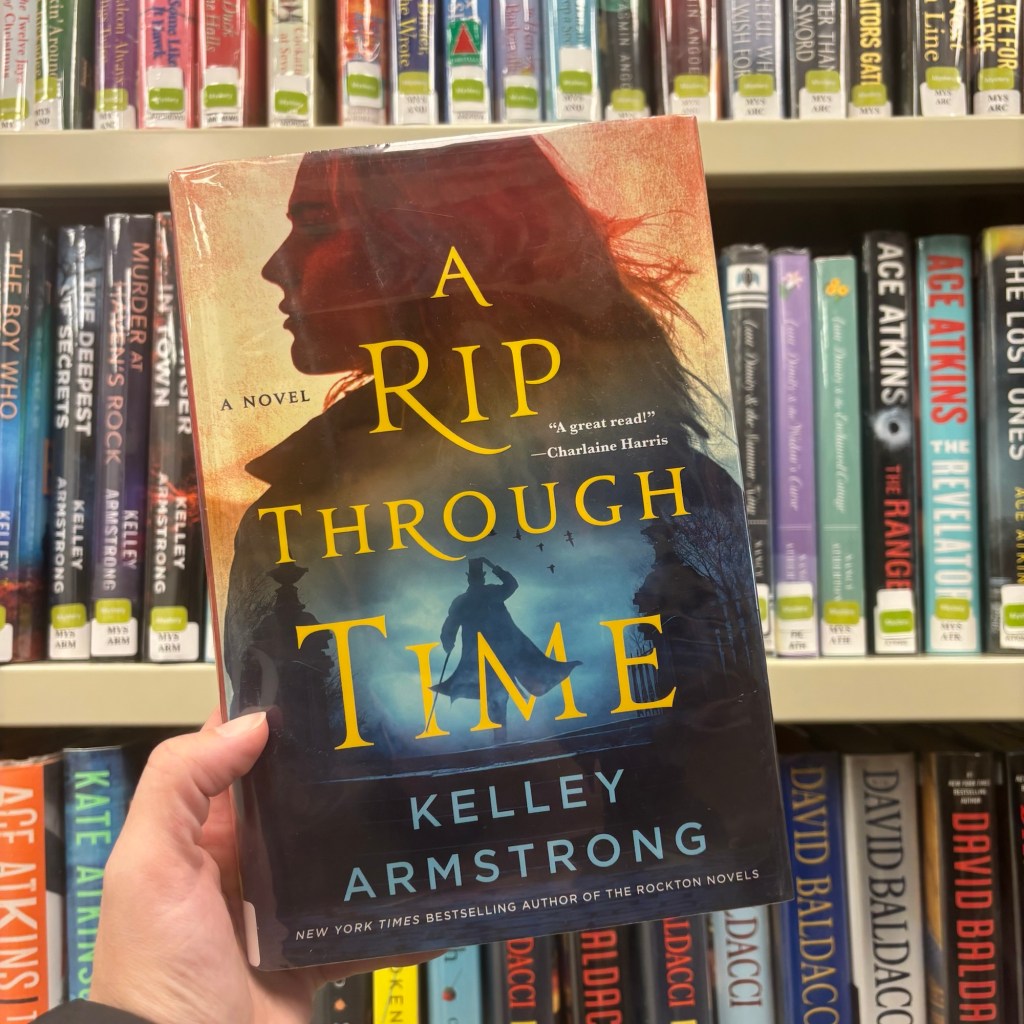
    I don’t know when or why this changed, but lately I struggle to read fiction novels. These days, it takes actual effort to read beyond 50 pages of most books. By the time I do, the library book is usually overdue. I can’t tell if I’ve suddenly become bad at choosing books or if reading articles online or reading non-fiction has changed the wiring in my brain. But then, I discovered A Rip Through Time by Kelley Armstrong. It checked the boxes for beautifully illustrated setting, clever plotting, and great character chemistry, and it was the first book in years that had me turning on my book light in bed and reading until I could barely keep my eyes open.

    In 280 words or less…

    In this historical mystery with speculative and cozy-adjacent elements, modern-day homicide detective, Mallory Atkinson, is going for an evening jog when she hears a woman in distress. Mallory is then drawn to an alley where she is attacked and loses consciousness. When she awakens, she finds herself trapped in the body of Catriona Mitchell, a housemaid and not-so-reformed thief in 1869 Scotland. Mallory then discovers Catronia was attacked in a similar fashion that same night (some 150 years apart), which created the link needed for time travel. Mallory tries her best to assimilate into Victorian Scotland but when she learns her employer, Dr. Gray, is a medical examiner and undertaker, who works (off the record) with the local police department to solve murders in Edinburgh, she can’t resist temptation. Soon Mallory finds herself involved in solving the case of who tried to murder Catriona (as well as secretly solving the mystery of how to return to her own time period and body.)

    The Review

    Remember when I said lately, it requires effort from me to get passed the first 50 pages of a book? I felt that way at first about A Rip Through Time by Kelley Armstrong. It opens in a way that many cozy mystery fans would be familiar with when starting a new series: the protagonist is in the middle of a major life change and is expressing all of the strong emotions that come along with it. They may be a recent divorcee or widow, they may have just quit their humdrum job and moved to a new town for a fresh start, they may have finally retired and cashed in their life savings to start a hobby farm… In A Rip Through Time, the story opens with Mallory Atkinson, a Vancouver police detective, visiting her dying grandmother in Edinburgh, Scotland. At first, I didn’t feel anything– no grief, no connection to Mallory’s sadness. I can never tell if it’s me or if it’s the writing, but I almost returned the book to the library unfinished because of it. Once I made it to chapter five though, everything changed.

    Mallory’s personality starts to take shape once she wakes up and finds herself trapped in the body of a housemaid in 1869 Scotland. She’s no longer completely preoccupied by grief now that she’s forced to navigate a culture and society that is foreign to her and is becoming acutely aware of her sudden lack of autonomy and social standing. Then, Armstrong begins to play with the “fish out of temporal water1” and “blithe spirit2” tropes, which was just fun, as modern-day Mallory stuns Dr. Gray and Detective McCreadie with her knowledge of forensics and policing. The interactions between the three are often snarky and comical. Additionally, the contrast of modern-day detective work compared to Victorian era detective work was fascinating since forensic science as a discipline was just beginning in the 1800s. The exploration of murder and forensics in this novel reminded me of a non-fiction book I read a year or two ago: The Invention of Murder: How the Victorians Revelled in Death and Detection and Created Modern Crime by Judith Flanders 3. In it, Flanders explores the relationship between murder and society in Victorian England and how, even though murder was relatively rare, it was often sensationalized which led to broadsides and theatrical performances and even laid the groundwork for detective fiction like Sherlock Holmes (and one could even say like A Rip Through Time…?)

    The banter and chemistry between the characters feel all the more alive against the vividly and, at times, grimly painted backdrop of Victorian Scotland. Armstrong’s writing brought 1869 Edinburgh to life, and I found myself time traveling right alongside Mallory– to Gray’s well-kept townhouse in New Town, with penny dreadful scattered on tabletops, to the pubs and pawn shows and seedy back alleys of Grassmarket, to the muddy streets of Old Town congested with small businesses and tenements of questionable stability.

    Armstrong often writes thoughtfully about the social issues of the time period too, which helped ground the story even more firmly in the past. During the story, Mallory develops a strong friendship with Isla, Dr. Gray’s sister. They become each other’s confidant– supporting each other as bold and brilliant women. Their friendship becomes a sort of subtle rebellion against the social hierarchy of the time, one that crosses economic class lines and challenges expectations based on gender. Elsewhere in the story, Armstrong explores racism and colonialism, burgeoning anti-immigrant sentiments, and the morality of scientific progress.

    By the end, A Rip Through Time reminded me of the joys of escape through fiction. I had so much fun exploring a different time and a different country. As the series progresses, I’m looking forward to seeing how the relationships develop between Mallory, Gray, Isla, and McCreadie (I already have my theories!), and I’m looking forward to watching Mallory and Isla challenge gender norms in the Victorian era. About an hour after finishing the final chapter, I sneaked away from the work desk to go to the library where I checked out book two from the series, The Poisoners Ring. THAT is a testament to how much fun I had with this book. I rarely seek out the other books in a series. And if I do, it’s usually years after finishing the first book. I just really want to know what happens next!

    The Teas

    Scottish Breakfast Tea with milk and sugar

    Your favorite Scottish Breakfast blend

    Even though Dr. Gray starts his day with a cup of coffee, I’m recommending a cup of Scottish Breakfast tea instead. The tea is a blend of black teas from Assam and Ceylon, and it sometimes includes black tea from China. Of the traditional breakfast teas from the U.K., Scottish Breakfast tea tends to be the strongest, and it offers malty and oaky aromas. I love sipping this one with milk and sugar.

    Victorian London Fog from Harney & Sons

    I know A Rip Through Time doesn’t take place in London, but it’s does take place in the Victorian Era, which makes Victorian London Fog a lovely companion for this book. It is a blend of black tea, oolong tea, bergamot oil, lavender, and vanilla flavor. In lieu of this particular type of tea, might I recommend reaching for your favorite lavender infused Earl Grey?

    Your favorite Assam

    Mallory, Isla, Detective McCreadie, and Dr. Gray often meet during afternoon tea to discuss the cases, and Assam could certainly have graced the table. This malty cup of tea might give them the caffeine boost they need to keep them alert while they investigate the darkened, back alleys of Grassmarket at night.

    Coffee for Mallory so she doesn’t haven’t to sip Dr. Gray’s dregs

    One comfort Mallory misses from the modern day is a cup of coffee. A good cup of coffee. Mallory is desperate for the brew and the jolt of caffeine (especially since she can’t quite figure out how to wake herself up before dawn without an alarm clock), so she will sneak sips from Dr. Gray’s abandoned coffee cups.

    Footnotes

    1. A “fish out of temporal water” trope results from characters being placed in an unfamiliar time period. ↩︎
    2. In the “blithe spirit” trope, “a free-spirited fish out of water goes to a straight-laced land and shakes things up” ↩︎
    3. The Invention of Murder: How the Victorians Revelled in Death and Detection and Created Modern Crime by Judith Flanders — it’s well-written and researched but also quite dense, so I only could recommend it to readers who have more than a passing interest in the subject matter ↩︎

  • Lately in Books, Tea, & Geekery

    Lately in Books, Tea, & Geekery

    I love the brevity of a month-in-review kind of post– the ones where bloggers share the podcasts/albums/books/events/video games they consumed recently but without an accompanying thousand-word analysis of the experience. I used to compose posts like this (read: Five March Favorites), but I am so, so terrible at sticking to structured content calendars. So, here is my latest attempt at a (probably, almost definitely, unregular) feature. Here are the books, tea, and geekery I have enjoyed lately:

    Books

    Can’t Even: How Millennials Became the Burnout Generation by Anne Helen Petersen

    Can’t Even critiques the the systems many Millennials were born into like the college-at-all-costs pipeline, social media-driven lifestyle curation, and the burden of invisible labor nearly all mothers carry even in (especially in?) the year of our Lord, 2024. Petersen’s strongest chapters discussed the “enshittification” of the workplace by examining labor theory and history since the 1970s.

    I would be enraged after reading this book, but I’ve read it all before. If you’re a Millennial, who exists at all online, you’ve probably read the arguments before, too. Nevertheless, Can’t Even is relatable, and the book satisfies the craving for confirmation bias.

    My biggest critique of this book is the author’s declaration that Millenials are the “burnout generation”. She then dispels that notion in the first chapter by arguing burnout is a state of existence we inherited from our Boomer parents. Which I agree with, by the way! I don’t think Millenials have a monopoly on burnout, and I think trying to imply that only invites the generational infighting I’m so tired of reading about.

    The Best American Essays 2023 edited by Vivian Gornick

    I love essays. I think I secretly want to be an essayist. It’s probably why I’ve always been drawn to blogs and blogging, which seem like informal essays [this post is not an essay]. Essays take my favorite approach to storytelling (nonfiction) and turn it bite-sized, conveying complex ideas concisely. (How appropriate that The Best American Essays 2023 includes a meditation on concision by George Estreich).

    I’m only halfway through, but I’ve already read a few memorable essays. Any Kind of Leaving by Jillian Barnet shatters the usual savior-like portrayal of adoption, and this essay almost made me cry. We Were Hungry by Chris Dennis is a brutal, sort-of-love-letter to McDonald’s from an ex-addict. Ms. Daylily by Xujun Eberlein is an achingly intimate story about a daughter trying to piece together her mother’s relationship with another woman during Mao’s reign and the Cultural Revolution in China.

    This anthology also feels like it will be a time capsule for future generations with essays about gender identity, the prison system, and the immigrant experience in the United States. It makes me curious to read earlier books from this series (started in 1986) to see if earlier editors managed to curate a collection of work that embodies the year it was published, too.

    New Kid by Jerry Craft

    Some of the best graphic novels I’ve read in recent years have come from the Middle-Grade section of the local library, and New Kid by Jerry Craft now gets added to this growing list. New Kid follows Jordan, a Black middle schooler who wants to attend art school but is enrolled in a rigorously academic private school instead. At his new school, Jordan confronts bullying, classism, code-switching, and microaggressions as he struggles to find his place among peers who do not look like him.

    The characters and the friendships that develop between them are delightful. The book was laugh-out-loud funny. And, I loved the playfulness of the chapter title illustrations, which were inspired by popular films like the Lord of the Rings, Rocky Horror Picture Show, and Star Wars.

    Tea

    A few Sunday’s ago, a surprise from the good folks at Plum Deluxe arrived on my doorstep– this World of Tea care package inspired by France, which includes five curated blends from their shop and five blends exclusive to this sampler. I’m looking forward to sipping through this collection, but I think I need to acquire some croissants first. Especially for the Cafe Breakfast Blend, which is infused with coffee beans.

    The tea featured in my favorite Pragon teacup above is the Huckleberry Happiness blend, a random sample included with the care package. It’s a fruity black tea blend that pairs well with sunny mornings filled with birdsong.

    Geekery

    Citizen Sleeper

    Citizen Sleeper is the cozy, slice-of-life cyberpunk video game I didn’t know I needed in my life. I am obsessed with the artwork, the soundtrack, the story, the wholesome characters like Lem & Mina, the gameplay– everything!

    This game follows a “sleeper”, a digitized human mind encapsulated in an artificial body, who escaped their old life of indentured servitude to Essen-Arp Corp. As the story opens, the sleeper has sought refuge on a lawless space station called the Eye. There, the sleeper meets a colorful cast of characters, builds friendships, navigates factions, and ultimately tries to survive and rebuild their life among a hyper-capitalist, interstellar society.

    Citizen Sleeper is a text-based game that functions like a Tabletop RPG, where payers “spend” dice to drive the story forward, complete actions, and determine outcomes of choices. It’s sort of like a virtual choose-your-own-adventure story with several different endings, so I’m already looking forward to replaying this game.

    Open Roads

    In Open Roads, gamers play the role of sixteen-year-old Tess, who has just discovered a secret stash of love letters tucked away in the attic of her grandmother’s house after her grandmother passed away. Tess convinces her mother to go on a road trip to discover how deep these family secrets are buried.

    Wikipedia tells me this is a “walking simulator”. Players can navigate a scene and interact with the environment to reveal more of the story. It’s a low-stakes (no-stakes?) video game that had me hooked because 1. it’s set in the early 2000s, so it’s satisfying the craving for nostalgia, and 2. it takes place in Michigan, my home state!

    It’s a very short video game; players can probably complete it in an evening. But, after solving the mystery surrounding the grandmother’s secret love letters, I kept hoping Tess would try to discover the secret stash of bootleggers gold, which was a topic that surfaced throughout the story. Open Roads left me wanting more, but in a good way, I think. The story was compelling enough, the characters were charming, and the gameplay was calming, so I just wanted to keep playing.

    Skyrim

    I am a creature of habit, so I’m usually just replaying a handful of games (Dragon Age, Mass Effect, Fallout, Elder Scrolls, Stardew Valley), and lately, I’ve been devoting my time to Skyrim. In this open world, action roleplaying game, players explore Skyrim, the northernmost region of the continent of Tamriel, by navigating the politics of a region divided by civil war, joining factions, slaying dragons and draugr, and delving into dungeons to discover valuable loot. (It seems strange to summarize this game since it’s so iconic).

    I’ve had this game since it was released in 2011, and I’ve never completed the main storyline(s). I’ll sink 40 hours into a character then take a break for a few months. When I return, I forget what I’m doing and just start a new character with a new play style. Lately, I’ve been playing as a mage. I recently finished the College of Winterhold questline, and I’m now working on the Dawnguard questline, but I don’t love this playstyle, and I already want to start a new character. I started a new sneak thief character. Why am I the way that I am?

    Have you enjoyed some books, tea, or geekery recently, too? Let me know in the comments!

  • 7 Graphic Novels I Can’t Stop Thinking About

    7 Graphic Novels I Can’t Stop Thinking About

    A few years ago, I plucked an unsuspecting graphic novel from a shelf at the library–The Sacrifice of Darkness by Roxanne Gay, Tracy Lynne Oliver, Rebecca Kirby, and James Fenner. I remember this graphic novel being solidly okay, but it encouraged me to actively seek out graphic novels going forward. Now I bring one home after every library visit. They are mostly middle-grade or young adult books since that’s what is immediately available to me at my local library, but they are nevertheless incredible. Some have even made me weep! Here are 7 graphic novels I’ve read in the last year (and a half?) that I cannot stop thinking about:

    This was Our Pact by Ryan Andrews

    On the night of the Autumn Equinox Festival, a town gathers to float paper lanterns down the river. Legend has it, the lanterns will float away and right out to the Milky Way. This year, Ben and his classmates make a pact to follow the lanterns to find out if the legend is true. However, it’s not long before the pact is broken, and all who remain are Ben and the one kid who doesn’t quite fit in, Nathaniel. Together, they travel farther than anyone has gone before, and along the way, they discover a world full of magic and unexpected friendship.

    This Was Our Pact was delightful. It was magical. It was whimsical. It had a talking bear! And the whole time I thought, this world could come to life in a Hayao Miyazaki film. The artwork was stunning, too. Like, you could open up the book to the illustration of the Milky Way, and the page could just swallow you up like the sky.

    Squire by Sara Alfageeh and Nadia Shammas

    Aiza has always dreamed of being a knight; it’s the highest military honor of the Bayt-Sajji Empire, and it’s her only path to full citizenship as a member of the marginalized Ornu people. When Bayt-Sajji finds itself on the brink of war, Aiza enlists. She navigates new friendships and rigorous training all while hiding her Ornu background from her friends and superiors. She also learns that the Bayt-Sajji military might not be fighting for the greater good after all, forcing her to choose between her heritage and her loyalty to the empire.

    Lately, I feel as though I’ve abandoned YA books because the authors I’ve picked up struggle to address social issues well. The stories often feel stilted or like the author is just reiterating a talking point they read on social media. It feels cringey and vaguely Afterschool Special-esque. But, I think the thing that impressed me most about Squire was its ability to address complex themes like propaganda, imperialism, colonialism, and minority identity under a conquering empire without sacrificing rich storytelling. Also, the story features badass girls with swords, which is always awesome.

    Incredible Doom: Volume 1 by Matthew Bogart and Jesse Holden

    Simply, Incredible Doom is about outcast teens finding refuge from abusive parents and acceptance from peers after being bullied at a new school through the bulletin board system of the early ’90s (sort of a precursor to the modern internet). Plus, it has a punk house, 90’s DIY aesthetic, and some wonderful Star Trek geekery!

    Even though I didn’t have internet access at home until the late 1990s and didn’t experience BBS, this graphic novel made me feel so nostalgic for the internet of yesteryear. I haven’t been able to stop thinking about this book and the early days of personal websites since.

    Ducks: Two Years in the Oil Sands by Kate Beaton

    Kate Beaton narrates her experience working in the oil sands of Alberta, where she is one of a few women among thousands of men, in this graphic novel memoir.

    This is probably the only book on this list that doesn’t target a YA or middle-grade audience and pheeew! This book was heavy. I went into reading this book thinking it was going to be about the environmental impact of the oil sands, and the author does touch on it. But, it was more about the cultural and human impact of living in an insular and isolated community.

    As a woman, Beaton dealt with sexual harassment and sexual assault. She doesn’t excuse these actions but still manages to hold compassion for many of her male co-workers, who are complicit in perpetuating a toxic and dangerous environment for women. Ultimately, the men were victims of the oil sands too. Without access to mental health resources, pervasive loneliness and depression permeated their lives as they spent years away from families and communities outside of work camps or watched corporate bosses sweep the accidental deaths of oil sand workers under the rug because they were viewed as expendable. Ducks is a devastating, empathetic, and nuanced portrayal of just how badly the environment and human lives were exploited to churn out a corporate profit.

    P.S. Don’t skip the afterword. Beaton addresses her assault more directly here, and it provides much more context on how it was treated in the graphic novel. It helped me process some of the emotions that surfaced as I read this story.

    Laura Dean Keeps Breaking Up with Me by Mariko Tamaki and Rosemary Valero-O’Connell

    Freddy Riley’s world revolves around her girlfriend, Laura Dean. Laura is cool and popular and exciting, but she’s also a jerk who only seems to use Freddy when she’s bored. Freddy’s self-esteem and friendships are suffering because of it, so Freddy is trying to figure out how to ditch Laura once and for all.

    I found this coming-of-age story absorbing, but the thing that sticks with me after all this time is the artwork. The illustrations are inked simply in black and white with the occasional use of pink. It was beautiful, absolutely striking.

    This One Summer by Mariko Tamaki and Jillian Tamaki

    On the surface, This One Summer is about Rose and her annual summer vacation at Awago Beach. This summer is different though because Rose’s parents keep fighting. Luckily, Rose’s friend Windy is at the beach too, and together they find ways to distract themselves from family drama.

    Below the surface, This One Summer is a quiet novel about a girl teetering on the cusp of adolescence. It’s about leaving the freedom and naivety of childhood behind and learning to navigate the tumultuous world of pre-teen/teenage girlhood. It’s changing bodies and pushing boundaries and noticing boys. It’s also about all the ways we learn to form opinions of ourselves as girls based on how the world around us (men and boys in particular, but also the media we consume and other women harboring internalized misogyny), reacts to our existence. Girlhood (and womanhood) is such a powerful experience, but sometimes it is a profoundly devastating experience, and it was captured here within the pages of This One Summer. And by God, this book made me weep.

    There are two stories I think of that capture the essence of being a preteen girl so perfectly: Are You There God? It’s Me, Margaret by Judy Blume (which I read as an actual preteen) and now This One Summer by Mariko and Jillian Tamaki (which I read as an adult and through the lens of being a mother). It was absolutely brilliant.

    On A Sunbeam by Tillie Walden

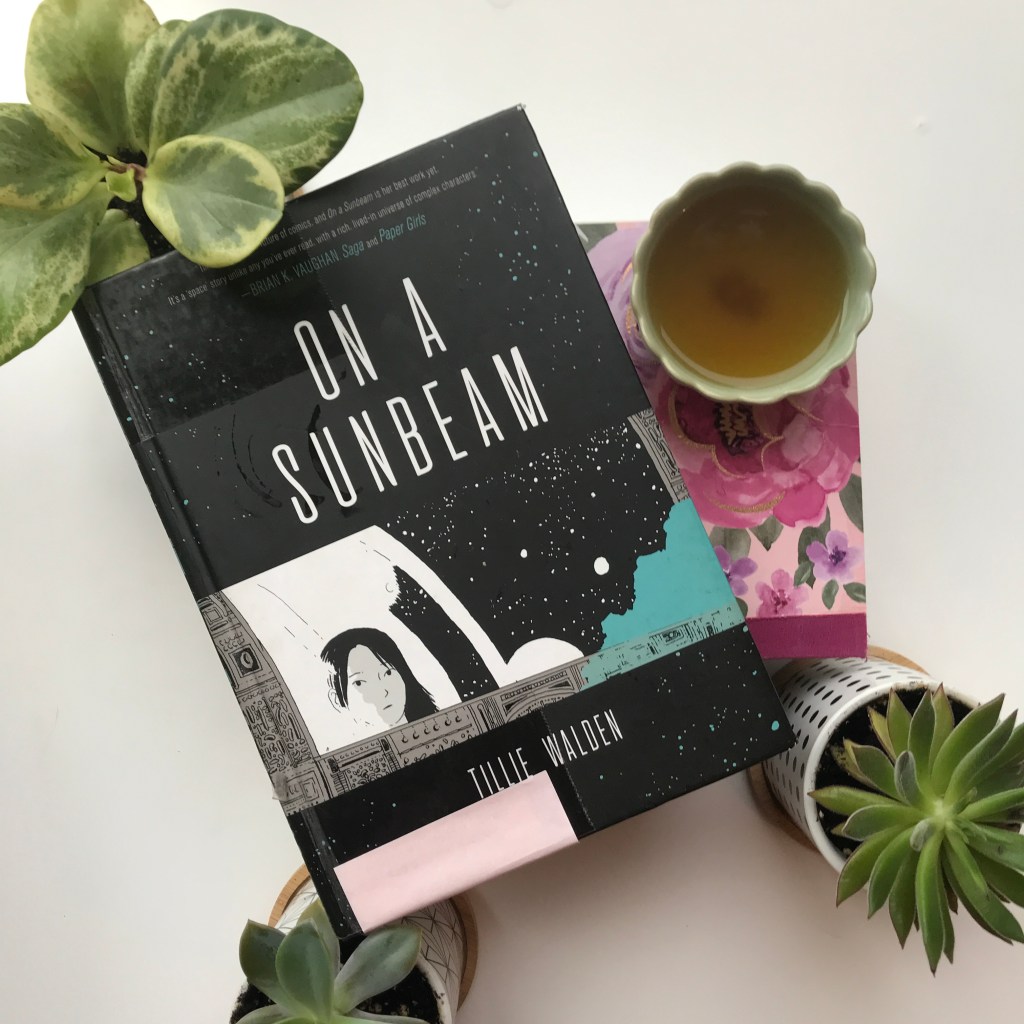
    Throughout the deepest reaches of space, a crew rebuilds broken-down structures to reassemble the past. As the newest crew member, Mia gets to know her team, the story flashes back to her time in boarding school, where she first fell in love. Soon, Mia reveals her purpose for joining the crew was to track down her long-lost love.

    On a Sunbeam is a warm blanket. There is so much love between these pages it soothes my soul. First, it is in the form of Sapphic relationships, especially between Mia and her first love, Grace. When Grace is suddenly ripped from Mia’s life, Mia attempts to defy the vastness of the entire. friggin. universe. just to find her again. Second, it is in the form of a found family– the crew Mia connects with to rebuild abandoned buildings in space.

    Beyond the storytelling, Tillie Walden’s illustrations are stunning, and her artwork is among my favorites. Her artwork in Are You Listening? is pretty incredible too.

    P.S. You can read On a Sunbeam online for free here.

  • Teas to Sip While Reading  Dragon Age: The Stolen Throne by David Gaider

    Teas to Sip While Reading Dragon Age: The Stolen Throne by David Gaider

    I am obsessed with the Dragon Age video game series. Like, replay-the-video-games-every-year obsessed. Like, check-for-Dreadwolf-updates-every-other-month-even-though-I-know-there-are-no-new-updates obsessed. Like, would-buy-all-the-Dragon-Age-collectibles-if-I-did’t-have-to-be-responsible-with-money obsessed.

    Dragon Age is a fantasy role-playing video game series that takes place on the continent of Thedas. The video games focus on the events that take place during the 100 years of the Dragon Age:

    • from the story of the Grey Wardens, who defeated the horde of twisted Dark Spawn during the Fifth Blight
    • to the growing unrest between the mages of the Free Marches city-state and their militant handlers, the Templars
    • to the re-creation of the Inquisition, an independent political and military organization trying to restore order to Thedas following an explosion at the Divine Conclave that resulted in the death of the leader of the Orleasian Chantry (their church, if you will) and a tear in the veil that allows demons to escape from the Fade (a magical realm) into the world (phew!). And, they must do this while navigating a world torn apart by the Mage-Templar War and an Orlesian Civil War.

    Beyond the current video games, there are books, comics, flash games, tabletop RPGs, web series, a movie, and a Netflix animation. The world is immersive. And, rumor has it, there is to be a full reveal of Dreadwolf in 2024. (But, who knows. I feel like Bioware has been teasing us about DA4 since 2018).

    I’ve never anticipated the release of a game this much, so I had the brilliant idea to read and play through as many of the 34 Dragon Age installments I can get my hands on in chronological order for my “canon playthrough”. (Okay, as I admit this to the world, my plan sounds more bonkers than brilliant, but I think other passionate fans of the series would understand.)

    The Book

    And so it begins with Dragon Age: the Stolen Throne by David Gaider. The events in this novel take place 30 years before the 1st video game, Dragon Age: Origins. In fact, it takes place before the actual “Dragon” Age. The novel opens with the country of Ferelden under occupation by the neighboring Orlesian Empire. The Rebel Queen of Ferelden, who has been fighting against Orlais, is murdered by traitorous, Fereldan nobles, but her son, Prince Maric survives.

    Fleeing from his mother’s assassins, Prince Maric runs into a band of outlaws led by Loghain (who Dragon Age fans will recognize as the antagonist from Dragon Age: Origins). The two reluctantly team up, reunite with the Rebel Army, and fight to expel the usurper Orlesian King of Ferelden. Of course, no Dragon Age story would be complete without the threat of villainous mages, a foreboding visit from the Witch of the Wilds, morally ambiguous Chantry leaders, and passionate romances between companions in between brutal battles for the future of Ferelden.

    I give it a solid…TWO STARS.

    The Stolen Throne was both too short for the story Gaider wanted to tell and too long for the story that was delivered. The author stuffed several years of story into 400 pages, so naturally, some elements of good storytelling were sacrificed. Gaider spared readers several years of redundant battles by summarizing a year of war into a few paragraphs. But, this also meant that crucial character development and relationship building were glossed over, and arguably, the characters, the interpersonal drama, and the dialogue between them is what makes the Dragon Age series so special.

    In the end, I would only recommend this book to folks who really embrace the fandom. I’m not sure there is enough here to keep even a casual player enticed. And forget it if you’ve never played a game before. So much of the world-building was lacking, so without prior knowledge of the world of Thedas, the Stolen Throne reads a bit like a generic sword and shield fantasy novel.

    The Teas

    Shou pu'erh in teacup

    Your Favorite Shou Pu’erh

    The Fereldans are a puzzle. As a people, they are one bad day away from reverting to barbarism. They repelled invasions from Tevinter during the height of the Imperium with nothing but dogs and their own obstinate disposition. They are the coarse, wilful, dirty, disorganized people who somehow gave rise to our prophet, ushered in an era of enlightenment, and toppled the greatest empire in our history.

    – Empress Celine I of Orlais, in a letter to her newly appointed ambassador to Denerim

    The Dragon Age continent of Thedas is an amalgamation of cultures and civilizations in Eurasia spanning from the Early Middle Ages to the Early Modern Period. Ferelden, the setting for the Stolen Throne, seems to resemble the period following the Anglo-Saxon conquest of England– not quite “barbaric” but not yet as opulent as Orlais or Tevinter. Not opulent at all, actually. It’s rural and dirty and always on the verge of battle against darkspawn or neighboring Orlais, and really I just imagine most people smell of wet mabari (a breed of war dog revered by Fereldans).

    And so, for my first tea, I suggest your favorite shou pu’erh. For the uninitiated, shou pu’erh is a fermented tea that, to me, is akin to licking a wet forest floor in the middle of Autumn, but in a good way. (Usually. I had a shou that tasted like how the animal pens at the county farm smelled, and that ended up down the drain. But, honestly, that sounds perfect for Ferelden, too). I sipped Pu-erh #1 from Friday Afternoon Tea, which is an undaunting introduction to pu’erh. It offers aromas of earth, wet wood, and dry leaves. (It appears this tea is no longer available, but check out more aged teas from Friday Afternoon here.)


    Black Tea Blend in Teacup

    Soldier’s Blend from Friday Afternoon Tea

    Loghain glanced uncomfortably at the knights who had been assigned to his command, once again wondering just how he had allowed himself to end up here. Thirty mounted men in heavy plate armor, each with more combat experience in the last year than he had in his life, and he was supposed to lead them?

    the Stolen Throne by David Gaider

    Picked simply for its name, the Soldier’s Blend from Friday Afternoon Tea is a blend of black tea, chicory root, cacao nib, and natural vanilla flavor. It’s reminiscent of a dark chocolate bar with a pop of tangy acid. I prefer to sip this one sweetened to draw out the creamy vanilla notes and to tame the dark chocolate flavor (I’m a milk chocolate girlie).


    Herbal Tea blend in teacup

    Shield Maiden from Friday Afternoon Tea

    The knight sheathed his sword. Reaching up to his helmet, he pulled it off, and Loghain realized the man’s voice had sounded strange because it wasn’t a man at all. Masses of thick brown curls were plastered against the woman’s sweaty pale skin, yet Loghain found it didn’t mar her striking appearance. She had high cheekbones and a strong chin that a sculptor would have ached for, yet carried herself with a confidence that told him the armor was no affectation. She was as much a soldier as the men she led, and while it was not unheard of in Ferelden for a woman to be skilled in the art of war, it was uncommon enough to be surprising.

    the Stolen Throne by David Gaider

    Rowan is easily my favorite character. She is betrothed to Prince Maric and will someday be Queen of Ferelden. But, in the meantime, she charges headfirst into battle alongside her army to win back the throne stolen by Orlais. Her story is part honor, duty, and total badassery, but it is also part unrequited love, which wrecks me every single time. She should have been the main character.

    Rowan kind of reminds me of Eowyn from the Lord of the Rings, so to honor Rowan, I’ve selected Shield Maiden from Friday Afternoon Tea, which is a blend of elderflower, pink peppercorn, roasted dandelion root, ginkgo biloba, cacao nib, and shavegrass. This golden-like-the-sun brew has a thick, luscious mouthfeel and it offers aromas of dried grass and dried wildflowers. There is also a soft heat from the pink peppercorns.


    Rose-infused Earl Grey in Teacup

    Your Favorite Rose-Infused Blend

    Delicate to the nose, comfort to the tongue, and, strangely, a half-remembered whisper to the ears. It is described as—and inspires—a wistful spirit. A vintner’s opus.

    Dragon Age codex entry on the tasting notes for Vint-9 Rowan’s Rose

    No Dragon Age story is complete without romance. (Except for Dragon Age 2. My headcanon Hawke only has eyes for Varric, who is not one of the game’s love interests :( and yes I am still bitter about this.) In The Stolen Throne, we get a double-whammy of unrequited love. ~*~spoilers!~*~ Loghain pines for Rowan who pines for Maric who has been promised to Rowan but pines for Katriel. sigh.

    For the final tea, I suggest your favorite rose-infused blend. To sweep me off my feet, I sipped the Orlesian Gray from Lady Gray Kitchen. It’s a citrusy Earl Grey blended with rose, lavender, and rosemary. As an added bonus, this particular blend was inspired by the kingdom of Orlais from the Dragon Age series!

  • Teas to Sip While Reading Spoiler Alert by Olivia Dade

    Teas to Sip While Reading Spoiler Alert by Olivia Dade

    I used to be adamant about my distaste for Romance novels. I knew them as the Harlequin Romance novels my mom used to devour alongside Junior Mints on a quiet Sunday afternoon or the bodice rippers one of my friends used to have her nose buried in during high school lunches. I thought they were an inferior literary genre– simple, formulaic, and full of smut, which I did not want to read; in hindsight, I think that perspective was deeply rooted in internalized misogyny. Then a few years back, I read the Flat Share by Beth O’Leary, and my appreciation for Romance literature started to blossom. I’m still learning my preferences when it comes to the genre, so my experience is hit and miss, and unfortunately, my most recent venture into the genre with Spoiler Alert by Olivia Dade was a big miss.

    In 280 words or less…

    Spoiler Alert centers around the fictional fandom of Gods of the Gates, a live-action fantasy TV series that created legions of fans worldwide but started going downhill once the writers and TV producers ran out of source material…not unlike the Game of Thrones series based on George R. R. Martin books. Our main character, April, is a Gods of the Gates superfan, who writes smutty fan fiction about her favorite on-screen couple– Aeneus and Lavinea. Marcus Castor-Rupp, the actor that portrays Aeneus on-screen, secretly writes fan fiction too, and in fact, is April’s longtime online pal and beta reader. The two are unknowingly united after April posts a photograph of herself in Lavinea cosplay on Twitter, and folks criticize her for her weight in true internet fashion. When Marcus sees the post, he decides to invite April to dinner.

    By the end of dinner, Marcus has made the connection that April is one of his closest online friends, but April is none the wiser. Geekery, drama, and steamy bedroom scenes ensue.

    The Review

    I picked up Spoiler Alert for its unabashed love for fan fiction and nerdy pop culture. I, too, loved fan fiction in my youth. I used to devour Sailor Moon fics as a pre-teen, and I used to write awful Lord of the Rings fan fiction when I entered high school. (It was bad, folks. So, so bad.) I also admire cosplay culture and spending the day at comic book conventions. But, beyond this really cool element, the story made me cringe. First, the premise seemed unbelievable. I mean, I understand there is an element of fantasy in romance novels, but it was hard to suspend disbelief for this one– an actor that secretly reads and writes fan fiction for a fandom in which he acts (about the character he plays!) is kind of weird and creepy.

    Also, the characters were the worst. It’s hard to enjoy a romance when I’m just rooting for the couple to break up.

    The way the author introduced April made it seem like she was going to be a confident, plus-size bombshell working in a STEM field– heck yeah! But, in reality, this was not the fat-positive story I thought it was supposed to be. One particular scene that stands out to me and represents about 90% of the conflict in this novel, occurs early in the relationship. In the scene, April and Marcus are discussing the hotel breakfast options. April asks Marcus, who adheres to a strict diet for his career, what’s good for breakfast. Marcus tells her that he usually just has a bowl of oatmeal with fruit. April took that personally and as criticism toward her body, so she gives Marcus the cold shoulder and cuts him out of her life. April exhibits this kind of behavior several times throughout the story– she projects her insecurities onto Marcus, makes assumptions about what he means even though he’s never ambiguous, and then gives him the cold shoulder. I found her behavior to be toxic at best, and I was screaming internally, “Use your damn listening ears, April!”.

    Marcus is only slightly more bearable. He’s kind and sensitive and nurturing and a bunch of other character traits that fall under the list of “THE PERFECT MANTM“. Somehow, all of that kind of makes him boring? Like, don’t get me wrong– I’d totally marry him, but I don’t want to read books about him if that makes sense. He does harbor a deep, dark secret though– he’s dyslexic? Oh, also he’s April’s longtime internet pal, but instead of telling her the truth, he not only hides it from her during their relationship but his online persona essentially ghosts her as well. (I mean, this is actually really bad. Maybe I wouldn’t marry him.)

    I will say, if you love #smutsmutsmut, you will appreciate the steamier scenes in this book. Dade leaves nothing up to the imagination; this stuff seemed explicit. I do not like #smutsmutsmut, however, because I am a prude, so listening to the audiobook version of Spoiler Alert, and having Isabelle Ruther narrate the sex scenes to me as I washed the dishes was mortifying. It made me so, so uncomfortable.

    The Tea

    Writer’s Fuel by Friday Tea

    The name of this blend may be a little on the nose, but I couldn’t resist pairing the Writer’s Blend with a novel about writing fan fiction. The Writer’s Blend is subtle pine smoked black tea that reminds me of many chilly evenings spent writing by the fireside.

    Direwolf from Friday Tea

    Rumor has it, Spoiler Alert is actually a self-insert fan fiction inspired by the Game of Thrones (or rather about a certain actor who stars in Game of Thrones?) Many Goodreads readers seemed to take issue with this, but I’m not particularly bothered by it. However, I cannot unsee the connection to Game of Thrones, which is why I’m pairing Direwolf with this book. It’s a blend that features juniper and sage and shou Puerh, and it tastes like hiking through a rainy pine forest.

  • Teas to Sip While Reading Mayflower: A Story of Courage, Community, and War by Nathaniel Philbrick

    Teas to Sip While Reading Mayflower: A Story of Courage, Community, and War by Nathaniel Philbrick

    Like many folks, or at least like the folks in my liberal echo chamber of the internet, I spent a fair amount of 2020 in lockdown unlearning everything I was taught in U.S. History class. Then I was, at some point, struck with the desire to take a somewhat-chronological deep dive into U.S. History and read nonfiction books from an array of perspectives. So, I started my journey with Mayflower: A Story of Courage, Community, and War by Nathaniel Philbrick. It’s a nonfiction novel that explores the national myth of the Pilgrims landing at Plymouth Rock and the first Thanksgiving, the relationship between Native Americans and English colonists that degraded over time, and inevitably the deadly wars such as the Pequot War and King Philip’s War.

    In hindsight, I probably should have chosen a book about Jamestown, but I forgot that was the first English colony until several pages into Mayflower. Or better yet, I should have started with 1491: New Revelations of the Americas Before Columbus by Charles C. Mann, which presents evidence that the Indigenous peoples of the Americas were more numerous and more culturally and technologically sophisticated than is taught in school. Yet, here we are, caught ‘tween decks with 102 Mayflower passengers, sailing for months across 3,000 miles of the ocean toward a land unknown to most Europeans of the time.

    I Love to Hate the Puritans.

    It is a love that stretches all the way back to 10th grade U.S. Literature thanks to The Scarlet Letter by Nathaniel Hawthorne and the Crucible by Arthur Miller. The Puritans…are a real piece of work.

    If you’re not familiar, or if your history is a little rusty, the Puritans were Protestants in the 16th and 17th centuries, who followed the teaching of John Calvin. They sought to purify the Church of England of Roman Catholic practices, and they believed salvation or damnation was predetermined by God, so there was nothing a person could do in life to change that outcome.

    The Pilgrims (of Plymouth Rock fame) were a sect of Puritans who, instead of preoccupying themselves with purifying the Church of England, separated from the church and created their own congregation to meet their pious, spiritual standards. This was illegal in England, so Pilgrims were persecuted (like, properly persecuted– imprisoned or executed), and to escape persecution, the Pilgrims initially fled to Leiden, Holland. Despite being able to practice their religion in peace in their new home, the Pilgrims found themselves losing their English identity, so they sought a new land where they could carve out their own New England and plant their roots and church.

    Don’t get me wrong, the Pilgrims were on stolen land and they brought deadly diseases, but I found myself fascinated by this group all the same. They mostly kept to themselves, and the strength of their community was admirable. The ways they held each other accountable– to ensure each member of the church worshipped God properly– was interesting, too. After church sermons, the Pilgrims would sit around and listen to inspired lectures about religious doctrine from nearly everyone in the congregation for HOURS. (When did they get any work done?) Also, despite their religiosity, the Pilgrims insisted on the separation of church and state. Even their marriages were secular because the Bible says nothing about a minister being involved in wedding ceremonies.

    And so, while the Pilgrims may not have been the actual worst, their degenerate spawn (their words, not mine) as well as the non-separatist Puritans that emigrated afterward were. Like, literally, the worst. Ironically, the Puritans fled to America to escape religious persecution only to turn around and become the persecutors themselves. After settling in America, they forced all non-European Puritans living in their colony to assimilate into their religion. Or, they shunned neighboring colonies of Quakers. Or they actively persecuted folks like Thomas Morton, whose Anglican practices made him look like a heathen pagan to the Puritans.

    Not to mention, they monopolized the purchase and sale of Native American land thereby cheating Native Americans out of free and fair trade.

    Also, the genocide and enslavement of the Native Americans.

    Like, it’s absolutely stunning how a group of godly people can be so inhumane and awful. And, it becomes even more horrifying when predestination is factored in because then all of their actions become “God’s will”, and I think that says a lot about the Puritans (and why I love to hate them), the founding of Colonial America, and eventually the founding of the United States.

    Even though the birth of the United States was more than a century away, some of the nations defining qualities began to develop (for better or for worse).

    For example, the Pilgrims shifted away from communal farming to farming their own, private plots of land, where they were permitted to keep their own produce. Crop yields grew exponentially, which paved the way for capitalism. We also see the beginnings of American individualism and frontiersmanship in people like Benjamin Church (Captain of the first Ranger force in America). American frontiersmen became invaluable during the United States’ westward expansion but also contributed to the continued genocide of the Native Americans. And, who could disregard the burgeoning intolerance of different cultures and especially religions, which began to bubble at Plymouth colony?

    The Puritans were advocates for public education though, so there is that.

    I have a hard time wrapping my head around how anyone survived back then. Especially before the invention of electric heat.

    At the time of writing this, I’m wearing a sweatshirt, and I’m buried under two blankets. I also have a newly insulated attic. And even though the heater is running, I’m still cold. The Pilgrims arrived in North America at the start of winter during the Little Ice Age, and somehow they survived. (Also, one of the Pilgrims notes that the Native Americans they first meet are hardly wearing clothes. This can’t be true, can it?)

    I also wonder how many calories did these people eat? Their only mode of transportation in America was walking the trails between settlements, which could take days to traverse. Not to mention, they always seem to be at war or farming or clearing forests or building houses. Seriously, how did they stay sufficiently fed? (Especially since the Pilgrims sucked at hunting and fishing, and they did not have livestock in the early years of the colony).

    And don’t even get me started about sailing across the ocean at night before the invention of radar. It’s bananas.

    Philbrick addresses biases and does a decent job of balancing perspectives about Native American and colonist relations.

    Before beginning the story, Philbrick addresses that most of what we know of 17th century New England comes from the English. And even though in recent decades, anthropologists, archaeologists, and folklorists have increased the world’s understanding of Native American culture and history during this time, Philbrick’s reconstruction is predominantly pulled from the written histories and letters of the Puritans. He is more sympathetic to the Pilgrims than perhaps a Native American historian might be, but Philbrick doesn’t romanticize the colonization of Plymouth, either. He is critical of the Pilgrims and their descendants where it is undeniably due.

    Mayflower attempts to bridge the gap between what is usually taught about the founding of the United States.

    In school, we tend to learn about Jamestown and Plymouth Rock, but then we fast forward 100-150 years to the eve of the American Revolution. Considering the book is called Mayflower, Philbrick actually spends most of the book focusing on the events that occurred after the arrival at Plymouth Rock. He writes about the relative peacefulness that lasted for about 50 years between the Pilgrims and their Native American neighbors and allies, the Pokanoket (later the Wampanoag). But, readers also learn about the Pequot War, which ended after about 700 Pequots had been killed or sold into slavery in the Caribbean, and ultimately created a power vacuum among Native American Nations in the region (also, let’s file “creating power vacuums” under defining characteristics of the United States). Philbrick also writes about the “degenerate” children of the Pilgrims, who in adulthood, failed to maintain diplomacy with their Native American allies, exploited the purchase and sale of Native American land to serve their new and booming colonist population, and executed three members of the Wampanoags following a rigged trial. All of this eventually led to another war– King Philip’s War– which lasted 14 months, created conflict from Massachusetts all the way up to Maine, and ended after thousands of Native Americans and colonists died.


    Overall, I thought Mayflower: A Story of Courage, Community, and War was a worthwhile read. Philbrick’s writing is approachable and engaging, even for folks who just have a passing interest in the topic of the Mayflower and the colony at Plymouth (like myself). His narrative is rich with description as he recreates life in 17th century Massachusetts, and he inserts anecdotes (pulled from the letters and journals) throughout to help readers connect with the colonists and Native Americans from the past on a more human level. I did slog through some of the chapters about King Philip’s War, but I suspect that had more to do with my interest in war strategy. (Although, looking back, my eyes glazed over when learning about King Philip’s War in AP U.S. History in the days of yore as well…).

    Books & Tea

    It feels kind of weird to pair a tea with a non-fiction book. And I imagine depending on the topic, this may border on inappropriate. But, what the heck, I’m committed. If you pick up Mayflower by Nathaniel Philbrick, may I suggest pairing it with the following teas:

    Seaworthy from Friday Afternoon Tea

    Seaworthy is a blend of aloe vera flesh, white tea, blue cornflowers, and elderberries. It offers a thick and luscious mouthfeel but delicate vegetal, floral, and peppery aromas. I recommend cold steeping this one to draw out the sweetness of the white tea.

    Cliff by the Sea from Friday Afternoon Tea

    Cliff by the Sea is a blend of green tea, orange peel, apple, pear, wakame seaweed, and sea buckthorn berry. It tastes like the ocean breeze, but the fruit keeps it from wading too far into brine and seaweed territory.

  • Finding Balance in a Cup of Phoenix Oolong from DAVIDsTEA

    Finding Balance in a Cup of Phoenix Oolong from DAVIDsTEA

    Somehow, 2021 has been a more challenging year than 2020. I feel guilty for saying that for obvious reasons, but 2021 has left me feeling languished and stretched too thin (“like butter scraped over too much bread” as Bilbo Baggins might say). However, amid Oliver’s recent recess from school, I finally found relief. Granted, I cried mercy two days into the workweek and finally gave myself permission to take time off instead of trying to work with a toddler at home. But, now here I am, finding peace in a cup of Phoenix Oolong from DAVIDsTEA.


    The dark brown and charcoal strips of oolong offer a weak scent upon opening the bag. I think of sweet grass on a humid day, but it took a lot of effort to find those notes. After tumbling around in a warm gaiwan however, the tea leaves come alive. They are bold and fragrant fruit and floral, like lychee and plums.

    A quick 10-second steep produces a liquor that reminds me of honey, and the wet leaves smell like unripe plums or fresh wildflower petals that have been crushed. The tea offers floral aromas layered with honey or malt, and it makes me think of syrupy, tinned lychee. I also notice a dry bitterness that reminds me of grapefruit or its rind.

    A second quick infusion of unknown seconds (because I am still toddler-wrangling, after all) sheds its brown hues in favor of rich yellow. The honey flavor has already dissipated, and this time the tea offers floral aromas with the sourness of plum skins on the finish.

    A third and fourth infusion of 22-seconds and 27-seconds respectively (which I know because Oliver and I practiced counting together) produces softer florals yet and something that tastes both smoky and like a handful of dimes. The last few infusions after that become one note– more soft florals, but pleasant all the same.


    Dan Congs, like the Phoenix Oolong from DAVIDsTEA, hold a special place in my heart. It’s a kind of tea I discovered in the early days of the pandemic, and I spent many weekends getting to know it back then. Perhaps it seems weird to want to be transported back to April 2020, but amid all of the media coverage, the late night scrambles to process payrolls because we didn’t know what a lockdown would mean, and the refreshing of the State of Michigan COVID site at 3PM each day to see the COVID case and death count climb…I found moments of peace too.

    Like when cabin fever drove me to rearrange the furniture in my house, which created so much more space in the living room for Oliver to sprawl out and color. Or when we had to get creative about outdoor play spaces because the community playgrounds were taped off; so, we spent afternoons and weekends on abandoned football fields and baseball diamonds blowing bubbles, kicking a ball around, or having a picnic lunch. Or when I had the time, or perhaps more accurate, the mental bandwidth to create. I’m proud of the blog posts and youtube videos I put out into the world last year, and I miss it. I miss this…

    Somehow, finding balance between mother, employee, and self came easier back then, but I finally felt that balance again today in a cup of Phoenix Oolong.


    Thirsty? Why not try the Phoenix Oolong from DAVIDsTEA?

    Already tried the Phoenix Oolong from DAVIDsTEA? Why not try these tasTEA recommendations:

  • Teas to Sip While Reading The Southern Book Club’s Guide to Slaying Vampires by Grady Hendrix

    Teas to Sip While Reading The Southern Book Club’s Guide to Slaying Vampires by Grady Hendrix

    Ever since I read My Best Friend’s Exorcism a few years back, Grady Hendrix has topped a very short list of Authors Whose Books I Instantly Buy Hardcover Copies of Upon Their Release, While Simultaneously Reading Their Backlist Books. The list of authors is shorter than the title… So, when the Southern Book Club’s Guide to Slaying Vampires was released, I told multiple people I wanted it for Christmas. It was the only thing I asked for, last year. Thankfully at least one person listened to me, and the book didn’t disappoint!

    In 280 words or less…

    1990’s suburban housewives escape boredom in Charleston, South Carolina through a book club that reads true crime novels. Real excitement enters their lives when James Harris moves in, and the children in their town start to go missing. The Southern Book Club thinks they’re hunting a serial killer, but they soon discover their predator is something supernatural instead.

    The Review

    The Southern Book Club’s Guide to Slaying Vampires is a disturbing twist on vampire lore, but monsters are not the only horror in this novel. This novel is also about a mother who loses her sense of self as she submits to domesticity and later descends into madness after her husband gaslights her. Patricia’s true crime book club becomes her only refuge, but it’s only a matter of time before monsters– both the kind that is supernatural and the kind that is found in the home– infiltrate that too. From this reader’s perspective, it was the psychological trauma Patricia endured, not the literal monster, that was most terrifying. Vampires are pretend (aren’t they?), but emotional and mental abuse is very, very real. And in the Southern Book Club’s Guide to Slaying Vampires, it felt real. I felt Patricia’s isolation as one-by-one her children and family and friends were stolen from her. I felt Patricia’s powerlessness when she tried to reveal James Harris’s true nature but was instead silenced by her own husband. What makes this story worthwhile though is the strong women and their friendship that is found at the center of the story. Even when external forces threaten these women and drive them apart, they still rally behind each other and fiercely protect each other when they need it the most.

    This novel isn’t without its flaws though. Most notably, Hendrix attempts to illustrate the effects of systemic racism in the Charleston community but doesn’t seem to go beyond the surface of the issue. In many ways, the interactions between the Black women and the White women seem like a tool to wake up the White women to the racial injustices in their community. Also, when Black children start to go missing, Patricia (a white, upper-middle-class woman) tries to save them, and she comes across as a “White Savior“. Especially because it was really Mrs. Greene, a Black woman, who did most of the work to take down the monster.

    Still, I thought the Southern Book Club’s Guide to Slaying Vampires was a good book, and I never missed an opportunity to read some of the more gruesome passages to my husband just to watch him squirm… and he loves horror movies! This is a moderately paced, gory, and suspenseful novel but ends with satisfying vindication. If you like your horror fiction with a hint of true crime and Southern hospitality, you won’t want to miss this book.


    The Teas

    Cold Brew Black Tea with Peach and Apricot from Lipton

    Sweetened iced tea steeped from tea bags found among grocery store aisles is inescapable in the south. (I actually think the consensus is Luzianne > Lipton, but I’m working with what I have.) Add to that some peach flavor (because South Carolina actually harvests more peaches than the Peach State, Georgia), and you have the perfect nod to the book’s setting. Plus, I have memories of my own mother sipping instant Lipton iced tea (the horror!) during the 90s, and Lipton’s Cold Brew Black Tea is as instant as I’m willing to go.

    Actually, if I’m honest, I didn’t enjoy the Lipton Cold Brew, but I can still imagine main character, Patricia, sun brewing this tea all the same.

    Picard Blend Black Tea from Plum Deluxe

    The Picard Blend Black Tea from Plum Deluxe is a pecan-flavored Earl Grey, and it captures the spirit of the book club perfectly. It’s an Earl Grey, so it’s perfect for suburban stay-at-home moms hellbent on keeping up appearances. The pecan-flavor is a (delicious) twist and represents the unexpected true crime book club that Patricia and her friends keep hidden from their husbands.

    This blend doubles as a tribute to the setting of the book. The only blend that could best it is the Porch Sippin’ Pecan Black tea from Plum Deluxe.

    Caramel Shortbread from DAVIDsTEA

    The Caramel Shortbread from DAVIDsTEA offers a tart, fruity flavor that fades to a buttery sweetness, which reminds me of the crispy edge of a cookie. The finish is a mild nuttiness and the twang of something zesty that I associate with shortbread. I imagine this conservative cookie is the sweet treat Patricia and her friends would bake and serve during book club meetings.

    Alternatives include: Chocolate Chip Cookie from DAVIDsTEA or Buttery Shortbread Herbal from Plum Deluxe.

    Blood Orange Reflection from Plum Deluxe

    This hibiscus-heavy blend is too tart for my personal tastes, but the red color and the blood orange flavor make the Blood Orange Reflection from Plum Deluxe the perfect blend for the blood-sucking fiend in this novel. I know the title alludes to a vampire, but the villain is more like a bug that needs to be exterminated.

    Alternatives include: Blood Orange Tea from Adagio Teas

    If you’re a fan of horror fiction, let me know about your favorites in the comments. And, if you’ve read the Southern Book Club’s Guide to Slaying Vampires, let me know what you thought of it!

  • Five March Favorites

    Five March Favorites

    I always seem to start these posts by writing something along the lines of, “I can’t believe [insert month here] is already over. How did another one slip through my fingers?” But alas…here I am…wondering how another month flew by. This is absolutely a reflection of how present I am each day. I’m always looking forward– forward to better weather, forward to when we can feel safe in public again, forward to when my tea budget resets again… Perhaps April should be an exercise in intention and being present. Until then, let’s take a look back at some of my March Favorites.

    Tea Thoughts Countdown to Spring Box

    I’ve raved aplenty about Tea Thoughts over on my YouTube channel and my Instagram feed, but I’ve not yet dedicated any space on my blog to Nazanin’s wonderful creations. Nazanin is one of my favorite tea-adjacent creators…nay! She is one of my favorite creators, in general! She designs tea-related stationery and apparel, and she also crafts tea accessories like coasters, teacups, and tea pets. And while I wear my gaiwan t-shirt or sweatshirt literally every week (depending on the weather), it’s her curated tea boxes that have stolen my heart.

    The 2020 Countdown to Spring box was Japan-themed, so we sipped through Bancha, Kukicha, Matcha, and even sakura blossoms! This year, the Countdown to Spring box centers around bowl brewing tea. Day One was an adorable bunny and sakura printed bowl– a chawanmushi, actually– and the following days were teas that we could experiment bowl brewing with.

    I cannot recommend the Tea Thoughts boxes enough. If you haven’t experienced one, I recommend signing up for the Tea Thoughts newsletter, so you can be among the first to be alerted of their arrival in the shop. These boxes sell out quickly, and I believe her Countdown to Spring box was sold out within 24 hours.

    Springtime Weather

    Speaking of Springtime, I feel as though it has arrived early this year! It’s not uncommon for Michigan to see snowfall in April. I supposed snow could still “grace” us with its presence, but I’m holding out that the clear skies, sunshine days, and 60-degree weather is here to stay.

    I mentioned recently that one of my unofficial New Years Resolutions was to enjoy a cup of tea outdoors at least once a day, but frigid February temperatures kept me indoors all month long. The weather has been so nice recently that I’ve finally been able to enjoy a cup of tea on the back porch again. Lately, I’ve been enjoying oolong teas and green teas while listening to morning birdsong.

    Tea Mail from Masters Teas

    The first of the 2021 harvests are arriving at Masters Teas, and a few were sent my way to sample. Last year, I was lucky to try the 2020 Rohini First Flush Darjeeling, and this year I get to try the 2021 Rohini First Flush Oolong and the Rohini Gold Wire, which is an Autumnal Darjeeling. I also received some 2020 harvests to sample such as Qimen Caixia, Jun Shan Yin Zhen, Ma Liu Mi, Shi Feng Long Jing, and another tea from the Rohini Estate– a first flush white tea! I’ve never tried a white tea from India before, so I’m pretty excited about that.

    I’ve already dipped into the Qimen Caixia because I was certain I had never tried this tea before. Turns out Qimen = Keemun, which I’ve only ever had in breakfast blends. I always thought this tea added a smoky element to breakfast blends, but after trying this tea on its own, I realize it’s more complex than I realized. It offers toasty and honey aromas followed by soft florals on the finish. In later infusions, I notice something that reads as lemon and pine.

    My New, New Gaiwan

    I treated myself to a new gaiwan earlier this year. It was a Blood Moon Light & Shadow gaiwan from Crafted Leaf Tea. These kaolin clay gaiwan are fully handmade, and the kiln and firing process creates unique designs, so no two gaiwan look the same. It pours like a dream, and the cup doesn’t become scorching hot like my porcelain gaiwan, which means I don’t burn my fingers. Unfortunately, after about two weeks of owning this gaiwan, I dropped a watermelon on my tea tray, and it crushed the lid. (Everyone gets really curious about the logistics of this one because who drops watermelons on a gaiwan? But, the tea tray and gaiwan were sitting on my kitchen counter waiting to be dumped and rinsed).

    I loved this gaiwan so much that I turned right around and bought a new one less than an hour later, and it finally arrived! I don’t love the design of the new gaiwan as much as the original. The original was a lovely purple color, and my new one is mostly grey with some faded purple along the lip of the cup. It still pours like a dream though! (Also, the cup of my old gaiwan survived, so I imagine I will pair the new lid with the old cup like the heathen I am).

    P.S. The 2020 Moon Waffles from White2tea was the first steep.

    Oliver, of course!

    I mean, of course Oliver makes this list every time. He’s my favorite Favorite!

    Toddlerhood has challenged me in ways I did not expect and did not want. Early on, I learned that I have about as much patience as my two-year-old, so we’ve both been working on that these last few months. As a result, we’ve become really good at counting to ten as a way to cool down rising tempers. We also count to ten to help with waiting for me to switch gears from working to giving him a snack or playing a game with him. The downside is, I can’t give him “until the count of five” to do a task he doesn’t want to do because he just counts with me and continues to ignore my requests.

    He’s becoming more and more himself though, and that’s been exciting to watch. He loves playing outside, sliding down the big kid slides, playing hide-and-seek, drawing all over my notebooks and work folders, reading the Narwhal and Jelly Bubble! book, talking to grandparents over FaceTime, singing along with music, playing Toca Blocks, and as always, trying all of my teas.

    I also love hearing from his teacher that he’s a sensitive boy and that his favorite activity is going on walks around the school. She said they push all of the toddlers in strollers, but he’s the only one they let walk because he insists on it. I’m not surprised though– walking to and from school is a big part of our weekday routine. Also, when I dropped him off at school recently, one of his pals ran up to him greet him and hugged him. (Oh, my heart!)

    Honorable mentions

    The Earl Grey chocolate bar from Crow and Moss My new, yellow fingernail polish Waking up early to enjoy a cup of tea and a chapter of the Lord of the Rings before the family wakes up Staying up past my bedtime to sneak in some time with Mass Effect Andromeda The exciting news that the release of the Mass Effect Legendary edition is a few weeks away, and news that a Mass Effect 5 may be on the horizon, soon

    I hope you had a happy March! Let me know about your March favorites in the comments.

  • Blooming Tea on an Almost-Spring Day

    Blooming Tea on an Almost-Spring Day

    One of my unofficial New Year’s Resolutions was to enjoy at least one cup of tea outdoors each day. So far, I’ve neglected this practice, but in my defense, I always forget how bitter cold February can be in Michigan. I’m not sure any amount of cabin fever can drive me outdoors in ten-degree weather just for a ten-minute cup of tea. But, March is here now. The sun is shining, the snow is melting, the ground is thawing, and warmer temperatures are finally luring me outdoors again. As springtime creeps in again, I find myself reaching for blooming teas, and most recently I enjoyed the Black Gold Blooming Tea from California Tea House.

    Armed with a glass teapot, a kettle, a cup and saucer, and a ball of Black Gold (a blend of Monkey Paw black tea, marigold, and jasmine), I retreated outdoors to enjoy a quiet moment before the rest of the neighborhood woke up. Normally, I am distracted when preparing tea, but blooming teas command attention. After submerging the bloom in boiling water, I watched the tea steep for several minutes. Swirling among hot water and steam, black and occasionally golden-tipped tea leaves opened revealing a bouquet of marigold and jasmine.

    The tea was malty but smooth with a subtle floral aroma that did quite register as jasmine. I would have been relieved by this months ago when I first placed the order because I did not care for jasmine. However, I have had several positive experiences with the ingredient since, and I’m developing a fondness for it. In defense of the tea though, I may have used more water than I usually would for a blooming tea. Still, the Black Gold was a treat enjoyed while soaking in birdsong and golden sunshine stretching across grass. It was the exact kind of mindful moment to mark the end of a busy work week and the beginning of what would turn into a much-needed, relaxing weekend.

    Have you tried a blooming tea before? Tell me about your favorites in the comments!

    Already tried the Black Gold Blooming Tea? Why not try these tasTEA recommendations?

    Disclosure: This tea was provided for free in exchange for a review. Thoughts are ever my own.