By Golly, Ollie!

💾 a blog about books, tea, & geekery

Tag: historical fiction

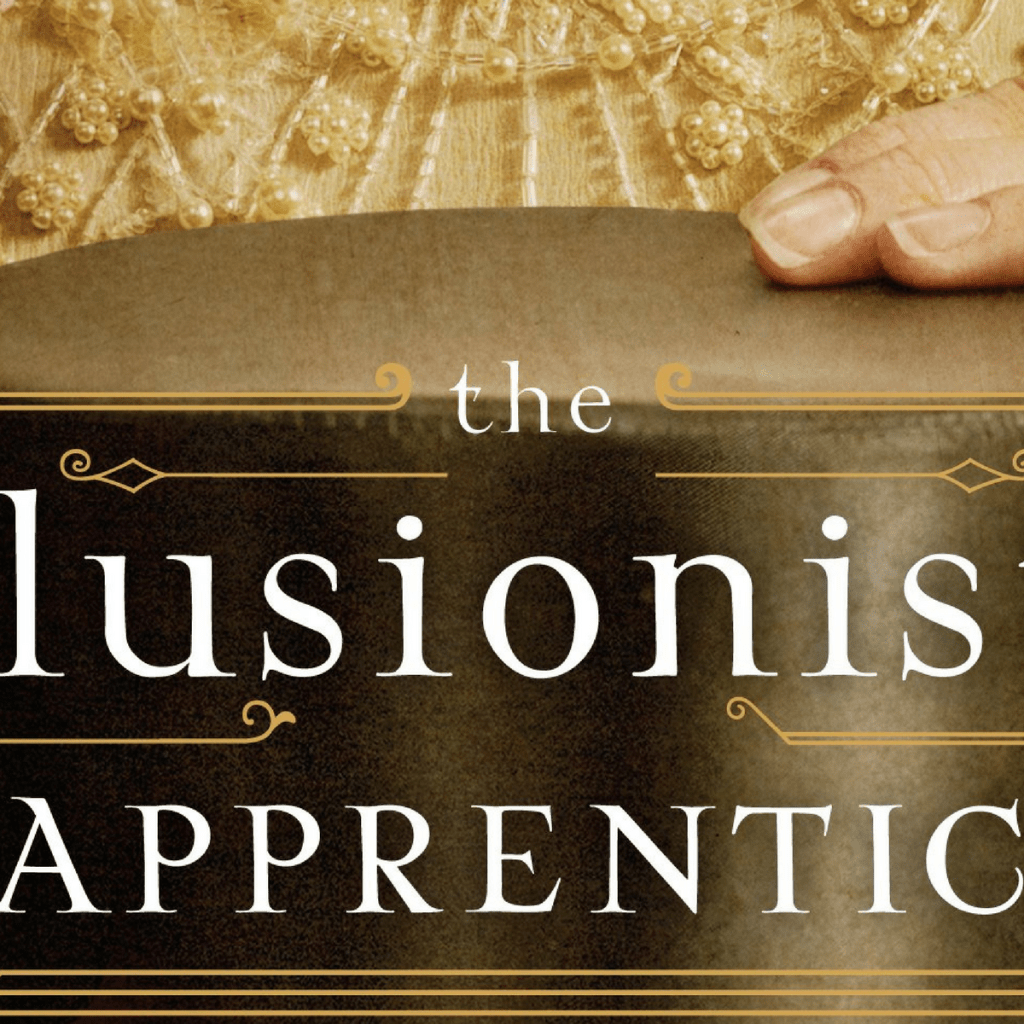
  • The Illusionist’s Apprentice by Kristy Cambron

    The Illusionist’s Apprentice by Kristy Cambron

    The Enemies of Versailles by Sally Christie is such a tough act to follow. Especially if the next book that is picked up is also of the historical fiction variety. How could anything even compare to a book that I’ve anticipated reading for months? Enter The Illusionist’s Apprentice by Kristy Cambron– a bit of a historical “whodunnit” set in 1927 Boston and on the Vaudeville stage. It had the ingredients to become an instant favorite, yet in the end, I just sort of felt like something was missing.

    I think the thing that frustrated me the most about The Illusionist’s Apprentice is it’s one of those stories that bounce around the timeline. The story opens in 1926/1927 in Boston. Then, six chapters later, we’re back in 1907 to reveal some small insight into one of the characters. A few pages later, we’re back in 1927 only to bounce back to 1924 in the next chapter for some more character insight. And so on and so forth. Part of me can appreciate what the author was trying to do; there were so many details in the past that seemed unassuming at first, but they ended up being totally relevant to the end of the novel. My biggest qualm was…I just felt disoriented. And I don’t think it’s through any fault of the author or the story; I think I just prefer more linear storytelling. I struggled to keep track of the timeline in Linda Lafferty’s the Girl Who Fought Napoleon after all. That being said, I also felt…well…bored? The timeline shifts slowed the pacing of the story down, sure, but what really frustrated me was that I finally discovered a novel that boasts being written about the jazz age that doesn’t revolve around/involve flappers, and I kept getting stuck in Wren’s sad childhood in 1907.

    What I was really sticking around for was Cambron’s writing and world-building. It was beautiful and atmospheric and full of intrigue both on and off stage. Plus, I was totally enamored by her choice to set the story against America’s Vaudeville scene, which is this jarring juxtaposition of gilt and grit and occasionally the grotesque. It’s a breeding ground for secrets and double lives and protagonist Wren Lockhart (illusionist, not magician) has them both; she’s a puzzle I wanted to unlock.

    It also made me want to listen to nothing but dark cabaret music for about a week straight, so I’ll leave you with this:


    The Illusionist’s Apprentice by Kristy Cambron

    Released: March 2017

    [goodreads | indiebound]

    Boston, 1926. Jenny “Wren” Lockhart is a bold eccentric—even for a female vaudevillian. As notorious for her inherited wealth and gentleman’s dress as she is for her unsavory upbringing in the back halls of a vaudeville theater, Wren lives in a world that challenges all manner of conventions.

    In the months following Houdini’s death, Wren is drawn into a web of mystery surrounding a spiritualist by the name of Horace Stapleton, a man defamed by Houdini’s ardent debunking of fraudulent mystics in the years leading up to his death. But in a public illusion that goes terribly wrong, one man is dead and another stands charged with his murder. Though he’s known as one of her teacher’s greatest critics, Wren must decide to become the one thing she never wanted to be: Stapleton’s defender.

    Forced to team up with the newly formed FBI, Wren races against time and an unknown enemy, all to prove the innocence of a hated man. In a world of illusion, of the vaudeville halls that showcase the flamboyant and the strange, Wren’s carefully constructed world threatens to collapse around her.

    Layered with mystery, illusion, and the artistry of the Jazz Age’s bygone vaudeville era, The Illusionist’s Apprentice is a journey through love and loss and the underpinnings of faith on each life’s stage.

    TLC Book Tours

    This novel was provided for free from the publisher and TLC Book Tours in exchange for an honest review.

  • The Enemies of Versailles by Sally Christie

    The Enemies of Versailles by Sally Christie

    Pardon me. I’m just feeling a bit emotional right now. I’ve officially finished the final installment of the Mistresses of Versailles series by Sally Christie– the Enemies of Versailles. I know I’ve dedicated a fair amount of blog space to this genius series already but allow me just one more post (at least this quarter because I know the Enemies of Versailles is going to be mentioned again in my 2017 wrap up post).

    My love for this series was so unexpected because it was entirely out of my comfort zone. I only dabble in historical fiction, and I try to steer clear of any books that could be described as “steamy”. Yet, here I am, consuming these books faster than Victoire consumes her cordial. These books are vibrant and full of life and personality. They’re hilarious. And, tucked in between bed sheets pages of scheming mistresses and unfaithful kings, there is actually a lot of substance, whether it’s the surprising depth of the characters or…well…the socio-economic structure of 18th century France, the fall of the House of Bourbon, how brothels work, and the French Revolution.

    The series as a whole was consistently well-written and engaging, but the Enemies of Versailles was perhaps my favorite novel of the trilogy. In the Sisters of Versailles and the Rivals of Versailles, there were several narrators. While the shift between the many narrators made the novels seem fast-paced, I did find the flip-flopping to be confusing at first. I also found some narrators more compelling than others. But the Enemies of Versailles only had two narrators– Comtesse du Barry, the king’s official mistress, and Madame Adelaide, the king’s daughter.

    It’s been interesting to watch King Louis XV’s mistresses decline in social standing throughout the course of the series. The Sisters of Versailles were nobles. Madame Pompadour was bourgeois. And Comtesse du Barry, despite what the name suggests, was of even lower social strata and made ends meet through prostitution. Comtesse du Barry, like previous mistresses, was portrayed as an airhead at first, distracted by gilt and gems, but she later grows into her role at Versailles (thankfully not as maliciously as previous mistresses).

    To give a voice to Madame Adelaide, the king’s daughter was also a fascinating choice. I suspect one of the reasons is to juxtapose France’s First Estate (the nobles) against the Third Estate (the commoners), as the tides of revolution lap at the gates of Versailles. But it also demonstrates how unnatural the royal family feels– like the queen and her children just simply existed in the background because King Louis XV had more important things to pay attention to (certainly not church sermons though). With the children being taken care of by wet nurses and tutors and whose marriages were treated as business deals and war strategies, it’s surprising they would even have any kind of attachment to their parents. And yet, Madame Adelaide seems to truly adore her father and not just because he is the King of France. Their relationship made me feel so sad though. I got the sense that Madame Adelaide wanted to have a real relationship with her father but couldn’t. Not only has she been constantly cast aside when King Louis XV preferred to dote on mistresses, she, like every other royal subject, had to request an audience with her father!

    The Enemies of Versailles didn’t seem as fast-paced as the two previous novels, but there was more character-building and more world-building this time around. Christie’s challenge was to make readers care about these two women, who seem self-centered and too caught up in living in material excess (maybe kind of like the Kardashians). Because, inevitably, the novel ends at the beginning of great turmoil– the French Revolution. The final scenes of this novel, this series, when royalty is being beheaded and nobles are being tried for being spies for the old regime are some of the most emotional. Throughout this entire series, Louis, his mistresses, his family, the court at Versailles, heck! even church leaders are caught up in this gross obsession with wealth at the expense of everyone else. They’ve bankrupted their country and raised the deficit and yet, the government will not make any motion to reform taxes. People are suffering, and to make matters worse, the nobles don’t even recognize the damage they have done. There is this wonderful passage to capture this:

    “Six hundred black crows breaching the walls of our palace. Who are these men? Nothing, their blood denuded of that essence that marks the noble races. The nobles have defended France, the clergy has prayed for France, but what have these men done? Probably they do some tasks that are important, but they are menial ones, and why should they have any glory or power for that?

    And yet, the final chapters are the most gripping. Despite their attitudes, I still hoped Madame Adelaide and her family could escape the revolution. I still hoped Comtesse Du Barry’s pleas wouldn’t fall on deaf ears as they dragged her to the guillotine.

    I can’t praise these books enough!


    The Enemies of Versailles (the Mistresses of Versailles #3) by Sally Christie

    Released: March 2017
    Genre: Historical Fiction, Romance
    Age Group: Adult

    [goodreads | indiebound]

    In the final installment of Sally Christie’s “tantalizing” (New York Daily News) Mistresses of Versailles trilogy, Jeanne Becu, a woman of astounding beauty but humble birth, works her way from the grimy back streets of Paris to the palace of Versailles, where the aging King Louis XV has become a jaded and bitter old philanderer. Jeanne bursts into his life and, as the Comtesse du Barry, quickly becomes his official mistress.

    After decades suffering the King’s endless stream of Royal Favorites, the princesses of the Court have reached a breaking point. Horrified that he would bring the lowborn Comtesse du Barry into the hallowed halls of Versailles, Louis XV’s daughters, led by the indomitable Madame Adelaide, vow eternal enmity and enlist the young dauphiness Marie Antoinette in their fight against the new mistress. But as tensions rise and the French Revolution draws closer, a prostitute in the palace soon becomes the least of the nobility’s concerns.

    Told in Christie’s witty and engaging style, the final book in The Mistresses of Versailles trilogy will delight and entrance fans as it once again brings to life the sumptuous and cruel world of eighteenth century Versailles, and France as it approaches inevitable revolution.

    TLC Book Tours
    This novel was provided for free from the publisher and TLC Book Tours in exchange for an honest review.

  • Four Reasons Why You Should Read the Mistresses of Versailles Series by Sally Christie

    Four Reasons Why You Should Read the Mistresses of Versailles Series by Sally Christie

    If you’ve read Books & Tea By Golly, Ollie! longer than a minute, you will know two things:

    1. I’m worse than you at reading series. Unless you are a non-reader; then I suppose you are worse by default. (Seriously though. I’m really bad.)
    2. Despite my lack of follow through with book series, I’m obsessed with the Mistresses of Versailles series by Sally Christie. I devoured the Sisters of Versailles. I read the Enemies of Versailles with fervor. I was even inspired to make some Pain Au Chocolat for the mistresses!

    To say I’ve been eagerly awaiting the release of the third and final installment almost feels like an understatement, and now it’s almost here. The Enemies of Versailles officially hits the shelves March 21, 2017. If you’re late to the Sally Christie bandwagon, or you’re not quite certain you really want to invest your time into a historical fiction series, hopefully I can change your mind.

    Four Reasons Why You Should Drop What You’re Doing and Read the Mistresses of Versailles Series Right Now

    1. If you’re a reluctant reader of historical fiction, the Mistresses of Versailles will change your mind. I think historical fictions gets a bad wrap. It’s sometimes perceived as stuffy and dry, and perhaps this is because we can still recall how dull high school American History or World History classes were. Or, perhaps we’re intimidated by tomes full of information rich world building. Either way, the Mistresses of Versailles shatters these perceptions. Sally Christie’s novels are full of life and personality and vivid imagery of life at Versailles and 18th century France.
    2. These books will make you laugh out loud. This is another way this series will shatter your perception of historical fiction. I think it’s an unwritten rule somewhere (that Sally Christie tossed to the wind) that historical fiction is definitely, 100% not supposed to be funny. Aside from the mistresses’ schemes and antics, Christie’s writing is clever and witty, which will have you snorting and chuckling (chortling?).
    3. If you’re a fan of double entendres, you will find this series satisfying. Allow me a brief digression. Fact: I’m a fan of Shakespeare. Also Fact: One of the reasons I love Shakespeare’s plays so much is because of all of the eloquently disguised references to butts. I happen to have a crude sense of humor, and Shakespeare makes me giggle chortle, and Sally Christie definitely gives Shakespeare a run for his shillings.
    4. You will realize that you’re actually mildly obsessed with 18th century France. Going into this series, I knew very little about 18th century France aside from the French Revolution (because school) and Marie Antoinette (because Sofia Coppola), and I found neither to be particularly memorable. (The Mistresses of Versailles takes place before the French Revolution anyway). In between chapters, you’ll find yourself surfing Wikipedia to learn everything there is to know about 18th century France, and you’ll start secretly hoping that Sally Christie does to the House of Bourbon what Phillipa Gregory did to the Plantagenet and the Tudors.

    the Enemies of Versailles (the Mistresses of Versailles #3) 
    by Sally Christie

    In the final installment of Sally Christie’s “tantalizing” (New York Daily News) Mistresses of Versailles trilogy, Jeanne Becu, a woman of astounding beauty but humble birth, works her way from the grimy back streets of Paris to the palace of Versailles, where the aging King Louis XV has become a jaded and bitter old philanderer. Jeanne bursts into his life and, as the Comtesse du Barry, quickly becomes his official mistress.

    After decades suffering the King’s endless stream of Royal Favorites, the princesses of the Court have reached a breaking point. Horrified that he would bring the lowborn Comtesse du Barry into the hallowed halls of Versailles, Louis XV’s daughters, led by the indomitable Madame Adelaide, vow eternal enmity and enlist the young dauphiness Marie Antoinette in their fight against the new mistress. But as tensions rise and the French Revolution draws closer, a prostitute in the palace soon becomes the least of the nobility’s concerns.


    Have you read any of the books from Sally Christie’s Mistresses of Versailles series? 

  • A Solid Dose of Nostalgia | The Mermaids of Lake Michigan by Suzanne Kamata

    A Solid Dose of Nostalgia | The Mermaids of Lake Michigan by Suzanne Kamata

    I’m calling it right now– The Mermaids of Lake Michigan by Suzanne Kamata will be one of the top five books I read during 2017.


    the-mermaids-of-lake-michigan-book-coverThe Mermaids of Lake Michigan by Suzanne Kamata

    Released: February 14, 2017
    Publisher: Wyatt-MacKenzie Publishing
    Add to Goodreads
    ★★★★☆
    Amazon|BAM|B&N

    Elise Faulkner is more at home in the waters of her beloved Lake Michigan than on land where her beauty queen mom is always on her back about her lack of a social life; her sister is dating the boy of her dreams; her favorite penpal–the one who wrote about mermaids in Ghana–has gotten married and ended their correspondence; and no one’s allowed to talk about her glamorous great-grandmother, the deep-sea wreck diver. Elise is biding her time with books until she can flee. But then crazy Chiara Hanover pops into her life, as does Miguel, a mysterious carnival worker whose dark future has been predicted by a gypsy.


    Here’s the thing– the synopsis you’ll read on goodreads or the back of the book won’t do The Mermaids of Lake Michigan by Suzanne Kamata justice. The synopsis seems almost flippant with its talk of beauty queens and carnival workers and deep-sea wreck divers and mermaids (of course), but there is so much more gravity to this novel.

    The Mermaids of Lake Michigan is a stunningly-written and poetic coming-of-age novel that takes place in the small, sea-side town of Grand Haven, Michigan during the 1970s. Life for Elisa Faulkner seems cookie-cutter-esque until she meets the Chiara Hanover, her neighbor’s vibrant and carefree granddaughter. They’re a bit of an odd couple at first, but Chiara breathes life back into Elise. It’s the small things at first– like influencing Elise to chop of her long locks and changing her wardrobe. Then it grows to skipping school and stealing away to the smoky clubs in Chicago with fake IDs to succumb to infectious, jazzy music. Along the way, Elise meets a young Romani man at a carnival, and he sweeps her off her feet with talk of destiny.

    Every once in a while, readers also catch a glimpse of Elise’s childhood and her relationship with her mother. At times, readers see a pathetic vision of a mother trying to fit into the dress she wore when she was the winner of her local beauty pageant. They see her distant and depressed when she learns she is pregnant for a third time. They see her hiding a greyhound bus ticket that promised to take her far away from the family she helped build. And, it’s these visions that drive Elise to be impulsive– to follow her heart all the way from Michigan to Columbia, South Carolina. There she hopes to find love and destiny, but instead she finds longing and despair.

    I knocked a star off my rating because I didn’t realize this novel took place in the 1970s for the first several chapters. Also for its use of the word “gypsy”, which is a racial slur, and its associated stereotypes.


    I received a copy of this novel for free in exchange for an honest review as part of TLC Book Tours.

    TLC Book Tours

  • Four Reasons Why I Would Never Want to Live During the 1800s| Madame Presidentess by Nicole Evelina

    Four Reasons Why I Would Never Want to Live During the 1800s| Madame Presidentess by Nicole Evelina

    Have you ever been asked the question, “If you could go back in time and live, which year/decade/century would you choose”? After reading Madame Presidentess by Nicole Evelina, I can, with certainty, tell you that I wouldn’t want to live in America during the 1850s and 1880s.


    madame-presidentessMadame Presidentess by Nicole Evelina

    Released: July 2016
    Publisher: Lawson Gartner Publishing
    ★★★★☆
    Add to Goodreads
    Purchase: Amazon|B&N

    Forty-eight years before women were granted the right to vote, one woman dared to run for President of the United States, yet her name has been virtually written out of the history books.

    Rising from the shame of an abusive childhood, Victoria Woodhull, the daughter of a con-man and a religious zealot, vows to follow her destiny, one the spirits say will lead her out of poverty to “become ruler of her people.”

    But the road to glory is far from easy. A nightmarish marriage teaches Victoria that women are stronger and deserve far more credit than society gives. Eschewing the conventions of her day, she strikes out on her own to improve herself and the lot of American women.

    Over the next several years, she sets into motion plans that shatter the old boys club of Wall Street and defile even the sanctity of the halls of Congress. But it’s not just her ambition that threatens men of wealth and privilege; when she announces her candidacy for President in the 1872 election, they realize she may well usurp the power they’ve so long fought to protect.

    Those who support her laud “Notorious Victoria” as a gifted spiritualist medium and healer, a talented financial mind, a fresh voice in the suffrage movement, and the radical idealist needed to move the nation forward. But those who dislike her see a dangerous force who is too willing to speak out when women are expected to be quiet. Ultimately, “Mrs. Satan’s” radical views on women’s rights, equality of the sexes, free love and the role of politics in private affairs collide with her tumultuous personal life to endanger all she has built and change how she is viewed by future generations.

    This is the story of one woman who was ahead of her time – a woman who would make waves even in the 21st century – but who dared to speak out and challenge the conventions of post-Civil War America, setting a precedent that is still followed by female politicians today.


    First reason why I wouldn’t want to live during the second half of the 1800s (or the first half, really): everybody was dying during the war or from tuberculosis and dysentery (leading cause of death during all of my Oregon Trail efforts [RIP greenhorn]) and splinters and stuff. That being said, the atmosphere, grim though it may be, was perfect for spiritualism (you know, the Fox sisters? Ectoplasm? This post I wrote a few months ago?), and our dear Victoria Woodhull was a believer, nay! a practitioner of the art. Madame Presidentess explores Woodhull’s relationship with spiritualism throughout her life. Exploited by family, at a young age, Woodhull and her sister, Tennie, entertained clients by contacting the spirits from beyond. Then, during adolescence and early adulthood when she wanted to gain independence, Woodhull made a fortune as a traveling magnetic healer. (Later, she would earn another fortune after opening her own stock brokerage firm on freaking Wall Street. No bid deal.)

    Second reason why I wouldn’t want to live during the second half of the 1800s: everybody seemed to be pretty awful to each other. Following the abolition of slavery, racial tensions soared (I mean, the KKK was founded). Luckily for business owners though, the Fair Labor Standards Act didn’t exist, so they were free to overwork and underpay their employees (who were frequently children). Women didn’t fare so well either. At times, Madame Presidentess was difficult to read because Woodhull was physically and sexually abused throughout her youth and young adulthood. Particularly devastating was the abuse by the hand of her first husband, Canning Woodhull, who was a womanizer with a penchant for alcohol and laudanum (damn Libertines!). “Penchant” is probably definitely an understatement here. Woodhull was a fierce young women though and divorced that sucker.

    Third reason why I wouldn’t want to live during the second half of the 1800s: women didn’t have the right to vote. Which is why Victoria Woodhull is such an important figure. She fought to give women a voice. She launched her own newspaper, through which she published articles advocating women’s suffrage, sex education, and free love. She rubbed elbows with Susan B. Anthony and Elizabeth Cady Stanton and infiltrated the male dominated world of business and politics. Then, she ran for president and named abolitionist leader, Frederick Douglas, as her Veep! (She lost though. Obviously. Which maybe isn’t the worst thing since she also promoted eugenics).

    Fourth reason why I wouldn’t want to live during the second half of the 1800s: internet, video games, Jets BBQ chicken pizza, sneakers, Harry Potter, and Adagio tea did not exist. But, I digress…

    If I had to sum up Madame Presidentess in one word, I would definitely choose “fascinating”. What a life this woman lead! I’m not saying her stances and actions were always ethical, but Woodhull was certainly a powerhouse, who for some reason was written out of the history books. If you’re looking for an engaging and fast-paced historical fiction novel about subject not often explored in the genre, be sure to check out Madame Presidentess by Nicole Evelina.


    TLC Book Tours

    This novel was provided for free from the publisher and TLC Book Tours in exchange for an honest review.
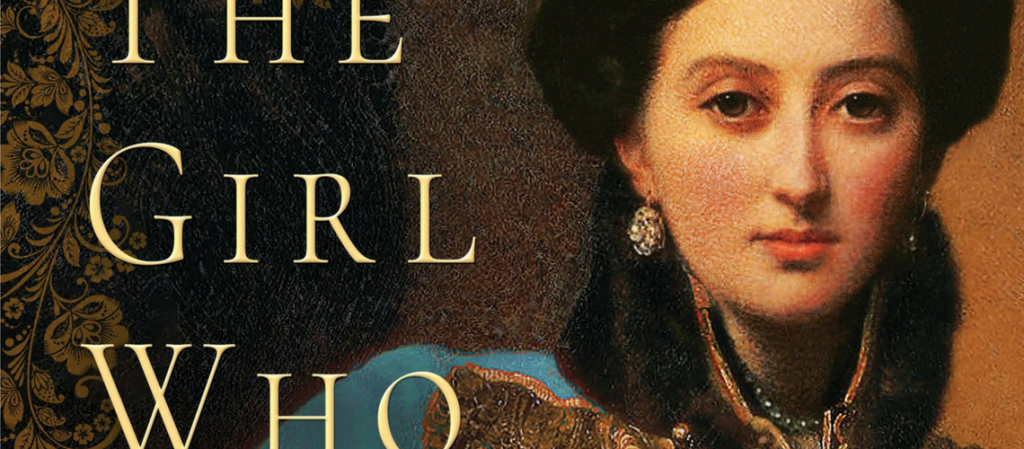
  • The World Needs a New Period Drama, and it Needs to be The Girl Who Fought Napoleon by Linda Lafferty

    The World Needs a New Period Drama, and it Needs to be The Girl Who Fought Napoleon by Linda Lafferty

    The world seems to be enamored with period dramas that take place in the U.K., like Downton Abbey, the Tudors, and the White Queen. There is actually an entire website dedicated to Regency, Victorian, and Edwardian period dramas called Willow and Thatch. Truly, with the exception of the Borgias, I cannot think of a period drama that doesn’t take place in the U.K. Isn’t that sad? So, when I sat down to read the Girl Who Fought Napoleon by Linda Lafferty, all I could think about was how badly I wanted this to be optioned for a TV mini-series. Lafferty brings Russia during the Napoleonic Wars to life both in the warm and seemingly safe Winter Palace as well as the bloody battlefields. Further, this 430 page novel seems to fly right by; the plot is paced perfectly and is filled with action, suspense, treason and betrayal.


    the-girl-who-fought-napoleonThe Girl Who Fought Napoleon by Linda Lafferty

    Released: September 20, 2016
    Publisher: Lake Union Publishing
    Add to Goodreads
    ★★★★☆

    In a sweeping story straight out of Russian history, Tsar Alexander I and a courageous girl named Nadezhda Durova join forces against Napoleon.

    It’s 1803, and an adolescent Nadya is determined not to follow in her overbearing Ukrainian mother’s footsteps. She’s a horsewoman, not a housewife. When Tsar Paul is assassinated in St. Petersburg and a reluctant and naive Alexander is crowned emperor, Nadya runs away from home and joins the Russian cavalry in the war against Napoleon. Disguised as a boy and riding her spirited stallion, Alcides, Nadya rises in the ranks, even as her father begs the tsar to find his daughter and send her home.

    Both Nadya and Alexander defy expectations—she as a heroic fighter and he as a spiritual seeker—while the battles of Austerlitz, Friedland, Borodino, and Smolensk rage on.

    In a captivating tale that brings Durova’s memoirs to life, from bloody battlefields to glittering palaces, two rebels dare to break free of their expected roles and discover themselves in the process.


    This story is also told in alternating perspectives.

    But, it’s not what you would expect. Typically, that would imply first person perspectives from two main characters, but that is not the case with the Girl Who Fought Napoleon. Lafferty makes an interesting choice to write the narrative from both first person perspective as well as third person subjective. I’ve never read a novel that alternates between first person and third person, so that did take a few chapters to get used to. However, it’s a storytelling method that I appreciated, especially for this particular story. The Girl Who Fought Napoleon is based on the memoirs of Nadezhda Durova (the Calvary Maiden), so the obvious choice would be to tell the story in first person. This story is hers, after all. But, that would offer the reader such a limited view of what was happening in Russia during this point in history. Switching to a third person point of view allows readers to peek inside the Winter Palace– to get to know the paranoid Tsar Paul and the reluctant soon-to-be Tsar Alexander, to witness assassination plots and royal affairs, to understand the political turmoil rumbling across Europe as the tides of the Napoleonic Wars lap at Russia’s borders.

    The biggest challenge in understanding the alternate POV had less to do with the actual point of view and more to do with the timeline

    The timeline tends to bounce back and forth. For example, the story starts in 1783, which is when Nadezhda Durova is born. The next chapter jumps six years to Christmas 1789, when young Alexander and his family are opening presents. Then the next chapter jumps back to 1785 to reveal more about Nadezhda’s life. Then to 1790…and 1799…and back to 1789. Trying to remember when certain events happened was futile; I eventually stopped reading the date headers because it was distracting me from the story.

    By the way, can we talk about how amazing Nadezhda Durova is?

    First, the story seems a little cliché– young woman dresses up as a man so she may live life with more freedom. In Nadezdha Durova’s case, it was to escape restrictions and tedium of “women’s work” and to help save her homeland. Second, it seems kind of far-fetched that during the early 1800s, a young woman would trick her way into the military and dupe everyone for nearly a decade, save a bunch of lives with very little military training, receive recognition from the Tsar himself, help lead victories over the Grand Armee, and live to retire and then write a memoir about it. BUT IT’S TRUE. IT’S TOTALLY FREAKING TRUE! That is reason enough to read this novel– you need to know Nadezdha Durova!


    Overall, I really enjoyed the Girl Who Fought Napoleon. It’s one of those books that looks long but somehow you manage to breeze through 100 pages before you even finish eating your box of bon bons (and it’s not even a particularly large box of bon bons either). I just found myself not only fascinated by Nadezhda, but also with Russia during the early 1800s. I think the only reason why I managed to not consult wikipedia during my readthrough is because the novel was such a page-turner. Should you read this one? Definitely!

    This book was received for free in exchange for an honest review.

    TLC Book Tours

  • Girl Power! And Other Renegade Ideas | Rebel Sisters by Marita Conlon-McKenna

    Girl Power! And Other Renegade Ideas | Rebel Sisters by Marita Conlon-McKenna

    Upon finishing Rebel Sisters by Marita Conlon-McKenna, I was filled with regret that I didn’t pay better attention in the British Literature class I took my sophomore year of college. The class surveyed Romantic, Victorian, and Modern literature. I happily devoured Romantic literature, which was a reaction to the Industrial Revolution and Age of Enlightenment, and it celebrated nature, spirituality, individuality, creativity, and purity. It’s something that resonated with me, and now that I think about it, that’s probably why I’m so keen on the Steampunk subculture; it seems to celebrate many of the same things. Victorian literature and Modern literature? Puh! That stuff could hardly hold my attention. And…now I find that unfortunate because we definitely studied the Irish identity in Modern literature, and that is a major theme in Rebel Sisters. While I enjoyed this novel, I feel I could have experience a different plane of appreciation had I just applied myself a little harder in that class.

    (more…)

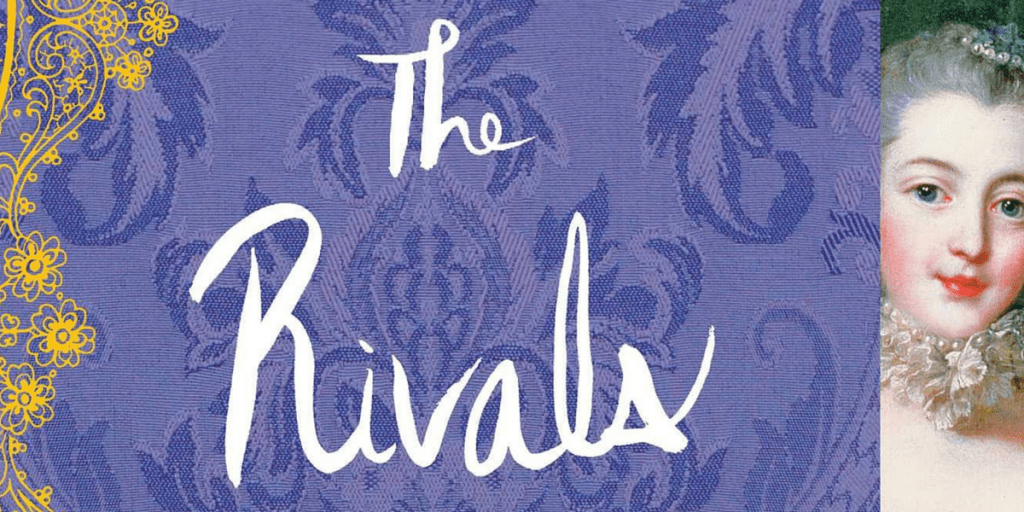
  • The Book that Made Me Blush Even More | The Rivals of Versailles by Sally Christie

    The Book that Made Me Blush Even More | The Rivals of Versailles by Sally Christie

    How do you go about writing a review for a book that is about one of the most influential women of the 18th century? Wait…how do you go about writing an entire book about one of the most influential women of the 18th century? I am talking about Jeanne Antoinette Poisson, more commonly known as Madame de Pompadour, and Sally Christie has brought her to life in the second installment of her Mistresses of Versailles trilogy, the Rivals of Versailles. Readers, prepare yourself for more inappropriate innuendos!

    (more…)

  • The Book that Made Me Blush | The Sisters of Versailles by Sally Christie

    The Book that Made Me Blush | The Sisters of Versailles by Sally Christie

    Every once in a while, I finish a book, and I’m in such awe of what I read that I struggle to find the words to express that. Sometimes I avoid writing a review for a while so I can let every character, setting, and scene sink in, but I do not have that luxury with the Sisters of Versailles by Sally Christie. To be totally honest, this review should have probably gone live several hours ago, but I’ve been budgeting my time very poorly lately, and instead found myself finishing this book during my lunch break at work today. Luckily, submersing myself in the world of the Sisters of Versailles came easily; this novel swept me off my feet faster than King Louis XV swept Louise Mailly-Nesle off her feet…or her sister Pauline…or their sisters Marie-Anne and Diane. As for this review? Bare with me here.

    (more…)

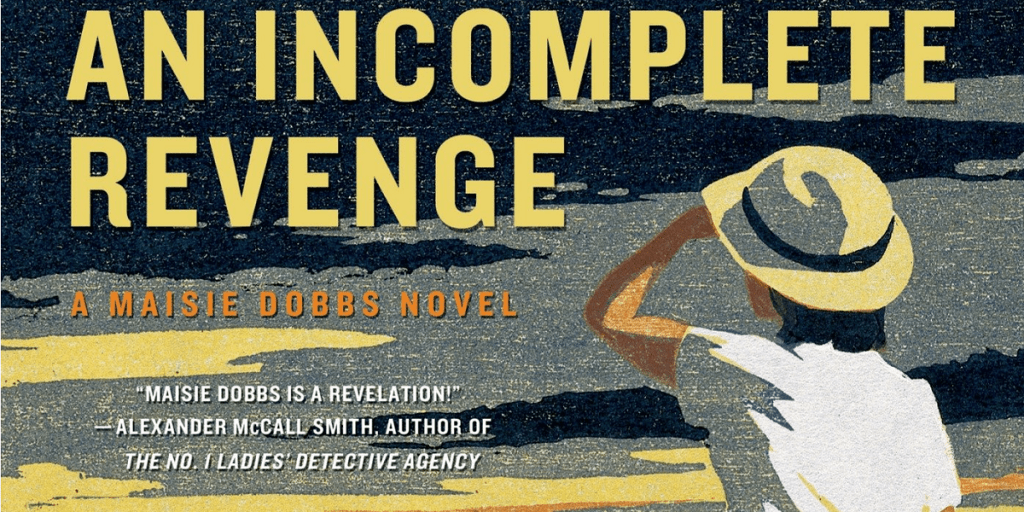
  • Meet Maisie Dobbs | An Incomplete Revenge by Jacqueline Winspear

    Meet Maisie Dobbs | An Incomplete Revenge by Jacqueline Winspear

    I spied my first Maisie Dobbs novel while exploring the fiction stacks at my local library. It was the character’s name that first piqued my interest; I suspected she would be a plucky, young woman determined to prove herself as a private eye, which sounded right up my alley. Then, it was the beautiful book covers that made me pine for the first book in the series, something my local library unfortunately did not have. I returned week after week, but no such luck. Even though I was a tad reluctant to start yet another mystery series promptly in the middle, when TLC Book Tours offered me the opportunity to participate in the Month of Maisie blog tour, I couldn’t resist. Throughout the month of March, several bloggers will be blogging about Jacqueline Winspear’s historical mystery books from the series starter to her newest novel Maisie Dobbs: Journey to Munich, which will be released on March 29, 2016.

    (more…)