• This Story Features a Master Ninja Ronin Detective, Which is Pretty Awesome| the Ninja’s Daughter by Susan Spann

    This Story Features a Master Ninja Ronin Detective, Which is Pretty Awesome| the Ninja’s Daughter by Susan Spann

    When I was offered the opportunity to read the Ninja’s Daughter by Susan Spann, I jumped on it. From what I could tell, the novel featured two subjects that I was interested obsessed with: mysteries and Japanese history. Yet, the longer this novel sat on the corner of my dining room table, the more reluctant I became to read it. I hyper-focused on the idea of the main character, Hiro Hattori, being a master ninja detective and couldn’t help but wonder if I was launching myself into to weird, campy martial arts story reminiscent of those poorly dubbed kung-fu movies of the 1970s. (Yes, yes, I know those 1970s kung fu movies came from China, not Japan). Instead, I discovered the Ninja’s Daughter to be a compelling mystery set in the complex world of feudal Japan right at the end of the Muromachi period.


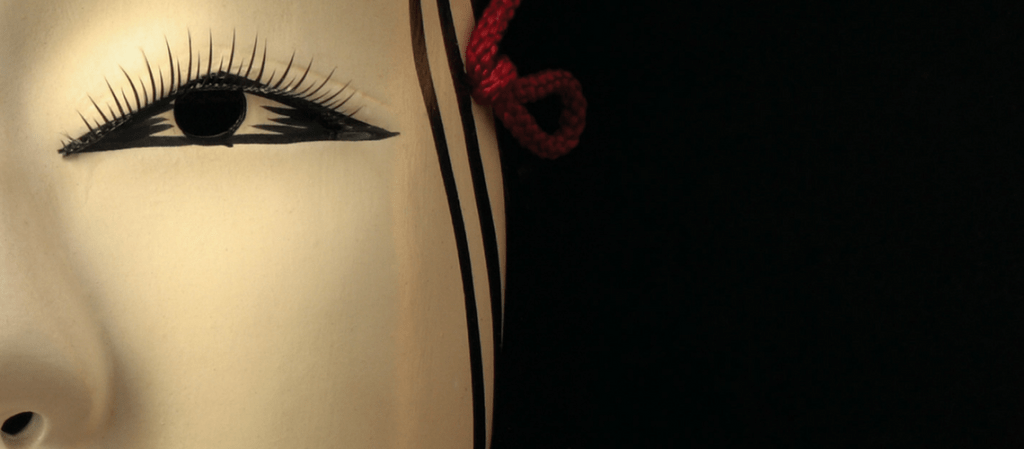
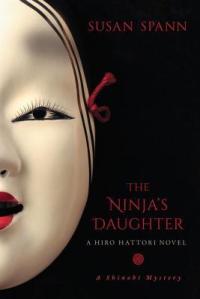
    Ninjas daughterThe Ninja’s Daughter (Shinobi Mystery #4) by Susan Spann

    Released: August 2016
    Publisher: Seventh Street Books
    Add to Goodreads
    ★★★☆☆

    Autumn, 1565: When an actor’s daughter is murdered on the banks of Kyoto’s Kamo River, master ninja Hiro Hattori and Portuguese Jesuit Father Mateo are the victim’s only hope for justice.

    As political tensions rise in the wake of the shogun’s recent death, and rival warlords threaten war, the Kyoto police forbid an investigation of the killing, to keep the peace–but Hiro has a personal connection to the girl, and must avenge her. The secret investigation leads Hiro and Father Mateo deep into the exclusive world of Kyoto’s theater guilds, where they quickly learn that nothing, and no one, is as it seems. With only a mysterious golden coin to guide them, the investigators uncover a forbidden love affair, a missing mask, and a dangerous link to corruption within the Kyoto police department that leaves Hiro and Father Mateo running for their lives.


    The mystery is compelling even though the characters involved are kind of terrible

    Hiro and Father Mateo must discover the link between a golden coin, a missing mask, and the death of a young woman associated from one of Kyoto’s theater guilds. All of the suspects harbor secrets that threaten reputations, so there is a constant veil of deceit that only Hiro seems to pick up on because of his master ninja skills (also his familiarity of Japanese nuances compared to his Portuguese sleuthing companion). Despite their weeping eyes, it’s hard to feel sympathy for any of the suspects because their reluctance to cooperate comes off as selfish instead of simply defensive. I suppose that sounds like an unpleasant read, but I actually kind of liked it. I suppose I’ve been in the mood for unlikable characters lately. But I digress! I even had a hard time feeling sympathy for the victim– not because she may or may not have become a lady of the night to purchase her freedom (freedom in a metaphorical sense, not literal) but because of the ways she exploited her family.

    That being said, the scene where the perpetrator is revealed is kind of a let down. All of the suspects are sitting in a room, and Hiro starts explaining to them why he has determined a certain person could not have committed the crime, until he finally reveals who the real killer is. I can’t help but think of the endings of Scooby Doo mysteries (but with kimonos and the fear of bringing shame to the family).

    Really, it was the historical aspect that sucked me in

    Spann chose a rather complex time in Japanese history to use as a setting for a mystery series. By 1565, Japan had been steeped in a civil war lasting at least 100 years, and now it is trying to recover after the death of the shogun. To add to the tension, the first waves of European missionaries are making contact on Japanese soil (which would inevitably lead to Japan isolating itself in the following period). It’s a time of samurai and ninjas but also art forms such as flower arrangement, the tea ceremony, and Noh theater. This isn’t merely a backdrop for a mystery. The historical aspect plays a vital role in the series as a whole; the political and military turmoil start to burden the Portuguese missionary and Hiro (a ninja ronin detective!) And Spann writes about this without making the story feel cumbersome. I’m not saying the historical aspect of these books are flawless (I’m not sure how someone just “slips into” their kimono), but they are well researched nonetheless (which, I would expect considering Spann has turned an undergraduate degree in Asian Studies into a lifelong passion for learning about Japan, which she writes about frequently on her blog).

    Clearly, I owe the Ninja’s Daughter by Susan Spann a thousand apologies for ever thinking it was going to be campy. It was engaging and surprisingly complex compared to the usual mystery I devour. On top of that, I’m pretty sure it will be the book that launches me into an obsession with historical fiction novels taking place in Japan. Heian Period, here I come!

    I also want to pick up the previous books in the series. Yet again, I started reading a mystery series from the middle, but I really want to know how the death of the shogun affected Hiro, and I really want to know how and why Hiro ended up guarding Father Mateo.

    TLC Book Tours

  • Do I Have a New Favorite Author? | Peaches by Jodi Lynn Anderson

    Do I Have a New Favorite Author? | Peaches by Jodi Lynn Anderson

    It’s not often that I read two books by the same author in the same year (JK Rowling withstanding). And, it’s rarer than a blue moon that I read two books by the same author within 30 days. Yet, I recently devoured Peaches (in one day) by Jodi Lynn Anderson less than 30 days of  reading The Vanishing Season by Jodi Lynn Anderson (in one day).


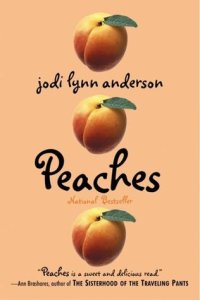
    Peaches by Jodi Lynn Anderson Book coverPeaches (Peaches #1) by Jodi Lynn Anderson

    Released: June 2005
    Publisher: HarperCollins Publisher
    Add to Goodreads
    ★★★☆☆

    In a Ya-Ya Sisterhood for teens, Peaches combines three unforgettable heroines who have nothing in common but the troubles that have gotten them sentenced to a summer of peach picking at a Georgia orchard.

    Leeda is a debutante dating wrong-side-of-the-tracks Rex.

    Murphy, the wildest girl in Bridgewater, likes whichever side Rex is on.

    Birdie is a dreamer whose passion for Girl Scout cookies is matched only by her love for a boy named Enrico.

    When their worlds collide, The Breakfast Club meets The Sisterhood of the Traveling Pants in an entirely original and provocative story with a lush, captivating setting.


    Anderson writes about the most spectacularly flawed characters.

    Sometimes they’re downright unlikeable. Like Murphy and Leeda and Birdie, who are selfish and insecure and condescending and full of pride and sometimes just downright fools. I really wanted to hate them, but I couldn’t because beneath the walls they built, they just wanted to be loved and accepted. They want to be optimistic about their future even though Murphy is certain she’s doomed to endure failed relationship after failed relationship just like her mother. And Leeda is certain her existence is a regretful mistake and that her mother actually has a favorite child (spoiler: it’s not Leeda). And Birdie…well, her mother just ran out on her and her father, and the peach farm she calls home is failing, and she’s about to lose that too.

    I felt like I was on a peach farm in south Georgia.

    Just like in the Vanishing Season, Anderson made her setting come alive, and she made it seem effortless. I could smell the stinky-sweet scent of overripe peaches, and I could feel their sticky juice on my skin as it dried. I could feel the cool refreshing waters of the lake the girls would steal away to after curfew, and I could feel Georgia’s blazing, afternoon sun and suffocating humidity.

    The story seemed slow, however.

    Which I understand might seem weird because I praised the Vanishing Season for being an intentionally slow novel. In the Vanishing Season, it seemed to add to the atmosphere Anderson was creating. But, it seemed out-of-place in Peaches. I just wanted Murphy and Leeda and Birdie to get over themselves already so that I could read a book about friendship.

    A Contemporary YA novel would be incomplete without a little romance.

    But, I wasn’t a fan of the romantic relationships that developed in Peaches. Okay, Birdie and Enrico were awkwardly charming together, but Rex and Leeda… and Rex and Murphy? Actually, it was just Rex in general. He didn’t have much of a personality. Really, I just wanted Leeda and Murphy to realize they were better as independent women and lose interest in “wrong-side-of-the-tracks”-Rex (who was really just sort of benign).

    Overall, I enjoyed Peaches. I didn’t love it like the Vanishing Season though. Peaches is actually part of a series, which I didn’t realize when I checked the book out. I don’t know if I feel compelled to read on. At least, not this year. Perhaps I’ll revisit the idea of reading Peaches #2 next summer. Still… I did find it to be a satisfying summertime read about friendship and self-discovery. It made me want to read Sisterhood of the Traveling Pants or watch the movie Now and Then.

    What is one of your favorite summertime novels about friendship?

  • The Novel Had a Cat on the Cover, so Are We Even Surprised that I Loved this Book? | Lending a Paw by Laurie Cass

    The Novel Had a Cat on the Cover, so Are We Even Surprised that I Loved this Book? | Lending a Paw by Laurie Cass

    I recently went on a cozy book buying spree, which is when Lending a Paw by Laurie Cass was added to my e-library. I think I figured I was destined to enjoy this book for three reasons: 1. CATS!!! (obviously) 2. our sleuthing MC is a librarian, and 3. the series takes place in Michigan, my home state! Aaaaaand…basically I was right (but for more reasons than the three I just listed).


    Lending a Paw by Laurie Cass Book CoverLending a Paw by Laurie Cass

    Released: December 2013
    Publisher: NAL
    Add to Goodreads
    ★★★★☆

    Eddie followed Minnie home one day, and now she can’t seem to shake the furry little shadow. But in spite of her efforts to contain her new pal, the tabby sneaks out and trails her all the way to the bookmobile on its maiden voyage. Before she knows it, her slinky stowaway becomes her cat co-pilot!

    Minnie and Eddie’s first day visiting readers around the county seems to pass without trouble—until Eddie darts outside at the last stop and leads her to the body of a local man who’s reached his final chapter.

    Initially, Minnie is ready to let the police handle this case, but Eddie seems to smell a rat. Together, they’ll work to find the killer—because a good librarian always knows when justice is overdue.


    Reading books that take place where you live is the coolest

    Granted, Lending a Paw takes place “up north” in a fictional town named Chilson, which is located somewhere north of Traverse City and south of Charlevoix– basically, where all the wineries, cherry trees, and ritzy vacation homes settled on Lake Michigan are located. It’s totally different from where I live, which is part of the “Rust Belt“, if that paints a charming picture in your head at all. Still, it’s always interesting to see how authors perceive your state. Especially Michigan because Michigan is the best ;)

    Eddie the cat is also the coolest

    Aside from helping Minnie solve a murder (without magic) and being her co-pilot in the bookmobile, I also have a bias towards cat named Eddie (or variations thereof). Throughout this novel, I could help but picture my late cat, Ed, even though he’s orange. He just seemed like the Eddie in Lending a Paw.

    His name had been the inspiration of a bemused coworker. “Sounds like and Eddie kind of cat,” Josh had said after I told the story.
    “What kind is that?” Holly, another coworker, had asked.
    “Just…Eddie.” Josh had shrugged. “You know what guys named Eddie are like.”
    And just like that, my cat had a name.

    What impressed me the most was the sleuthing

    While I’ve enjoyed every cozy mystery novel I’ve read and reviewed for Books & Tea, I’ve always felt the actual sleuthing was minimal. A lot of times, clues are revealed by chance and the main characters, while intent on finding the perp, don’t always piece the puzzle together very well throughout the story. Sometimes I’m totally surprised when the identity of the perp is revealed and I wonder if that’s a good thing; did I not see it coming because the author did not give me enough clues or did I not see it coming because I’m…CLUELESS (hahahahah!)

    In Lending a Paw, Minnie “interviews” suspects, pieces together a family tree, and follows tracks and clues before the trail goes cold. She also keeps means and motive in mind, and while her hunches are not always right, another piece of the piece of the puzzle is usually revealed. This novel presented one of the most satisfying mystery-solving experience I’ve read so far.

  • This Book Destroyed Me | The Vanishing Season by Jodi Lynn Anderson

    This Book Destroyed Me | The Vanishing Season by Jodi Lynn Anderson

    The Vanishing Season by Jodi Lynn Anderson is not what I expected. At first, I thought it was going to be a mystery/thriller because teenage girls are vanishing in Door County in Wisconsin and then turning up days later, dead in the water. Then I thought it was going to be a ghost story, and maybe in a really abstract way it is. But really, it was the most haunting and devastating YA contemporary I have ever read.


    The Vanishing SeasonThe Vanishing Season by Jodi Lynn Anderson

    Released: July 2014
    Publisher: HarperTeen
    Add to Goodreads
    ★★★★★

    Girls started vanishing in the fall, and now winter’s come to lay a white sheet over the horror. Door County, it seems, is swallowing the young, right into its very dirt. From beneath the house on Water Street, I’ve watched the danger swell.

    The residents know me as the noises in the house at night, the creaking on the stairs. I’m the reflection behind them in the glass, the feeling of fear in the cellar. I’m tied—it seems—to this house, this street, this town.

    I’m tied to Maggie and Pauline, though I don’t know why. I think it’s because death is coming for one of them, or both.

    All I know is that the present and the past are piling up, and I am here to dig. I am looking for the things that are buried.


    The Vanishing Season by Jodi Lynn Anderson is an atmospheric novel. It is a cold, quiet, and introspective novel. It’s a slow but intentional novel. It’s not something that will appeal to everyone. You need patience to read it, but at the same time, I read it in a single sitting. I couldn’t put the book down because it was one of the most beautifully written books I have ever read.

    The Vanishing Season is a character-driven novel. It is a novel about friendship. It is a novel about betrayal. It is a novel about isolation and death and lost memories. It is a novel about unrequited love. It’s always the stories about unrequited love that make me cry. I knew it was coming, but I cried anyway.

    The Vanishing Season has one of the most upsetting endings I have ever read. I didn’t expect it, and it feels like the suffocating weight of melancholy. I wanted to love Maggie’s new friends, Pauline and Liam. But, I knew…I knew they were going to be toxic. I get so angry just thinking about them because it’s not fair. It’s not fair!

    The Vanishing Season is one of the best books I have read this year. It’s probably one of the best books I’ve read since launching Books & Tea five years ago. It’s so rare that a book moves me to tears or emotionally destroys me to the point where I’m fumbling to find words for a review. I need to read this book again. I think maybe that’s a bit masochistic, but I really do need to read this book again. I’ll wait for wintertime though. I think that’s when this book is meant to be read.

  • So, this is magical realism? | the Wrap-Up List by Steven Arntson

    So, this is magical realism? | the Wrap-Up List by Steven Arntson

    I find myself irritated by the goodreads shelf labels associated with the Wrap-up List by Steven Arntson. Which is stupid, I know. I’m not a genre snob, I swear. But… Paranormal FantasySupernatural Fantasy? Really? Okay…sure, I can admit, that part of it is gag reflex; when I hear Paranormal Fantasy I think of Twilight and the million other vampire novels out there, which are not in the same league as the Wrap-up List. But part of it is that these genre labels seem to simplify this novel; the story takes place in reality but has fantastic elements and revolves around some really complex issues like grief and mortality. After finishing the novel, I found myself thinking, “So that’s magical realism?”


    the wrap up listThe Wrap-up List by Steven Arntson

    Released: January 2013
    Publisher: HMH Books for Young Readers
    Add to Goodreads
    ★★★★☆

    In this modern-day suburban town, one percent of all fatalities come about in the most peculiar way. Deaths—eight-foot-tall, silver-gray creatures—send a letter (“Dear So-and-So, your days are numbered”) to whomever is chosen for a departure, telling them to wrap up their lives and do the things they always wanted to do before they have to “depart.” When sixteen-year-old Gabriela receives her notice, she is, of course devastated. Will she kiss her crush Sylvester before it’s too late?


    The synopsis seems to simplify the novel as well

    I’m glad I just skimmed the synopsis and flipped to the first page to read the first paragraph instead [your book has to “hook” me in the first paragraph, or it’s going back on the shelf!]. Had I continued the synopsis, I would have learned that Gabriela’s wrap-up list revolves around getting first kisses for herself and her friends. Sounds cheesy, right? Once I actually learned the contents of Gabriela’s wrap-up list, I was quite skeptical myself. It just seemed silly that a sixteen year old would become so preoccupied by first kisses when she had just one week to live. (Then again, maybe I’m the silly one; I would have been more preoccupied by trying to figure out how to see AFI in concert instead of getting my first kiss.) I think I was also a little concerned that the author’s treatment of the subject of death was going to be flippant, which it wasn’t.

    The world building is wonderful

    Which is kind of strange when you think about it– this book does takes place in a modern-day, suburban town after all. Except, these beings called Deaths, which children are taught about in school, roam our world to escort the chosen Departed to the place beyond the Fields. (The Fields is a very tangible place that the living can visit, but they cannot visit the place beyond the Fields.) People can also specialize in the study of Departure and work for the Departure Authority. Their reports may end up in the Municipal Archives, which contains all sorts of government records including record of all the Deaths, their Departed, and who was granted Pardons.

    Everything changes once Hercule is introduced

    Hercule is Gabriela’s Death, and she and her friends intend to kidnap him. What follows is a bit of chaos, some deep discussions about faith and mortality, and a second half of a novel that is so cleverly tinged with black comedy (sort of like when Percy Jackson met Charon and Hades in the Lightning Thief). While I enjoyed the entire novel, it was the second half of the novel that really affected me. The story became so much more complex and emotional and yes, sometimes even funny.

    Overall, the Wrap-up List by Steven Arntson is a wonderful novel. Just like Into the Wild Nerd Yonder by Julie Halpern, I finished it in one sitting, and wouldn’t hesitate to recommend this novel to other readers.

    Have you ever read the Wrap-up List? What would be on your list?

About the Blogger

My name is Jackie, and I am a millennial / mother / Michigander / blogger / wannabe runner / accountant / local library enthusiast / gamer, kinda. This is a personal blog, which means I’m not entirely certain what you’ll find here, but it will definitely not show up on the first page of Google search results.