When I stepped back from blogging last June, I didn’t think my hiatus would last over a year. Between a death in the family and my promotion at work, I was in dire need of a mental reset, but I ended up burning myself out instead. Everything became so routine, and I couldn’t even bring myself to spend time on a hobby that, in the past, provided me with a creative outlet. However, there were two recent life events that acted as a catalyst for my return to the blogosphere:
I turned THIRTY this July, and I’ve been looking forward to this decade for the past five years. It’s been this mental milestone of mine that if I could just make it to thirty, things would start falling in to place, and this would be the decade that I discovered Me. (So far, I’m off to a slow start, ha!)
On October 3, Jon and I welcomed our baby boy, Oliver Robert, into the world. There are few life events that force one to become introspective and to re-assess ones priorities quite like entering the world of parenthood for the first time.
Pardon the bags under my eyes and the disheveled hair, but do I look grown up, yet?
Actually, I attempted to re-brand and create a new blog for my road to self-discovery and motherhood, but it just felt weird. My voice didn’t sound like my voice, and my readers didn’t sound like my readers. It seemed inauthentic and foreign, and so I let the blog sink quietly into the sea of all the other abandoned blogs on the interwebs. Then I spent the last few nights reading through some of my old posts here on Books & Tea By Golly, Ollie!, and I realized this is my home on the web. I spent six years writing here– writing that I’m proud of– and I can’t imagine blogging anywhere else. So, here I am, blowing off the dust and brushing away the cobwebs on my blog.
It’s been a while. How have you been? How is your October, so far?
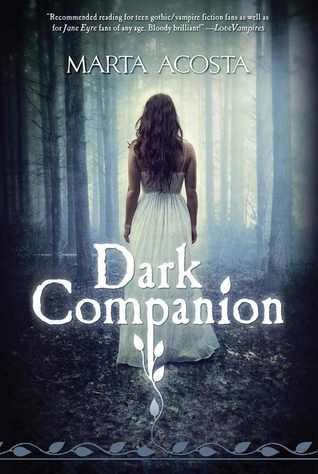
Dark Companion by Marta Acosta is book #2 in my READ ALL THE LIBRARY BOOKS challenge, and like my initial reaction to Sign Language by Amy Ackley, when I pulled Dark Companion from the shelf, I was once again disappointed. In fact, I hadn’t even openly declared that I was trying to read all of the books in the YA section of my library at this point, so I almost gave up on the project in that moment. The book cover featured a young woman wearing a white gown in the middle of a spooky forest; between that image and the title, it screamed paranormal romance, which is a genre that has me hightailing it in the other direction faster than if it were a plate of brussels sprouts.
I chose to persevere though, and in the end…I’ll still run from paranormal romance faster than if it were a plate of brussels sprouts.
Dark Companion by Marta Acosta
Released: July 2013
Publisher: Tor/Macmillan ★★☆☆☆ Add to Goodreads
Orphaned at the age of six, Jane Williams has grown up in a series of foster homes, learning to survive in the shadows of life. Through hard work and determination, she manages to win a scholarship to the exclusive Birch Grove Academy. There, for the first time, Jane finds herself accepted by a group of friends. She even starts tutoring the headmistress’s gorgeous son, Lucien. Things seem too good to be true.
They are.
The more she learns about Birch Grove’s recent past, the more Jane comes to suspect that there is something sinister going on. Why did the wife of a popular teacher kill herself? What happened to the former scholarship student, whose place Jane took? Why does Lucien’s brother, Jack, seem to dislike her so much?
As Jane begins to piece together the answers to the puzzle, she must find out why she was brought to Birch Grove and what she would risk to stay there..because even the brightest people make terrible decisions when they are offered the things they desire most.
The Review
Admittedly, for the first half of the novel, I thought Dark Companion was going to be a solid, four-star kind of novel. I thought it was going to be the book that changed my mind about paranormal romance. So what if I thought the main character, Jane, was kind of uninspiring? So what if I thought Lucien and Jack, potential love interests, were worse than Edward Cullen (how?!)? It takes place at a friggin’ boarding school, which is one of my favorite settings ever! Plus, Acosta wrote one of my favorite secondary characters ever– Mary Violet (or MV). MV is hilarious and clever and vibrant, and all I wanted to do was read a book about her. Of course, there simply is no denying that Marta Acosta’s writing is beautiful either. She captured the atmosphere of a gothic novel so perfectly.
Yet the exclusive Birch Grove Academy has a dark, cult-like secret. One that I wasn’t on board with.
I thought Dark Companion was going to be a vampire novel because there are these subtle clues that some of the characters in the novel have a certain fascination with blood. They like their steaks rare (Did I say “rare”? I mean “basically raw”), and they practically start salivating when people get paper cuts. And yet, vampirism would have been preferred to the twist that was presented (even though I can’t stand vampires. Exhibit A. Exhibit B. Exhibit C.) A genetic disorder plagues Lucien and his family (who run Birch Grove), that makes them both incredibly pale and incredibly thirsty for blood. And Jane was invited to Birch Grove Academy because her blood is exactly what Lucien needs. When it is revealed to Jane that she was selected to be Lucien’s companion, she’s both freaked out because this means he will drink her blood, but also kind of thrilled because it means she gets to be with Lucien forever and she totally has the hots for him. Except, their relationship ends up being just as creepy as you think it will be. Lucien is overwhelmed by literal bloodlust, and he tries to seduce Jane every time he wants to feed. It boggled my mind that this novel was marketed as a YA novel, especially considering in a previous scene, Jane returned to a friend in the slums and learned all about BDSM and “blood play”. All of this just made me feel so uncomfortable, and all I wanted to do was take a hot shower and scrub myself clean with a loofah made of steel wool. Ick.
Jane eventually comes to her senses and realizes this relationship is absolutely crazy and toxic and ends up falling for Jack, Lucien’s brother, instead. Neither of the love interests are particularly decent, but at least Jack doesn’t want to drink Jane’s bodily fluids.
Dark Companion was a disappointment, but I still find myself optimistic about this challenge. This is especially odd because the next book in line is Halo by Alexandra Adornetto, and I’ve intentionally avoided YA novels featuring angels as the main character. I’m not keen on innocent and pure main characters and forbidden love.Save
Sometimes I choose library books with reckless abandon. I choose them at random and hope for the best. For example, the moment I plucked Sign Language by Amy Ackley from the library stack…I was disappointed. The book cover seemed to indicate that the novel I held in my hands was going to be some generic contemporary YA novel. This is a genre I tend to avoid because I have a hard time relating to the characters, and sometimes I find their actions/reactions to be unbelievable. However, Fangirl by Rainbow Rowell and Open Road Summer by Emery Lord are exceptions; I adored these two novels. On top of that, Sign Language dealt with a topic that I wasn’t entirely sure I was prepared to read about because I was already dealing with it in my own life– grief and a parent battling cancer. I did struggle to immerse myself into the novel at first, but by the end I found Sign Language to be wonderfully written and emotional story.
I had a hard time getting absorbed into the story because I struggled to accept how Abby North, the main character, reacted to the news of her father’s cancer. At first, she wouldn’t call her father’s ailment what it was– cancer. It seemed like she was ignorant and unaware of what was happening, which didn’t make sense because twelve-year-old kids know what cancer is. Then I realized, this was her “denial stage”, and the author was essentially using the 5 steps of grief as framework for the novel. The moment when Abby finally acknowledges that her father has cancer, and it is terminal, changed everything for me. I recall reading this novel in bed at 2AM with a flashlight tucked under my chin, and I’m fairly confident I wept through the entire second half of the novel.
Aside from coping from the loss of her father, Abby still has to deal with everything else that comes with being a teenager– falling in love, a family that feels like it is falling apart, moving away, finding a place in the world. She feels lost, and she feels angry that her father is not around to guide her through adolescence. She doesn’t always make the best decisions, sometimes she pushes friends and family away, and every time, it felt like my heart was breaking for her.
Sign Language by Amy Ackley is a perfect example of why I wanted to challenge myself to READ ALL THE BOOKS. It’s a novel I would have ignored either because of something vain, like the book cover, or because I don’t often like contemporary fiction, but in a way, it’s a story that I needed to read.
(Also, fun fact, according to her bio, the author is a Michigan native, and she lives two towns over from where I live. What if I bumped into her at a restaurant and didn’t even realize?! NEAT!)
Twelve-year-old Abby North’s first hint that something is really wrong with her dad is how long it’s taking him to recover from what she thought was routine surgery. Soon, the thing she calls “It” has a real name: cancer. Before, her biggest concerns were her annoying brother, the crush unaware of her existence, and her changing feelings for her best friend, Spence, the boy across the street. Now, her mother cries in the shower, her father is exhausted, and nothing is normal anymore. Amy Ackley’s impressive debut is wrenching, heartbreaking, and utterly true.
There is something overwhelming about Springtime. I’m sure I bring it on myself after six months of hibernation, but the rate at which tasks are added to my To Do List makes me withdraw from the world. Thankfully, family came for a visit, and I was wrenched from my comfort zone (lately known as “the couch”) and thrown into the yard. Up until this, our house had been an embarrassment with overgrown bushes and trees and weeds in the flower bed that reached my knees (okay, really it was mid-thigh). Yesterday we spent 12 hours pulling weeds, mulching the flower bed, potting herbs (for tea! such as spearmint, lemon balm, and bee balm) and tomatoes and planting hastas, cutting back bushes and trees, mowing the lawn, whipping the weeds, and cleaning and replacing gutters. Today, my muscles are sore and my skin is sunburned, and I feel proud of what was accomplished yesterday.
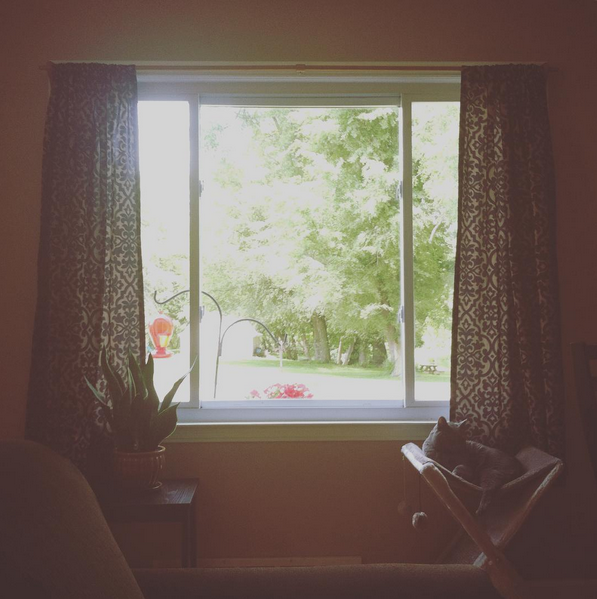
Today I’m taking things much more slowly. I read out on the deck to catch some morning sun; although apparently 67 degrees is “scorching hot” to me, so I only lasted about an hour. Now I’m appreciating the view of my front window– of mammoth trees, petunias, and a snoozing kitty, while sipping green tea and waiting for the afternoon’s impending thunderstorms. (Yes, I know my curtains are ugly. They came with the house, and I haven’t replaced them yet).
Today’s tea comes from Japanese Green Tea IN, a tea seller specializing in green tea from Japan’s Shizuoka prefecture (which I understand has an incredible view of Mount Fuji!). I tried their Fukamushi Sencha, first crop, which is unlike any tea I’ve ever experienced before. The appearance of the tea leaves was the first surprise. The forest green leaves varied in size including long thin leaves, small fragments, and even powder. The fragments and the powder first led me to believe that this was a reflection of the quality of the tea– that it was no different from a bag of Lipton tea dust, but I was mistaken. This appearance is a result of how the tea is processed– the tea is deep steamed, and while the leaves become more delicate (hence the breakage), the astringency is reduced and the flavor becomes more rich.
The next surprising characteristic about this tea was the color. Most of the green teas I’ve steeped produce a pale yellow liquid, but the Fukamushi Sencha produced a cloudy, Chartreuse green color. I was intimidated at first, thinking I over-steeped my tea, but again, I learned this is just another characteristic of this kind of tea. It’s also common to have tea sediment collect at the bottom of the mug– go ahead and drink that up though because they are nutrient-rich!
As for the flavor of the tea, I was under the impression it was supposed to be naturally sweet, but it tasted more savory to me. The first steep was vegetal and lightly astringent, and the finishing notes were buttery and slightly like blanched or grilled asparagus. Because it’s a savory tea, and also because it is lightly caffeinated, I think it makes for a perfect early afternoon treat. The tea also begs for multiple infusions. So far, I’ve brewed four cups of tea with the same batch of tea leaves, and the flavor (although lacking the buttery finishing note) was just as rich and flavorful as the first cup, and I’m confident I can steep at least one or two more cups.
The final notable characteristic of this tea is how it is farmed. Japanese Green Tea IN sells tea that is cultivated using the Chagusaba Method. The tea farmers in the Shizuoka prefecture put sustainability first, and as a result, the region has been named 1 of the 26 sites in all of Asia and the Pacific Islands as a Globally Important Agricultural Heritage System by the Food and Agriculture Organization of the United Nations. The Chagusaba Method uses deliberately grown, surrounding grasslands to mulch fields of tea shrubs. The grass mulch prevents weeds, keeps the tea fertilized, prevents run-off into surrounding ecosystems, and maintains biodiversity. The Chagusaba Method is a labor-intensive process, which means it is a dying art in a business world that is becoming increasingly mechanized to remain competitive in a global market.
Japanese Green Tea IN’s Fukamushi Sencha is probably one of the more expensive teas I’ve featured on Books & Tea; it’s a little bit of a splurge at $45 for 3.5oz (that’s about 30-40 cups). That breaks down to about $1.12 per cup (compared to Adagio’s 78 cents/cup and Twinings 20 cents/cup). But the quality of this tea though… the flavor, the multiple infusions, the sustainability… is a worthwhile luxury for novice to seasoned tea drinkers alike.
A sample of this tea was provided for free in exchange for an honest review.
I had a difficult time immersing myself in I Found You by Lisa Jewell, and I’m not entirely sure why. This novel had many characteristics that I appreciate. It was atmospheric. The writing was beautiful. It involved a mystery that I desperately wanted to solve. Yet, I started this book four separate times before finally reading all the way to the end.
What Jewell successfully created in I Found You is an atmospheric novel, rich with vivid imagery and an underlying sinister feeling that both entices readers to keep turning the pages while at the same time making them feel slightly squidgy about the story that is unfolding. And, for the most part, I think that’s what I was really sticking around for– the atmosphere and, yes, the squidginess, though that seems to be the case with most of the books I’ve been reading lately. Because honestly, I found the plot line to be somewhat predictable, the characters to be kind of unrealistic, and the pacing to be somewhat slow compared to the usual thriller. And, let’s be real– if a man suffering from amnesia shows up on my property during a rainstorm, I’m not inviting him to spend the night in my detached garage (even though the previous tenants were so thoughtful to leave behind their mildewy box spring); I’m calling 9-1-1 not only to get this guy medical attention but to report a missing person. And, God forbid he enters my home uninvited to toast my hypothetical daughter a bagel and watch cartoons with her! How did the protagonist, Alice Lake, find this totally acceptable and endearing when the average person would lose their mind?
Yet, despite my grief with the characters, part of what made this story so compelling is not just the alternation of narrators (between modern-day Alice Lake and Lily Monrose as well as the past’s Graham Ross), but also the alternation of timelines. While I’ve struggled with alternating timelines in the past, Jewell incorporates one that is not only intriguing but even blends the voices of the past and present together in a way that truly had me on the edge of my seat.
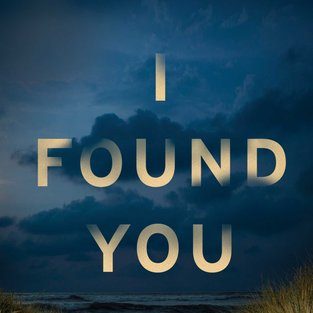
I Found You by Lisa Jewell
Released: June 2016 Genre: Mystery Age Group: Adult
In a windswept British seaside town, single mom Alice Lake finds a man sitting on the beach outside her house. He has no name, no jacket, and no idea how he got there. Against her better judgment, she invites him inside.
Meanwhile, in a suburb of London, twenty-one-year-old Lily Monrose has only been married for three weeks. When her new husband fails to come home from work one night she is left stranded in a new country where she knows no one. Then the police tell her that her husband never existed.
Twenty-three years earlier, Gray and Kirsty are teenagers on a summer holiday with their parents. Their annual trip to the quaint seaside town is passing by uneventfully until an enigmatic young man starts paying extra attention to Kirsty. Something about him makes Gray uncomfortable—and it’s not just that he’s playing the role of the protective older brother.
Two decades of secrets, a missing husband, and a man with no memory are at the heart of this brilliant new novel, filled with “beautiful writing, believable characters, pacey narrative, and dark secrets” (London Daily Mail) that make Lisa Jewell so beloved by audiences on both sides of the Atlantic.
This novel was provided for free from the publisher and TLC Book Tours in exchange for an honest review.
About the Blogger
My name is Jackie, and I am a millennial / mother / Michigander / blogger / wannabe runner / accountant / local library enthusiast / gamer, kinda. This is a personal blog, which means I’m not entirely certain what you’ll find here, but it will definitely not show up on the first page of Google search results.











 By Golly, Ollie!